Dirty Rain on Cars: What Causes It and How to Clean It

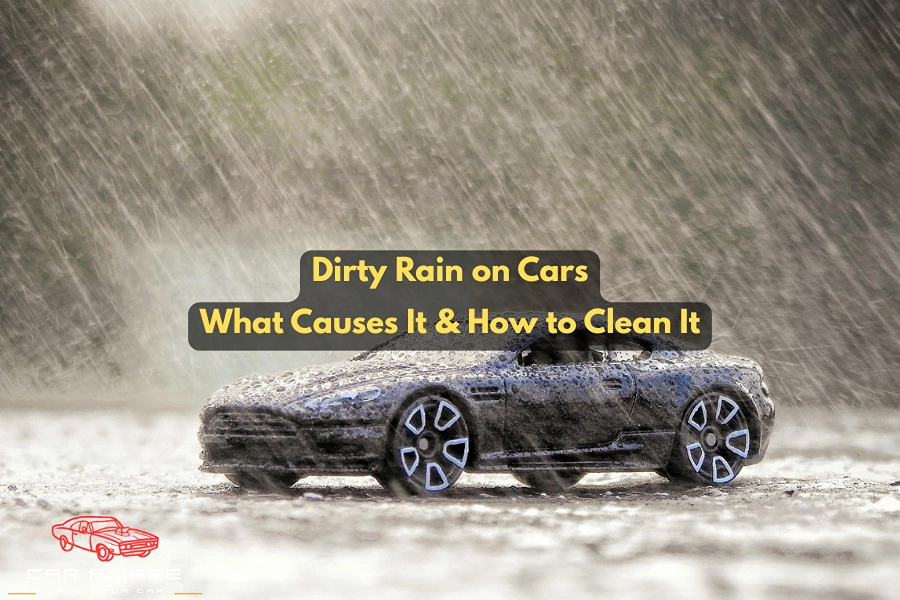
You wash your car, a rain shower passes, and somehow your vehicle looks dirtier than before. Dirty rain on cars can leave brown spots, dusty streaks, muddy residue, or a thin film across the paint. While it can look alarming, dirty rain is usually caused by particles already present in the atmosphere mixing with falling rain. Knowing what those deposits are and how to remove them properly can help keep your car’s paint clean and protected.
Table of contents
- What Is Dirty Rain?
- Why Does Rain Make My Car Look Dirtier?
- What Does Dirty Rain Look Like on a Car?
- Does Dirty Rain Damage Car Paint?
- Dirty Rain vs. Acid Rain: What’s the Difference?
- How to Clean Dirty Rain Off Your Car
- What Not to Do When Your Car Has Dirty Rain on It
- Should You Wash Your Car After Dirty Rain?
- Can Dirty Rain Cause Water Spots?
- Why Does Dirty Rain Leave Orange or Brown Spots on My Car?
- How to Protect Your Car From Dirty Rain
- Is Dirty Rain Bad for a Ceramic-Coated Car?
- When Does Dirty Rain Require Professional Detailing?
What Is Dirty Rain?
Dirty rain is a common term for rainfall that leaves visible dust, dirt, sand, pollen, pollution, or other airborne particles on surfaces after the water dries.
Rain doesn’t necessarily fall as perfectly clean water. As raindrops form and travel through the atmosphere, they can collect suspended particles. When those droplets reach your car and evaporate, the particles can remain behind as a visible layer of residue.
The result may look like:
- Brown or orange spots
- Yellowish dust
- Gray or black residue
- Mud-like streaks
- A thin dusty film
- Small dirty rain drops on car surfaces
- Circular marks left by dried droplets
In some cases, the particles can come from dust carried hundreds or thousands of miles through the atmosphere. The Met Office explains that desert dust can be lifted high into the atmosphere, transported long distances, and then brought back down when rain washes it from the air.
So if you wake up and find dirty rain on your car, it doesn’t necessarily mean something unusual happened locally. The particles may have traveled a considerable distance before landing on your vehicle.
Why Does Rain Make My Car Look Dirtier?
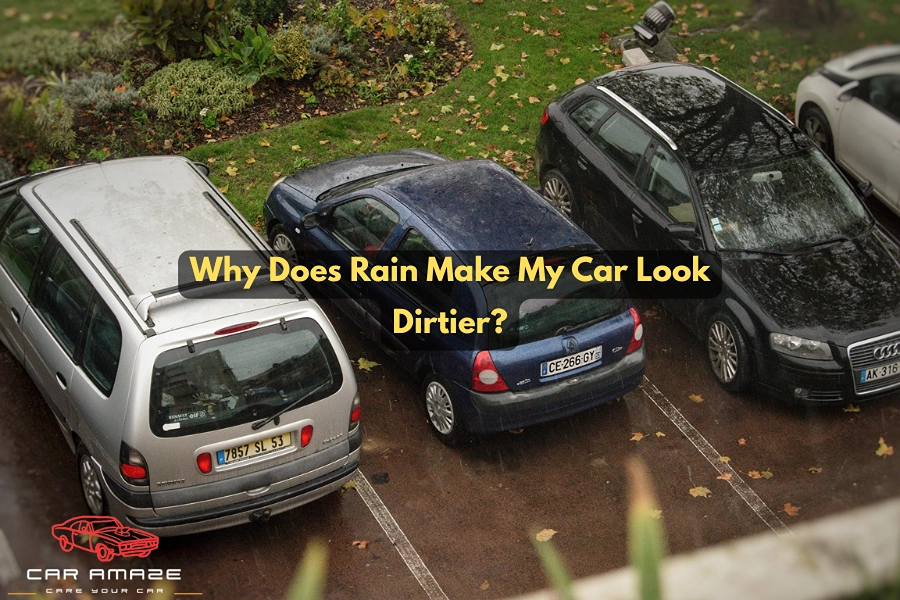
Rain can make a clean car look dirty for several reasons.
Dust and Dirt Are Already in the Air
Wind constantly moves small particles through the atmosphere. Dry weather, strong winds, construction activity, agriculture, traffic, and exposed soil can all contribute to airborne dust.
When rain begins, some of these particles can become incorporated into the falling precipitation. The rain may initially remove some dust from your vehicle, but once the water evaporates, the material it carries can remain on the paint. Getting rid of these water drops on the car body and stains of water drop on windows become challenging.
Desert Dust Can Travel Long Distances
One of the most noticeable examples is desert dust. Strong winds can lift fine dust and sand high into the atmosphere. Atmospheric circulation can then transport those particles over long distances. When rain passes through an area containing the dust, droplets can collect the particles and deposit them on vehicles and other outdoor surfaces.
The Met Office explains that Saharan dust can be transported thousands of miles and that raindrops can collect dust particles as they fall. After the water evaporates, a layer of dust can remain behind.
This is why dirty rain can sometimes leave a yellow, tan, orange, or brown coating on cars.
Pollen, Pollution, and Other Airborne Particles
Desert dust isn’t the only possible source. Depending on the location and weather conditions, rain can also bring down other particles suspended in the atmosphere, including pollen, soil particles, road dust, and pollution.
The exact composition varies from one weather event to another. That’s also why dirty rain doesn’t always look the same. One storm might leave a light gray film, while another produces obvious brown or orange deposits.
What Does Dirty Rain Look Like on a Car?
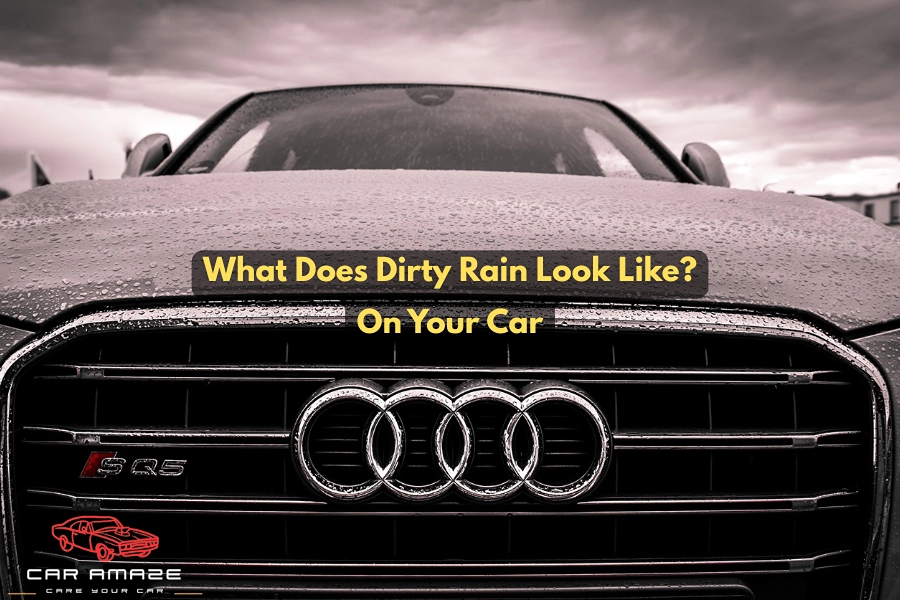
The appearance depends on what was suspended in the atmosphere and how much rain fell. You might notice several different patterns.
Brown or Orange Film
A brownish or orange coating can be associated with mineral-rich dust or soil particles.
Large amounts of airborne desert dust can create particularly noticeable discoloration. The Met Office notes that dust mixed into rainfall can leave yellowish or brownish residue on cars and windows after the water evaporates.
Dirty Rain Drops on Car Paint
Sometimes the vehicle doesn’t have an even coating. Instead, you may see individual circular or irregular deposits where droplets dried. These marks can be particularly obvious on dark-colored vehicles.
Mud-Like Streaks
If your car already had a layer of road dust before the rain, the water can mix with that dirt and move it around the body panels. Once the water dries, you’re left with streaks or patches that look like dried mud.
Dust Concentrated on Horizontal Panels
The roof, hood, and trunk often make dirty rain especially obvious because they receive and retain large numbers of droplets. Windshield glass can also show the residue clearly.
Does Dirty Rain Damage Car Paint?
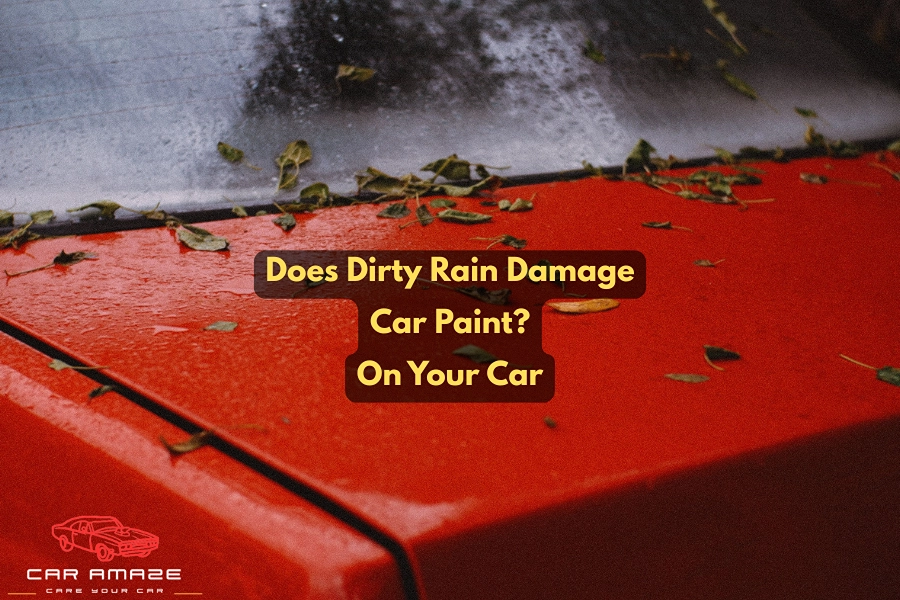
Dirty rain does not automatically mean your paint has been damaged. In many cases, the residue is simply contamination that can be removed with a proper wash.
The concern comes when contaminated water is allowed to dry repeatedly on the paint or when the vehicle owner tries to remove dried particles by rubbing them across the surface. In that case, water drops become very dangerous to car body paint.
Water spotting occurs when droplets dry and leave material behind. Paint-industry guidance identifies evaporating water droplets as a cause of water spotting, with correction potentially becoming more involved when the affected finish is severe.
There is also a physical risk. Dust and sand particles can be abrasive. If you take a dry towel and aggressively wipe a dusty car, those particles can be dragged across the clear coat. That can create fine scratches or micro-marring over time.
The safest approach is therefore:
Rinse first → wash properly → rinse again → dry carefully.
Don’t treat a dusty car as though it were already clean.
Dirty Rain vs. Acid Rain: What’s the Difference?
Dirty rain and acid rain are not the same thing.
| Dirty Rain | Acid Rain |
| Usually refers to visible particles deposited by rainfall | Refers to precipitation affected by increased acidity |
| Can contain dust, sand, pollen, soil, or other airborne material | Associated with atmospheric pollutants such as sulfur and nitrogen compounds |
| Often leaves a visible dusty or muddy film | Can contribute to chemical damage to exposed surfaces |
| Usually requires washing to remove surface contamination | May require more specialized treatment if etching occurs |
A rainstorm can also contain multiple types of contaminants, so the terms shouldn’t be treated as interchangeable.
If your vehicle simply has a brown or dusty coating after a storm, that doesn’t automatically mean you’ve experienced acid rain.
How to Clean Dirty Rain Off Your Car
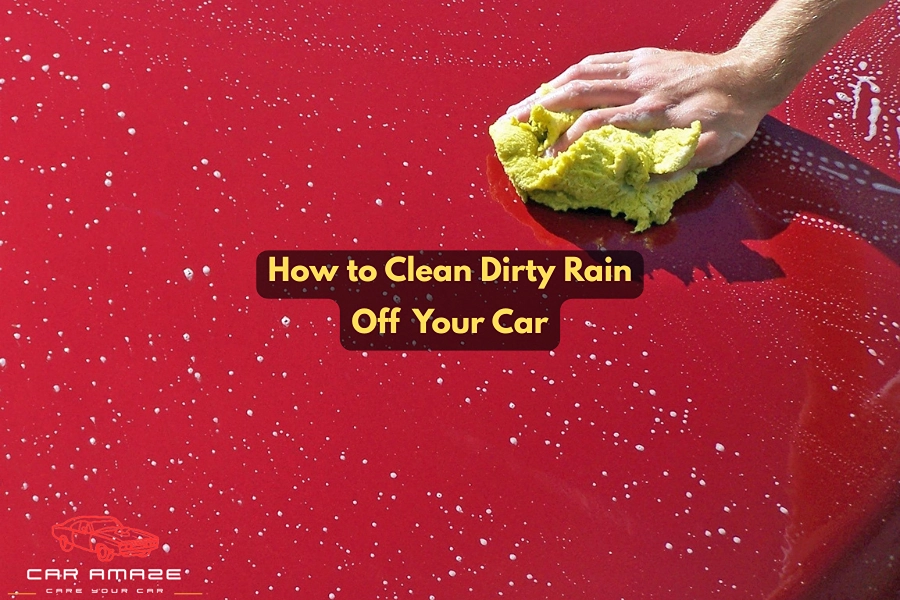
If your car has dirty rain on it, the most important thing is to avoid rubbing the contamination into the paint. A safe cleaning process is straightforward.
1. Rinse the Car Thoroughly
Start with plenty of clean water. The goal is to remove as much loose dust, sand, and dirt as possible before touching the paint.
Pay particular attention to:
- Roof
- Hood
- Trunk
- Windshield
- Side panels
- Wheel arches
- Lower doors
- Bumpers
A thorough rinse reduces the amount of abrasive material left on the surface.
2. Don’t Wipe Dry Dirt With a Towel
This is one of the most important precautions. If your car is covered in dirty rain residue, don’t grab a dry microfiber towel and start wiping the body. Even a soft towel can move dirt particles across the clear coat. Instead, loosen and rinse the contamination first.
3. Wash With Automotive Car Shampoo
After rinsing, use a quality automotive shampoo and plenty of water. Car shampoo is designed to help clean automotive surfaces while providing lubrication during the washing process. Avoid using household detergents simply because they are convenient.
4. Use a Clean Microfiber Wash Mitt
Wash the vehicle gently rather than applying heavy pressure. Start with the cleaner upper areas and work toward the dirtier lower sections. Frequently rinse the wash mitt so you’re not continually putting the same contamination back onto the paint.
5. Rinse the Vehicle Again
Once you’ve washed the entire vehicle, rinse it thoroughly. Make sure no shampoo or loosened dirt remains on the surface. Especially when cleaning car windows make sure no shampoo or dirt remains.
6. Dry the Car Properly
- Use a clean, soft microfiber drying towel or an appropriate drying method.
- Don’t allow large amounts of contaminated water to sit on the paint and evaporate unnecessarily.
- Water spots form when water dries and leaves material behind, and preventing uncontrolled drying can reduce the chance of visible deposits.
7. Treat Stubborn Spots Separately
If a normal wash removes the dirt but leaves behind stubborn rings or marks, don’t immediately start scrubbing harder.
The remaining contamination could be:
- Mineral deposits
- Bonded environmental contamination
- Water spots
- Etching
- Another type of surface contamination
The correct treatment depends on what you’re actually dealing with.
What Not to Do When Your Car Has Dirty Rain on It
A few common cleaning habits can turn a simple dirty-rain problem into a paint problem. With these safety precautions, you can clean and maintain automotive paint film.
Don’t Wipe the Car While It’s Dry and Dusty
Dragging dust across the clear coat can create unnecessary abrasion. Always rinse first.
Don’t Scrub Hard
More pressure doesn’t necessarily mean better cleaning. If contamination isn’t coming off with normal washing, identify what it is rather than applying more force.
Don’t Use Household Cleaning Products
Automotive paint is a specialized surface. Use products intended for vehicle paint rather than assuming a household cleaner is safe.
Don’t Immediately Use a Clay Bar on Heavy Dirt
Clay bars are designed for removing bonded contaminants from a properly prepared surface. They aren’t a substitute for washing a heavily dirty vehicle. Wash and rinse the vehicle first.
Don’t Let Heavy Residue Bake in the Sun
If dirty rain has covered your vehicle, leaving the residue on the paint through repeated wetting and drying isn’t ideal. Heat and sunlight can accelerate evaporation, leaving concentrated deposits behind. If you can safely wash and dry the vehicle, doing so is preferable.
Should You Wash Your Car After Dirty Rain?
Yes, if the vehicle is visibly covered in dirt or residue.
You don’t need to panic after every ordinary rain shower. But if you can clearly see dust, mud, brown spots, or other contamination on your vehicle, cleaning it is a better option than allowing the material to remain on the paint through multiple drying cycles.
This is especially important when the vehicle is exposed to strong sunlight after the rain.
A useful rule is:
If the rain made your car visibly dirtier, treat it as a cleaning opportunity rather than assuming the rain washed the car for you.
Rain can remove some loose dust, but it can also deposit airborne material as it falls.
Can Dirty Rain Cause Water Spots?
Yes. Water spots can form when water droplets evaporate and leave minerals or other contaminants behind. The problem is not simply that a raindrop touched your car. It’s what remains after the water disappears. For example:
Rain falls → contaminated water sits on paint → water evaporates → residue remains.
Repeated wetting and drying can make deposits more noticeable.
PPG’s automotive refinishing guidance identifies water droplets that impact and evaporate from painted surfaces as a cause of water spotting. Fresh deposits are generally easier to deal with than spots that have remained on the vehicle for a long time.
If ordinary washing no longer removes the marks, the surface may require a dedicated water-spot treatment or professional paint correction depending on the severity.
Why Does Dirty Rain Leave Orange or Brown Spots on My Car?
Orange or brown residue often means the rain deposited dust or mineral-rich particles onto the vehicle. One well-known source is desert dust.
For example, the Met Office explains that Saharan dust can become suspended high in the atmosphere and later be washed down by rainfall. The dust can leave a yellow or brown film on cars after the water evaporates.
However, the color alone does not prove that the residue came from the Sahara. Local soil, dust, pollution, and other airborne particles can create similar-looking deposits. If the residue disappears during a normal wash, it was likely surface contamination rather than permanent paint damage.
How to Protect Your Car From Dirty Rain
You can’t prevent dirty rain from falling, but you can make your vehicle easier to maintain.
Apply Wax or Paint Sealant
A quality wax or paint sealant adds a protective layer over the paint and can make routine cleaning easier. It won’t stop dust from landing on the vehicle, but contamination may be easier to remove from a well-maintained surface.
Consider Ceramic Coating
A ceramic coating doesn’t make your vehicle immune to dirty rain. Dust and rainwater can still land on a coated vehicle. Cleaning the ceramic coated car requires different techniques. However, a properly maintained coating can provide a hydrophobic surface and make routine washing easier. The important thing is not to treat a ceramic coating as a replacement for washing.
Consider Paint Protection Film
If protecting the underlying paint is a high priority, paint protection film can provide a physical protective layer over selected painted surfaces. It is particularly useful for owners concerned about physical damage from road debris and other environmental hazards.
Use Covered Parking When Possible
A garage, carport, or other covered parking area can reduce direct exposure to rain and airborne contamination.
Keep the Paint Clean
Old dirt provides another layer for fresh rainwater to mix with. Regular washing helps prevent layers of contamination from accumulating.
Is Dirty Rain Bad for a Ceramic-Coated Car?
Dirty rain can still leave residue on a ceramic-coated vehicle. A ceramic coating changes the surface characteristics of the paint, but it doesn’t create an invisible shield that prevents dust, pollen, minerals, or other particles from landing on the car.
You may still notice:
- Dusty residue
- Brown spots
- Water marks
- Dirty rain drops on car panels
- Mineral deposits
The advantage is that a properly maintained coating can make washing and removing contamination easier. However, don’t aggressively wipe a dusty coated car simply because it has ceramic protection. The same basic rule applies:
Rinse first and minimize friction. If you’re maintaining a ceramic-coated vehicle, follow the coating manufacturer’s recommended washing products and procedures.
Should You Wash Your Car Before It Rains?
Washing your car before it rains isn’t necessarily a waste of time, but the answer depends on the weather. If the forecast calls for a dusty weather event, washing immediately beforehand may mean you’ll need to wash the vehicle again shortly afterward.
However, keeping the vehicle reasonably clean and protected can make subsequent maintenance easier. If rain is already expected, you might choose to wash after the weather passes instead.
The more important point is that you shouldn’t assume rainfall automatically replaces a proper car wash.
When Does Dirty Rain Require Professional Detailing?
Most dirty-rain residue can be handled with proper washing.
Professional detailing becomes more worthwhile when:
- Normal washing doesn’t remove the marks
- The paint feels rough after washing
- Brown or orange staining remains
- Circular spots appear etched into the clear coat
- The finish looks cloudy or dull
- You accidentally create scratches while cleaning
- You aren’t sure what the contamination is
A professional can determine whether you’re dealing with removable contamination, bonded deposits, water spots, or actual paint damage.
Don’t immediately reach for an aggressive compound or machine polisher simply because a mark won’t wash away.
Final Thoughts
Dirty rain on cars is usually more annoying than dangerous. The brown, orange, yellow, or gray residue you see after a storm can come from dust, sand, soil, pollen, pollution, or other particles that rainfall collects from the atmosphere.
The biggest mistake is treating a dirty car as if it were clean. Don’t wipe dried dirty rain with a towel or scrub the surface aggressively. Rinse the vehicle thoroughly, wash it with proper car shampoo, rinse again, and dry it carefully.
If ordinary washing removes the residue, there’s usually little reason for concern. But if spots remain, the paint feels rough, or the finish develops permanent-looking marks, have the surface properly assessed before attempting aggressive paint correction.
FAQs
What is dirty rain on cars?
Dirty rain is rainfall that deposits airborne particles such as dust, sand, soil, pollen, or pollution onto a vehicle. When the water evaporates, these particles can remain as a dusty, brown, orange, gray, or muddy-looking residue.
Why is my car dirty after it rains?
Rain can collect particles suspended in the atmosphere while falling. It can also mix with dirt already sitting on your vehicle. Once the water evaporates, the remaining particles can make the car look dirtier than it did before the rain.
What causes dirty rain drops on a car?
Dirty rain drops on a car are usually caused by raindrops carrying airborne dust, mineral particles, pollen, pollution, or other contaminants. After the water evaporates, the material left behind becomes visible.
Can dirty rain damage car paint?
Dirty rain usually doesn’t damage paint simply by falling on it. However, contaminated residue left on the surface can contribute to spotting, and wiping dusty or gritty residue can cause scratches. Water spotting can also become more difficult to correct if deposits remain on the finish.
Why does dirty rain leave orange spots on my car?
Orange or brown spots can result from dust or mineral-rich particles deposited by rainfall. Desert dust is one possible source. The Met Office explains that dust transported through the atmosphere can mix with rain and leave yellow or brown residue on vehicles after evaporation.
Should I wash my car after dirty rain?
If your vehicle is visibly covered in dust, mud, or residue, washing it is recommended. Rinse the vehicle first to remove loose particles, then use automotive shampoo and a clean microfiber wash mitt before rinsing and drying.
How do I remove dirty rain from my car?
Start by thoroughly rinsing the vehicle to remove loose dirt. Then wash it with automotive shampoo and a clean microfiber mitt, rinse again, and dry it carefully. If stubborn spots remain, identify the type of contamination before using stronger treatments.
Is dirty rain the same as acid rain?
No. Dirty rain generally refers to visible particles deposited by rainfall, such as dust or sand. Acid rain refers to precipitation affected by increased acidity associated with atmospheric pollutants. They are different phenomena.