How to Get Weed Smell Out of a Car: 9 Easy Steps

A weed smell can linger in a car long after the smoke is gone. Air fresheners may cover it for a while, but odors can remain trapped in seats, carpets, the headliner, and even the ventilation system. The good news is that you can usually reduce or remove the smell by finding the source, cleaning the surfaces that hold the odor, and dealing with the HVAC system when necessary.
Table of contents
- Why Does Weed Smell Stay in a Car?
- Where Does Weed Smell Hide in a Car?
- How to Get Weed Smell Out of a Car
- Does Ozone Remove Weed Smell From a Car?
- How to Get Weed Smell Out of a Car Fast
- How Long Does Weed Smell Last in a Car?
- What Not to Do When Removing Weed Smell
- When Should You Get Professional Car Detailing?
- Final Thoughts
- Conclusion
- FAQs
Why Does Weed Smell Stay in a Car?

Weed smell can be surprisingly persistent because a car is a small, enclosed space.
When cannabis is smoked inside a vehicle, smoke and odor-producing residue can settle on fabrics and other interior surfaces. Seats, carpets, floor mats, the headliner, seat belts, and other porous materials can hold onto odors much longer than the air inside the cabin.
The ventilation system can also contribute to the problem. If smoke has circulated while the fan or climate control was running, some odor may remain around the HVAC system or cabin air filter.
That’s why opening the windows or spraying an air freshener may only provide temporary relief. To get rid of the cigarette smell, weed smell, mildew smell, etc. properly, you need to clean the areas where the odor has settled.
Where Does Weed Smell Hide in a Car?
Before cleaning, it helps to know where to look.
| Area | Why it can hold the smell | What to do |
| Seats | Fabric and foam can absorb smoke residue | Vacuum and deep-clean |
| Carpets | Fibers and padding trap odors | Vacuum and shampoo/extract |
| Floor mats | Collect smoke residue, dirt, and debris | Remove and clean separately |
| Headliner | Fabric can absorb smoke | Clean gently with minimal moisture |
| Seat belts | Woven material can retain odors | Wipe and clean carefully |
| Door panels | Fabric and textured surfaces can collect residue | Clean with an interior-safe cleaner |
| Dashboard and trim | Smoke can leave a film on hard surfaces | Wipe thoroughly |
| Windows | Smoke can leave residue on glass | Clean the interior glass |
| HVAC vents | Airflow can distribute lingering odors | Clean accessible vents |
| Cabin air filter | Can collect airborne particles and odors | Inspect or replace if applicable |
| Trunk | Odors can linger in carpets and liners | Vacuum and clean |
Don’t forget areas that are easy to overlook, such as underneath the seats, between seat cushions, inside door pockets, and around the center console.
How to Get Weed Smell Out of a Car
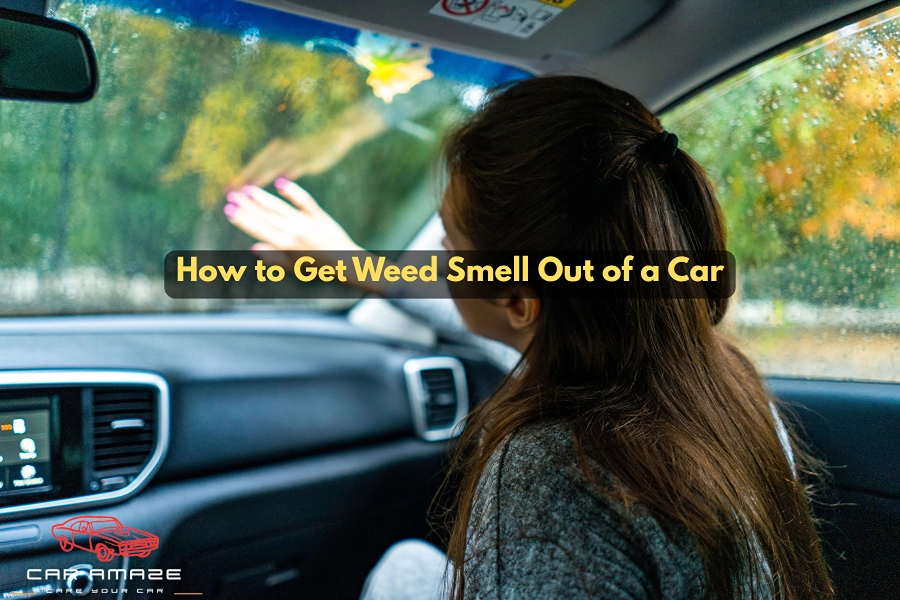
The best approach is to work from the source outward. Don’t start by covering the smell with a strong fragrance.
1. Remove Anything Causing the Smell
Start with the obvious stuff.
Remove any leftover plant material, ash, packaging, trash, food containers, or other objects that could be contributing to the odor. Take out the floor mats and any other removable items that can be cleaned separately.
If something smells strongly when you hold it close to your nose, don’t leave it inside the car while you’re trying to deodorize the interior. Also check the trunk. Items stored there can carry odors back into the cabin even after you’ve cleaned the seats.
2. Air Out the Car Thoroughly
Once the source has been removed, ventilate the vehicle.
Open the doors and windows in a safe location and allow fresh outdoor air to circulate through the cabin. If possible, remove the floor mats and other removable items so air can reach the carpet underneath.
Ventilation helps reduce airborne odor, but don’t expect it to solve a strong gas smell and weed smell by itself. If smoke residue has already settled into upholstery or carpeting, the surfaces still need to be cleaned.
3. Vacuum the Entire Interior
Vacuuming is one of the easiest steps to skip, but it matters.
Start with the:
- Front and rear seats
- Carpets
- Floor mats
- Areas underneath the seats
- Seat gaps
- Door pockets
- Center console
- Trunk
- Crevices around the seats and trim
Move the seats forward and backward so you can reach the carpet underneath them. For fabric seats, pay attention to seams and gaps where particles can collect. If you have a crevice attachment, use it around the edges of the seats and center console.
Remove the floor mats from the vehicle before vacuuming them. Clean them separately rather than simply putting them back after vacuuming.
4. Clean the Seats and Carpets

If the smell remains after vacuuming, it’s time to clean the surfaces that may have absorbed the odor. For fabric seats and carpets, use an automotive upholstery or carpet cleaner that’s appropriate for the material.
A basic process is:
- Vacuum first.
- Apply the appropriate cleaner.
- Gently agitate the fabric according to the product instructions.
- Extract or wipe away the cleaner as directed.
- Allow the material to dry completely.
Don’t soak the seats or carpet unnecessarily. Excess moisture can create a different problem, especially if the interior stays damp for a long time. If your vehicle has leather seats, use a cleaner specifically designed for automotive leather rather than treating them like fabric upholstery.
For heavily contaminated fabric interiors, an extractor can do more than surface cleaning because it can pull dirt and cleaning solution from deeper into the material.
5. Clean the Headliner Carefully
The headliner is one of the most important areas to clean, but it also requires some care.
Because the headliner fabric is attached to a backing material with adhesive, soaking it or aggressively scrubbing it can cause the fabric to loosen or sag.
Instead:
- Use an automotive-safe interior or upholstery cleaner.
- Apply a small amount to a microfiber towel or according to the product’s directions.
- Gently wipe or dab the affected area.
- Avoid saturating the material.
- Let it dry completely.
Don’t attack the headliner with a stiff brush just because the smell is strong. You can create a costly interior repair while trying to solve an odor problem. If the headliner still smells strongly after careful cleaning, professional detailing may be a better option.
6. Wipe Down Hard Surfaces and Clean the Glass
Smoke residue isn’t limited to fabric.
Wipe down hard interior surfaces, including:
- Dashboard
- Center console
- Door panels
- Steering wheel
- Cup holders
- Interior trim
- Gear selector area
- Door handles
Use an interior cleaner that’s appropriate for the particular surface. Don’t assume that one aggressive household cleaner is safe for every material inside the car.
Pay special attention to the inside of the windows. Smoke can leave a film on glass, and dirty interior glass can contribute to a stale cabin even after other areas have been cleaned.
A dedicated automotive glass cleaner and clean microfiber towels can help remove that film without leaving heavy residue. For more detailed window-cleaning instructions, see our guide on how to clean car windows.
7. Check the HVAC System and Cabin Air Filter
If the car smells fine while parked but the odor returns when you turn on the fan, AC, or heater, don’t ignore the HVAC system. The ventilation system moves air throughout the cabin, so lingering contamination around the vents or a dirty cabin air filter can contribute to the smell.
Check your owner’s manual to see whether your vehicle has a replaceable cabin air filter and where it is located. Filter locations and replacement procedures vary by vehicle. If the filter is dirty or has absorbed an odor, replacing it may help.
You can also clean accessible vents and use an automotive HVAC cleaning product if the product is suitable for your vehicle and you follow its instructions. If a strong smell continues to come through the vents after the interior has been thoroughly cleaned, a professional inspection or HVAC cleaning may be worthwhile.
8. Use an Odor Absorber After Cleaning
Once you’ve cleaned the interior, you can use an odor absorber to help deal with whatever smell remains. Activated charcoal is one option because it can adsorb certain odor-causing compounds from the air and helps keep new car smell.
Baking soda is another commonly used option for light odors, particularly around suitable carpet or fabric surfaces. However, it shouldn’t be considered a replacement for cleaning.
The important order is:
Remove the source → clean the interior → ventilate → use an odor absorber if needed.
Don’t reverse that process by filling the car with fragrance before cleaning it. Air fresheners can make the cabin smell better temporarily, but they don’t remove the material responsible for the odor.
9. Consider Professional Odor Treatment for Severe Smells
Some vehicles need more than a weekend DIY cleaning.
Professional detailing may be worth considering if:
- The vehicle was smoked repeatedly.
- The smell has been present for months.
- The odor returns after cleaning.
- Fabric and foam still smell strongly.
- The headliner has a persistent odor.
- The smell comes from the HVAC system.
- You need the interior thoroughly cleaned before selling or trading the vehicle.
A professional detailer may have equipment for deep extraction and specialized odor treatment that isn’t practical to use at home.
Does Ozone Remove Weed Smell From a Car?
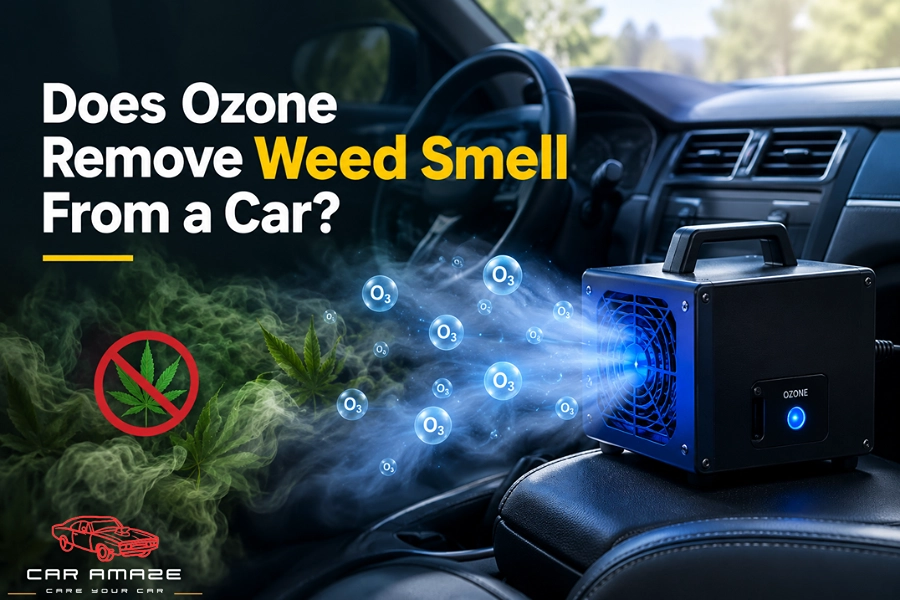
Ozone treatment is often mentioned as a solution for stubborn vehicle odors, but it needs to be handled carefully.
Ozone is a lung irritant, and the U.S. Environmental Protection Agency advises against using ozone-generating air cleaners in occupied spaces. EPA also notes that high ozone concentrations can damage certain materials, including rubber, fabrics, and other susceptible materials.
That means nobody should be inside the vehicle while an ozone generator is operating.
Ozone treatment, when used by professionals, is generally considered an unoccupied-space treatment. The vehicle must then be thoroughly ventilated before anyone gets inside. EPA also emphasizes source removal and ventilation rather than relying on ozone as the sole solution.
For a typical car owner, I’d start with physical cleaning and ventilation rather than reaching for an ozone generator. If the odor is severe enough to require specialized treatment, a professional detailer can determine whether ozone or another treatment is appropriate for the vehicle.
How to Get Weed Smell Out of a Car Fast
If you need to reduce the smell quickly, focus on the areas most likely to make the biggest difference.
Follow this order:
- Remove anything producing the smell.
- Remove the floor mats and clean them.
- Open the doors and windows to ventilate the cabin.
- Vacuum the seats, carpets, mats, and hidden areas.
- Wipe down hard surfaces.
- Clean the interior glass.
- Clean fabric upholstery if necessary.
- Check the cabin air filter.
- Let the interior dry and ventilate thoroughly.
This can make a noticeable difference when the odor is relatively light. However, if smoke has repeatedly been trapped inside the vehicle, a quick cleanup may not completely remove the smell.
How Long Does Weed Smell Last in a Car?
There’s no reliable single number of hours or days that applies to every vehicle.
The smell can last much longer when:
- A large amount of smoke was produced.
- The vehicle was kept closed while smoking.
- The interior contains lots of fabric.
- The seats contain absorbent foam.
- The HVAC system circulated the smoke.
- The vehicle wasn’t cleaned afterward.
- The smell has been present for a long time.
A lightly exposed vehicle with good ventilation may lose much of the odor relatively quickly. A vehicle that has been smoked in repeatedly can retain the smell until the affected surfaces are thoroughly cleaned.
What Not to Do When Removing Weed Smell
Avoid these common mistakes:
- Don’t rely only on air freshener: A strong fragrance can temporarily cover the odor, but the underlying residue is still there.
- Don’t soak the headliner: Too much moisture can damage the adhesive underneath the fabric.
- Don’t mix cleaning chemicals: Using multiple cleaners together can create dangerous chemical reactions. Follow the product label and use one appropriate cleaner at a time.
- Don’t leave the interior damp: Wet carpet and upholstery can develop their own unpleasant odors if they aren’t dried properly.
- Don’t ignore the HVAC system: If the smell returns when the fan starts, the ventilation system may need attention.
- Don’t use an ozone generator with people or pets inside: EPA advises against ozone-generating air cleaners in occupied spaces because ozone can irritate the lungs.
When Should You Get Professional Car Detailing?
A DIY cleaning is reasonable when the odor is relatively light and the exposure was recent.
Professional detailing becomes more attractive when the smell is strong, persistent, or repeatedly returns after cleaning. A professional can also help when the odor has penetrated upholstery foam, carpeting, the headliner, or difficult-to-access parts of the ventilation system.
For a heavily contaminated vehicle, spending money on proper interior extraction can be more effective than repeatedly buying air fresheners and odor sprays.
Final Thoughts
The most effective way to get weed smell out of a car is to remove the source and clean the surfaces that have absorbed the odor. Start with ventilation and thorough vacuuming, then clean the carpets, seats, headliner, hard surfaces, and glass. If the smell returns when the fan or climate control runs, check the cabin air filter and HVAC system.
For a mild smell, you may be able to handle everything yourself. For a strong, long-lasting odor, professional interior extraction and odor treatment can save you from repeatedly masking the same problem with fragrances.
FAQs
How do you get weed smell out of a car quickly?
Remove the source, ventilate the vehicle, vacuum the entire interior, clean upholstery and carpets, wipe hard surfaces, and check the cabin air filter. Strong or old odors may require professional detailing.
Does baking soda remove weed smell from a car?
Baking soda can help with some light odors, particularly on suitable carpet or fabric surfaces, but it shouldn’t replace thorough cleaning. If smoke residue remains, the smell can return.
Does vinegar get weed smell out of a car?
Vinegar may help with some odors, but it’s not a universal solution for smoke contamination. Automotive-safe cleaners designed for the specific interior material are generally a better choice.
Does airing out a car remove weed smell?
Ventilation can reduce airborne odor, especially when the smell is fresh. It usually isn’t enough for smoke residue that has settled into upholstery, carpeting, or other porous surfaces.
Does weed smell stay in car upholstery?
Yes. Fabric upholstery, carpeting, seat foam, and other porous materials can retain odors. Deep cleaning is often necessary when the smell has been present for a long time.
How do you get weed smell out of car vents?
Start by cleaning accessible areas, checking the cabin air filter if the vehicle has one, and following the manufacturer’s recommendations for HVAC cleaning. If the odor continues whenever the fan operates, professional HVAC cleaning may be needed.
Will an air freshener remove weed smell from a car?
An air freshener can mask the smell temporarily, but it doesn’t remove the residue causing the odor. Clean the interior first and use fragrance only as a finishing step if desired.
Does an ozone generator remove weed smell from a car?
Ozone treatment can be used in some unoccupied odor-treatment applications, but it should not be treated as a simple DIY air freshener. EPA warns that ozone is a lung irritant and advises against using ozone-generating air cleaners in occupied spaces.