
Buying a New or Used Electric Vehicle: The Pros, Cons, and What to Know Before You Buy

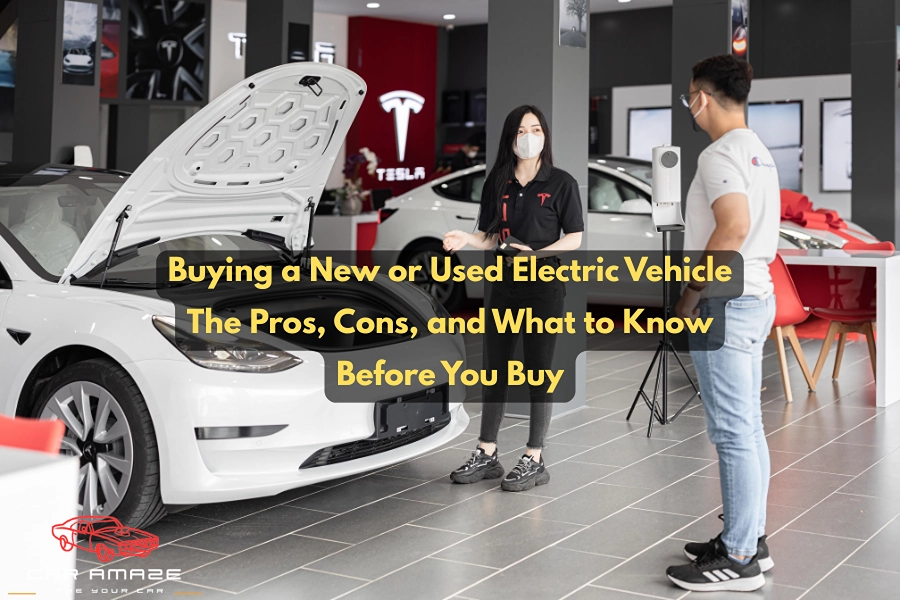
Electric vehicles have moved well beyond the stage where buying one feels like an experiment. Today, shoppers can choose from electric sedans, crossovers, luxury vehicles, pickup trucks, performance cars, and family SUVs. The bigger question is no longer whether an electric vehicle can work as an everyday car. For many buyers, the real decision is whether it makes more sense to buy a brand-new EV or take advantage of the rapidly growing used electric vehicle market.
That decision can be surprisingly complicated. A new electric vehicle gives you the latest battery technology, full warranty coverage, updated software, and the comfort of knowing exactly how the vehicle has been treated since mile one. A used EV, on the other hand, can offer an enormous amount of technology and performance for considerably less money.
There are also questions that traditional used-car buyers rarely had to consider. How healthy is the battery? How quickly can the vehicle charge? Will the advertised range fit your lifestyle? Can you charge at home? And what happens if the perfect used EV is sitting at a dealership or private seller 1,500 miles away? Before deciding whether your next car should run on electricity, it helps to understand both sides of EV ownership.
Table of contents
- Why More Drivers Are Considering Electric Vehicles
- The Advantages of Buying a New Electric Vehicle
- The Downsides of Buying a New EV
- The Biggest Concern With a Used EV: Battery Health
- Think About How You Really Drive
- Buying a New Tesla Is Different From Buying a Used EV Across the Country
- Do Not Let Distance Keep You From the Right Used EV
- Should You Drive a Newly Purchased Used EV Home Instead?
- New EV or Used EV: Which One Should You Buy?
- The Bottom Line
- FAQs
Why More Drivers Are Considering Electric Vehicles
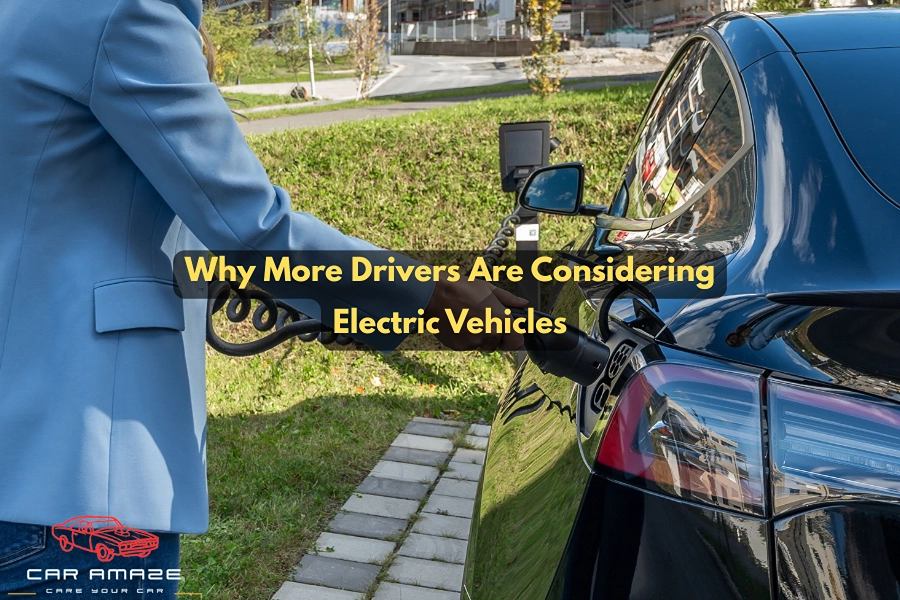
Electric cars have several characteristics that are difficult to appreciate until you actually drive one. The first is power delivery. An electric motor can deliver torque almost immediately, which is why even relatively ordinary EVs can feel unexpectedly quick from a stop. There is no traditional engine building RPM, and most battery-electric vehicles do not use a conventional multi-speed automatic transmission.
The driving experience can also be remarkably quiet and smooth. Then there is maintenance. According to the U.S. Department of Energy’s Alternative Fuels Data Center, all-electric vehicles generally require less maintenance than conventional gasoline-powered vehicles because they contain fewer moving parts, use fewer fluids, and take advantage of regenerative braking, which can reduce wear on conventional brake components.
That does not mean an EV is maintenance-free. Tires, suspension components, air-conditioning systems, coolant systems on some models, cabin filters, brakes, and other components still require attention. Tires can be especially important because electric vehicles are often relatively heavy and capable of producing substantial torque. Still, eliminating oil changes, spark plugs, exhaust-system repairs, and many traditional engine-related maintenance items is an appealing part of EV ownership.
The Advantages of Buying a New Electric Vehicle
If your budget allows it, buying new removes a lot of uncertainty.
You Start With a Fresh Battery and Full Warranty
The battery is the most expensive and technically important component in an electric vehicle, so starting with a brand-new one provides obvious peace of mind. Battery packs are designed for long-term use, but like virtually every rechargeable battery, they can gradually lose usable capacity over time. How quickly that happens depends on battery chemistry, charging habits, climate, mileage, thermal management, and the vehicle itself.
With a new EV, you know the history from the beginning. You also receive whatever battery, powertrain, and vehicle warranties the manufacturer provides. The exact terms vary considerably between manufacturers and models, so shoppers should read the warranty rather than simply assuming every EV has identical coverage.
You Get the Latest EV Technology
Electric vehicle technology is advancing quickly. Newer vehicles may offer faster DC charging, more efficient motors, improved battery chemistry, better thermal management, more sophisticated route planning, improved driver-assistance technology, and longer driving ranges. Those improvements matter most to drivers who frequently take long trips.
A difference of a few minutes at a charging stop may seem insignificant, but over a 600-mile road trip it can become much more noticeable. The same is true of range. A vehicle capable of comfortably completing your normal commute is one thing; a vehicle that can complete it even during cold weather while running the heater is another.
The U.S. Environmental Protection Agency notes that EV range can change significantly depending on conditions including cold temperatures, air-conditioning use, and high-speed driving. The number printed on the window sticker should therefore be viewed as a standardized comparison figure rather than a guarantee that the vehicle will travel exactly that distance every time.
There Is Less Uncertainty About the Vehicle’s History
When you buy new, there are no previous owners to investigate. There is no mystery surrounding charging habits, accident history, neglected tires, damaged suspension components, or whether the vehicle spent several years regularly being charged to 100 percent and left sitting in extreme heat. For some buyers, eliminating those unknowns is worth paying a premium.
The Downsides of Buying a New EV

New EVs have advantages, but buying new is not automatically the best financial decision.
The Purchase Price Can Be Higher
Depending on the vehicle, a new EV may cost considerably more than a comparable used example. This is where shoppers need to look beyond the monthly payment. Compare the total purchase price, financing costs, insurance, expected electricity costs, maintenance, depreciation, and the amount of time you expect to own the vehicle.
The Department of Energy provides a Vehicle Cost Calculator specifically designed to compare ownership expenses among conventional and alternative-fuel vehicles. The important takeaway is that there is no universal rule saying an EV will always be cheaper or always be more expensive. Your driving habits, electricity prices, purchase price, financing, and vehicle choice matter.
Rapid Technology Changes Can Affect Resale Values
Technology improving quickly is wonderful when you are shopping for a new vehicle. It can be less wonderful when you are trying to sell the vehicle you bought several years earlier. If newer models suddenly offer substantially longer range, quicker charging, lower prices, or more equipment, older EVs may face additional pricing pressure on the used market. For the second owner, though, that same depreciation can create an opportunity.
Why Buying a Used Electric Vehicle Can Be a Great Deal
A used electric car can sometimes give you the technology, comfort, performance, and fuel savings of an EV without the new-car price. The secondhand market also allows buyers to consider vehicles that may have been outside their budget when new. A premium electric sedan or SUV that originally carried a substantial sticker price may become much more affordable after several years of depreciation.
Used buyers can also widen their search considerably by shopping online rather than limiting themselves to nearby dealerships. That matters because EV inventory varies enormously from one area to another. Someone living in a smaller city might find only a handful of used EVs within 50 miles, while dealerships hundreds of miles away could have dozens of examples in the exact trim, color, range, and price they want.
The basic used-car rules still apply. Vehicle history, title status, previous damage, maintenance records, tires, brakes, suspension condition, and an independent inspection should all be considered. Car Amaze’s guide explaining how to tell if a car is totaled is particularly relevant when evaluating an unfamiliar used vehicle.
Shoppers considering auctions or alternative sources can also review Car Amaze’s guide on how to buy repossessed cars for another perspective on inspecting, researching, budgeting for, and purchasing vehicles outside the traditional new-car dealership model.
The Biggest Concern With a Used EV: Battery Health
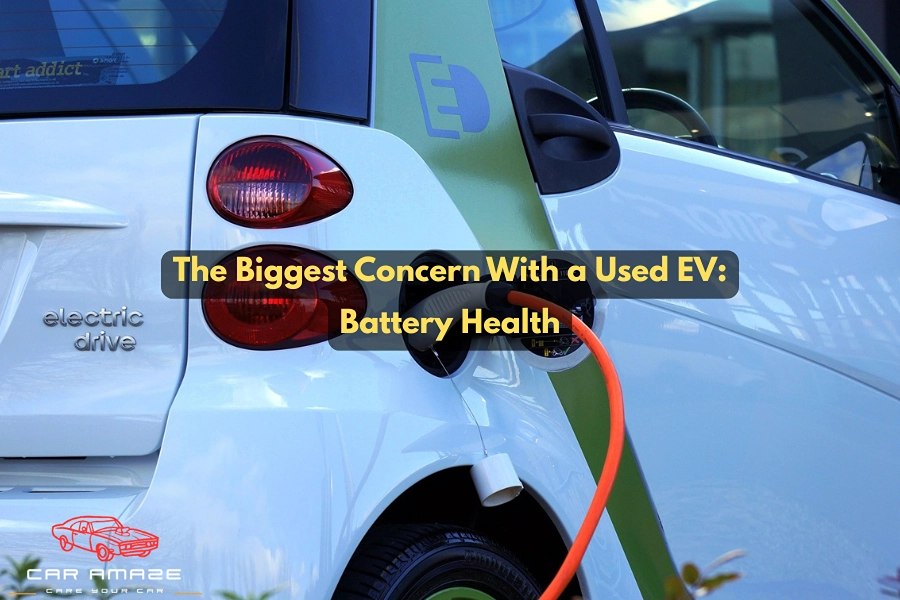
If you remember only one thing about shopping for a used electric vehicle, make it this: mileage alone does not tell the whole story. A gasoline vehicle with 80,000 miles raises questions about engine wear, transmission service, oil consumption, cooling systems, and dozens of mechanical components. With a used EV, one of the biggest questions is how much usable battery capacity remains.
Battery Degradation Is Normal
Rechargeable batteries gradually age. That does not mean a used EV with some degradation is a bad vehicle. It simply means the remaining capacity needs to be considered as part of the purchase price. Suppose a particular model originally delivered around 280 miles of real-world usable range under favorable conditions. If battery degradation and driving conditions have reduced what you can comfortably expect, the car may still be more than adequate for someone who drives 35 miles a day and charges at home. It might be less attractive to someone regularly driving several hundred miles between cities.
Ask the seller for any available battery-health information, determine whether the manufacturer provides a battery-health diagnostic, and research the particular model rather than applying assumptions from one EV to every other one.
Charging Can Make or Break the EV Experience
One person’s electric car can be incredibly convenient while another person’s identical vehicle can be frustrating. Often, the difference is charging.
Home Charging Is the Sweet Spot
For many EV owners, the ideal situation is being able to plug in at home overnight. Instead of driving somewhere specifically to refuel, you arrive home, connect the car, and wake up with the energy needed for the next day’s driving. That can be one of the best parts of owning an EV.
Apartment residents, condo owners, people who park on the street, and anyone without convenient access to electrical service need to think more carefully. Relying primarily on public fast charging can change both the economics and convenience of ownership. Before purchasing an EV, figure out where you will actually charge it rather than assuming you will solve that problem afterward.
Think About How You Really Drive
People occasionally shop for cars based on the most extreme trip they might take instead of the driving they actually do. If you commute 25 miles each day but drive 700 miles to visit family once a year, it may not make sense to reject an EV that works perfectly for the other 364 days solely because that annual trip requires several charging stops.
On the other hand, if you regularly cover hundreds of highway miles in one day, charging speed, charging-network availability, highway efficiency, and range become far more important. Climate matters too. EPA guidance notes that cold weather, climate-control use, and high-speed driving can reduce electric range. Buyers in colder areas should build a larger range cushion into their decision rather than selecting a vehicle whose rated range barely covers their longest normal journey.
Buying a New Tesla Is Different From Buying a Used EV Across the Country
Tesla helped normalize the idea of buying a vehicle without going through a traditional franchise dealership. When purchasing a new Tesla, much of the process is handled through Tesla’s ordering and delivery system. Buyers complete registration, payment, insurance, trade-in information, and delivery-related tasks through the Tesla app.
Depending on the buyer’s location and eligibility, the vehicle may be collected at a Tesla delivery location. Tesla also describes a fee-based Carrier Direct option for qualifying customers located more than 220 miles from the nearest Tesla delivery location. Tesla says that option uses an independent carrier coordinated as part of its delivery process.
That arrangement solves an important part of buying a new Tesla: getting the vehicle from Tesla’s inventory and logistics network to the buyer. But the situation changes when you are buying a used Tesla, Ford Mustang Mach-E, Hyundai Ioniq 5, Kia EV6, BMW i4, Chevrolet Equinox EV, Rivian, or another pre-owned electric vehicle from an unrelated dealer or private seller hundreds or thousands of miles away. Suddenly, transportation becomes your responsibility.
Do Not Let Distance Keep You From the Right Used EV
The rise of online vehicle shopping has changed what “local inventory” means. If the exact EV you have been searching for is 1,200 miles away and several thousand dollars cheaper than similar vehicles nearby, automatically dismissing it because of distance may not make financial sense.
Start with the complete cost. Take the purchase price and add taxes, dealership fees, inspection costs, registration expenses, transportation, and any immediate maintenance the vehicle needs. Then compare that total with similar cars available locally. Sometimes the distant vehicle will no longer look like a bargain. Other times, even after transportation is included, it can still be the better deal.
That is where professional auto transport can make long-distance EV shopping considerably easier. Rather than flying to another state and immediately putting hundreds or thousands of miles on an unfamiliar used vehicle, buyers can arrange Nationwide Car Shipping through a company such as Smart Auto Move and have the vehicle transported from the seller to its destination.
This can be particularly useful with an EV because you do not need to plan an unfamiliar long-distance charging route immediately after buying the car. You can have the vehicle transported home, inspect it on arrival, familiarize yourself with its charging system and controls, and then begin driving it in your normal environment.
Should You Drive a Newly Purchased Used EV Home Instead?
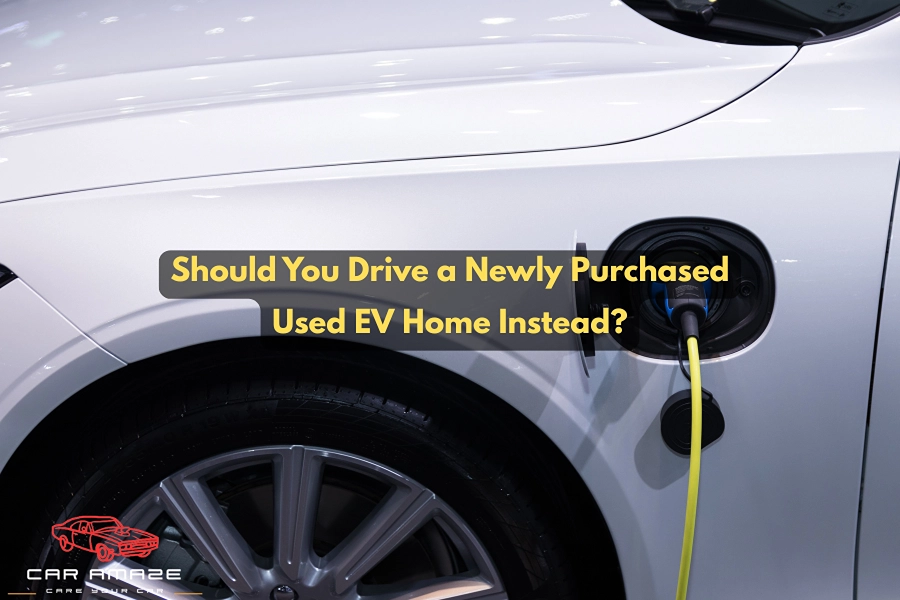
Sometimes driving it home makes sense. A long road trip can be an entertaining way to get acquainted with a new vehicle, particularly when the route has dependable fast-charging infrastructure. But calculate what that trip really involves.
A flight or one-way rental to reach the seller, hotel stays, meals, charging costs, time away from work, and the additional mileage all belong in the comparison. You should also ask yourself whether your first experience with a newly purchased used EV should really be a multi-state journey in a vehicle whose actual highway range and charging behavior you have not personally tested yet.
Shipping is not automatically the cheapest answer, and driving is not automatically the cheapest answer. Compare the full cost and choose whichever makes sense for that particular purchase.
New EV or Used EV: Which One Should You Buy?
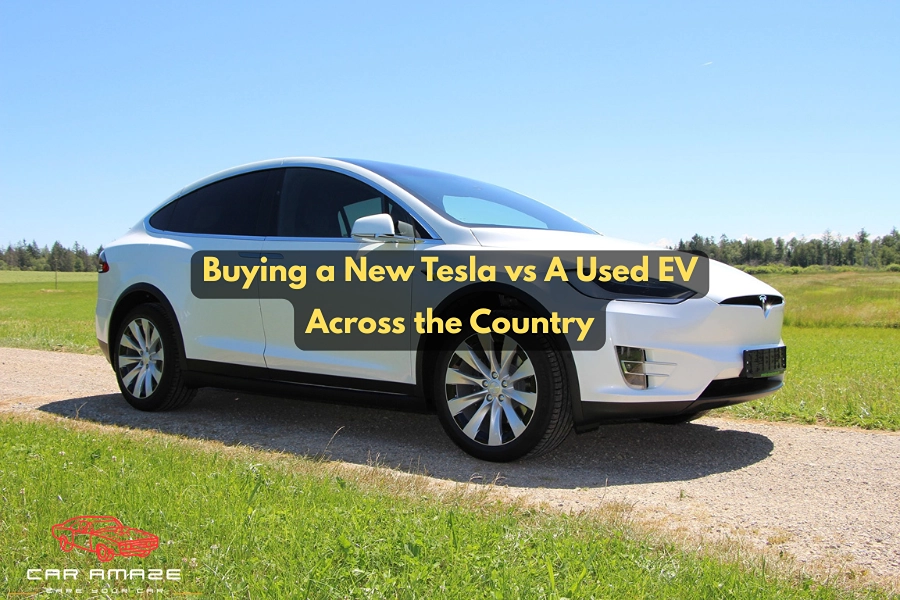
There is not one correct answer. A new electric vehicle makes sense for buyers who value full warranty coverage, the newest battery and charging technology, predictable vehicle history, and the ability to configure or select exactly what they want.
A used EV becomes much more attractive for buyers focused on value. If you can verify battery condition, vehicle history, warranty status, charging compatibility, title status, and overall mechanical condition, depreciation can work heavily in your favor.
Some buyers may even decide that the smartest purchase is not the closest vehicle. The combination of nationwide online inventory, independent inspections, digital paperwork, vehicle-history services, and professional auto transport means a used car hundreds of miles away is no longer nearly as impractical as it once was.
The Bottom Line
Electric vehicles require a slightly different buying mindset, but the fundamentals remain familiar. Buy the vehicle that fits your life rather than the one with the most impressive specification sheet.
Think carefully about where you will charge it. Give yourself enough range for real-world conditions rather than ideal ones. If buying used, investigate battery health just as seriously as you would investigate an engine and transmission in a gasoline vehicle.
And do not assume geography has to dictate your choices. Buying new may give you access to a manufacturer-managed delivery process, as Tesla demonstrates with its own ordering and delivery network. Buying used requires a little more planning, but it can also open the door to better prices and a much larger selection of vehicles.
If the right EV is sitting three states away, calculate the total cost, have the vehicle properly inspected, and compare transportation with traveling to retrieve it yourself. The perfect electric car does not necessarily have to be sitting at the dealership down the street. Sometimes the better deal is worth going farther for.
FAQs
1. Is it better to buy a new or used electric vehicle?
A new EV offers the latest battery and charging technology, full manufacturer warranty coverage, and a known vehicle history. A used EV can provide significant savings because of depreciation. The better choice depends on your budget, driving habits, charging access, and how much value you place on newer technology and warranty coverage.
2. What should I check when buying a used electric vehicle?
Pay particular attention to battery health, remaining warranty coverage, vehicle history, title status, accident or flood damage, charging capability, tires, brakes, suspension, and overall condition. If possible, have the vehicle inspected independently before purchasing it.
3. How important is battery health when buying a used EV?
Battery health is one of the most important factors when purchasing a used electric vehicle. Battery capacity naturally decreases over time, which can reduce the vehicle’s available driving range. Ask the seller for available battery-health information or diagnostic results and consider whether the remaining range fits your daily driving needs.
4. Can I buy a used EV from another state and have it shipped to me?
Yes. Buying a used EV from another state can expand your selection considerably. Before purchasing, calculate the complete cost, including the vehicle price, taxes, fees, inspection, registration, and transportation. Professional auto transport can allow you to have the vehicle delivered rather than driving it hundreds or thousands of miles yourself.
5. Is an electric vehicle cheaper to maintain than a gasoline car?
Generally, an all-electric vehicle requires less routine maintenance because it does not have an internal-combustion engine, oil changes, spark plugs, or many other engine-related components. However, EVs still require maintenance for items such as tires, brakes, suspension, air conditioning, cabin filters, and other vehicle systems. Actual ownership costs vary by model, driving habits, electricity prices, and maintenance needs.