Car Vibrates When AC Is on Its Highest Level? Causes and Fixes

Sometimes the car vibrates when the air conditioner is on its highest level. It is very annoying, and it could also be a sign of a serious issue in your car. It indicates that either your engine is not working well or your AC is under stress. When the AC is on its peak level, the compressor works harder, which puts an extra load on your engine. In this guide, I will explain why your car vibrates when the AC is on the highest level, its fixes, and preventive measures.
Quick Overview: Why Car Vibrates When AC Is on Its Highest Level? 📄
If your car vibrates when the AC is on, common causes include:
- Worn or damaged engine/motor mounts
- Failing AC compressor
- Low refrigerant levels
- Dirty or clogged cabin air filter
- Low or unstable engine idle speed
- Loose or worn serpentine/AC belts
Fixes range from replacing filters and belts to adjusting idle speed or repairing the AC compressor. Regular maintenance helps prevent future vibrations.
Table of contents
- Why Does Your Car Vibrate at the Highest AC Level?
- Top 10 Common Causes of Car Vibration at Full AC
- Step-by-Step DIY vs Professional Check
- Is It Safe to Drive When Your Car Vibrates at Max AC?
- Preventive Maintenance Tips
- Conclusion
- FAQs
Why Does Your Car Vibrate at the Highest AC Level?
The AC system of the car draws power from the engine to run the compressor. The higher the AC level is, the harder the compressor will run, and it will put more load on the engine.
If everything is in perfect condition, you might not notice any shaking. On the other hand, if any engine or AC component is worn, dirty, or misaligned, your car will vibrate. The car will shake and vibrate more strongly when idling.
Top 10 Common Causes of Car Vibration at Full AC
Now, let’s discuss the top 10 causes of car vibrations when the air conditioner is on its highest level.
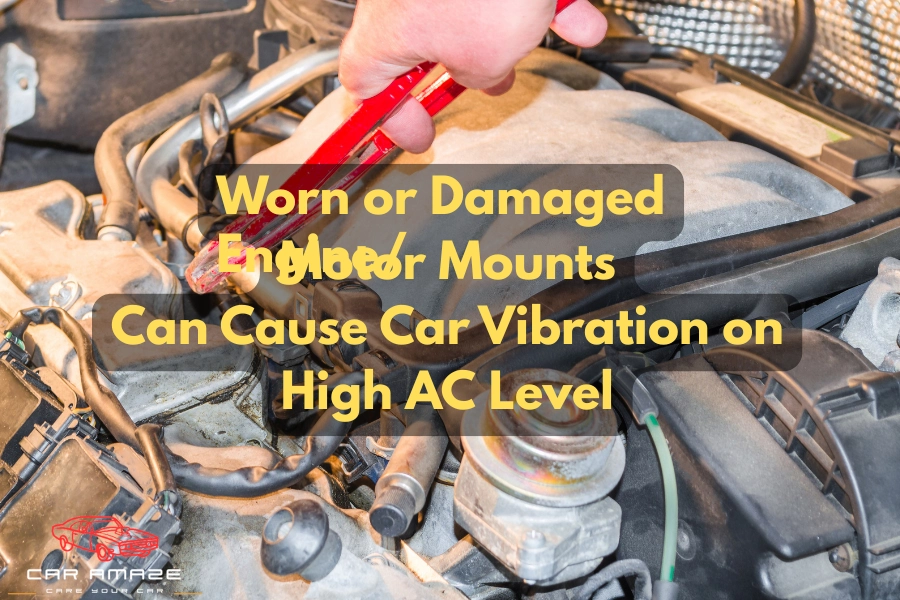
1. Worn or Damaged Engine/Motor Mounts
What They Do:
Engine mounts keep the engine securely in place. Their role is to absorb vibrations so you do not feel them in the cabin.
Why They Cause Vibration:
When mounts are worn, the extra engine load from a full AC makes vibrations worse. Older cars, especially those over 60,000 miles, often vibrate when the air conditioner is on its highest level.
Symptoms:
- Shaking more at idle than while driving
- Engine movement is visible when the hood is open
- Thumping or clunking noise when shifting gears
Fix:
- Replace worn mounts (professional job).
- Regular inspection prevents sudden failures.
2. AC Compressor or Clutch Issues Can Cause Car Vibration on High AC Level
What They Do:
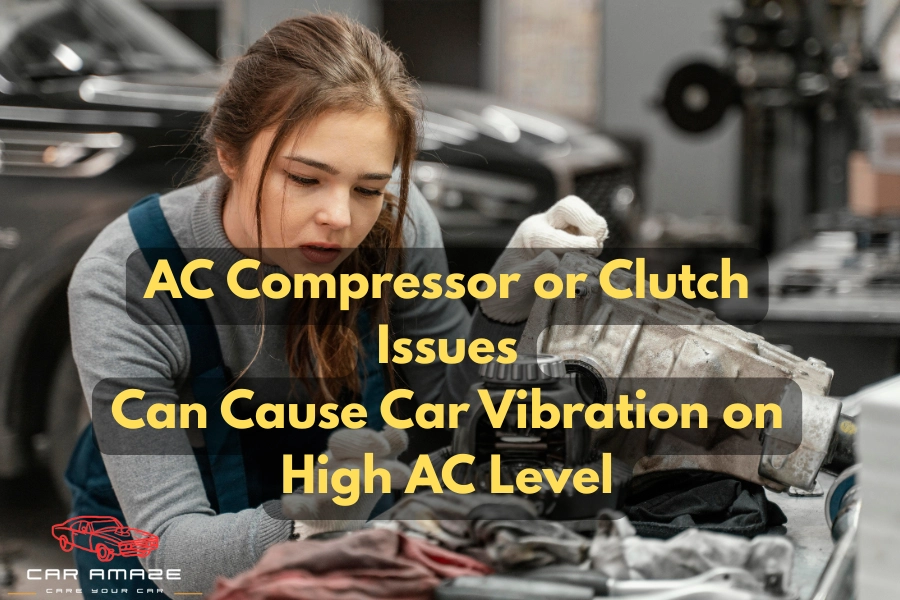
The role of the AC compressor is to pressurize the refrigerant and circulate it to cool your car. In this phase, the clutch engages and disengages the compressor.
Why They Cause Vibration:
In that case, the car vibrates when the air conditioner is on its highest level due to two reasons. These are worn or damaged compressors or clutches that struggle under full AC load. Both of these issues put extra strain on the engine and cause vibration.
Symptoms:
- Vibrations only occur when the AC is on.
- Grinding, squealing, or clicking noises from the compressor
- Weak airflow from vents
Fix:
- Professional inspection
- Repair or replace the compressor/clutch.
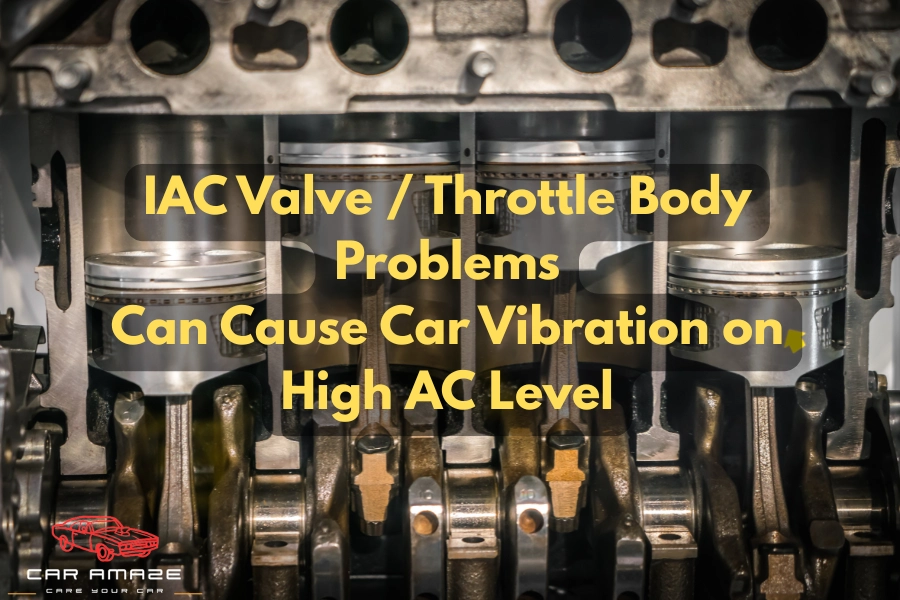
3. Engine Idle Problems (IAC Valve / Throttle Body)
What They Do:
The Idle Air Control (IAC) valve and throttle body manage engine idle speed. It is usually helpful when there is an extra load on the engine at a high AC level.
Why They Cause Vibration:
At max AC speed, the engine needs to idle slightly higher. If the IAC valve or throttle body is dirty, the car idles roughly and shakes.
Symptoms:
- The engine shakes more at idle than while driving.
- RPM fluctuates when AC is engaged.
Fix:
- Clean the throttle body and IAC valve.
- Reset idle speed or consult a mechanic if unstable.
4. Dirty or Clogged Air Filters Cause Car Vibration at High AC Speed
What They Do:
Air filters remove dirt and bad substances from the air and pass clean air into the engine and cabin. Air filters also help to keep the new car smell fresh and stop bad smells like cigarette smoke from entering the car.
Why They Cause Vibration:
Restricted airflow makes the engine work harder, especially under max AC load.
Symptoms:
- Weak airflow from vents
- Rough idling or misfires
- Reduced cooling efficiency
Fix:
- Replace air filters (engine + cabin).
- Check every 12,000–15,000 miles or per the manufacturer’s recommendation.
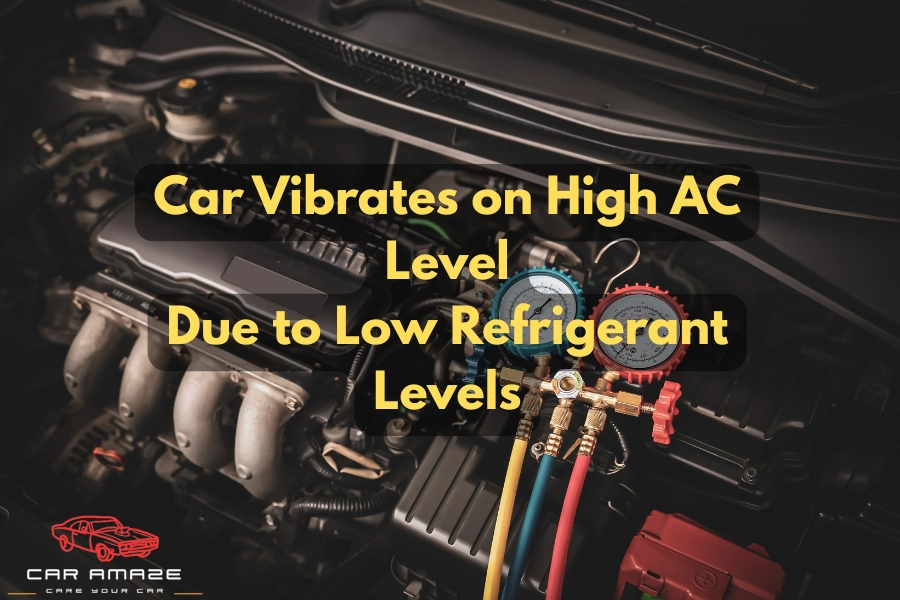
5. Car Vibrates on High AC Level Due to Low Refrigerant Levels
What They Do:
Refrigerant enables the AC system to cool air efficiently.
Why They Cause Vibration:
Low refrigerant forces the compressor to work harder. This extra load on the compressor and engine causes vibration.
Symptoms:
- Weak cooling performance
- The AC cycles on and off frequently.
- Hissing or bubbling noises from the AC lines
Fix:
- Recharge refrigerant with a proper kit.
- Inspect for leaks.
- Professional servicing recommended
6. Spark Plugs & Engine Misfires
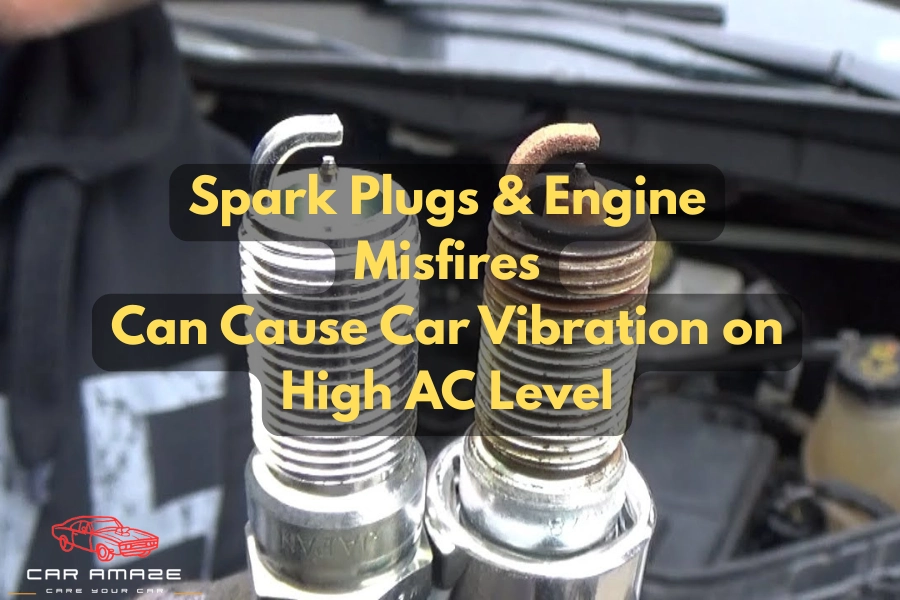
What They Do:
Spark plugs ignite the fuel-air mixture in each cylinder.
Why They Cause Vibration:
Worn or dirty plugs misfire under AC load, causing engine shaking. So, when you set the AC level to the highest, the issue amplifies and causes high vibrations.
Symptoms:
- Rough idle at max AC
- Poor acceleration
- Reduced fuel efficiency
Fix:
- Replace spark plugs on schedule.
- Check ignition coils if the problem persists.
7. Belts, Pulleys, and Serpentine Belt Issues
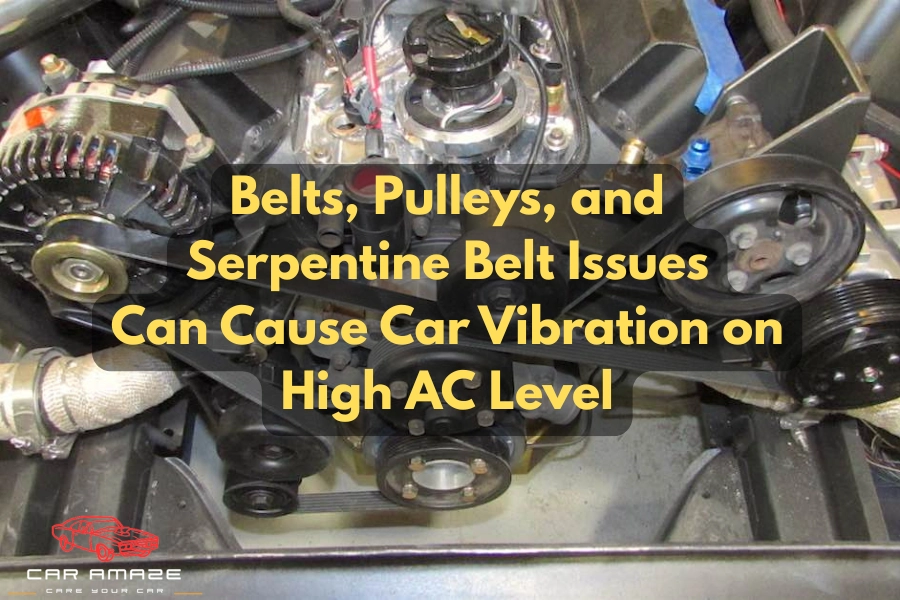
What They Do:
Belts transfer engine power to AC components and other accessories.
Why They Cause Vibration:
A loose, worn, or misaligned belt/pulley can wobble under full AC load and produce noise and vibration in the car.
Symptoms:
- Squealing or chirping noise with the AC on
- Engine vibration
- Visible belt wear (cracks, frays)
Fix:
- Inspect belts and pulleys.
- Replace worn or damaged components.
8. Car Vibrates When Air Conditioner Is on Its Highest Level Due to Vacuum Leaks
What They Do:
The key role of vacuum lines is to regulate the mixture of air and fuel and engine functions.
Why They Cause Vibration:
Leakage in the vacuum disrupts idle and increases engine strain when the air conditioner is on its highest level.
Symptoms:
- Hissing noise under the hood
- Rough idle or stalling
- Stronger vibration with AC running
Fix:
- Inspect vacuum hoses.
- Seal leaks or replace damaged hoses.
9. Car Vibration Due to Fuel Injector Problems
What They Do:
- Fuel injectors deliver the right amount of fuel to each cylinder.
- Why They Cause Vibration:
- If injectors are dirty or failing, the engine may misfire under the extra load of full AC.
Symptoms:
- The engine shakes more at high AC.
- Loss of power
- Poor fuel economy
Fix:
- Clean or replace injectors.
- Professional service recommended
10. AC System Overload & Improper Maintenance
Why It Matters:
A neglected AC system or improper installation can cause imbalance and excessive vibration at maximum AC.
Fix:
- Annual AC inspection
- Ensure proper installation and refrigerant levels.
- Replace worn parts promptly.
Step-by-Step DIY vs Professional Check
| Step | DIY Friendly | Professional Needed | Notes |
| Inspect belts | ✔ | Check for cracks & frays | |
| Replace air filter | ✔ | Engine + cabin filter | |
| Clean throttle body/IAC | ✔ | Use proper cleaner | |
| Check refrigerant | ✔ | AC recharge kits require care | |
| Inspect engine mounts | ✔ | Requires engine support tools | |
| Replace compressor | ✔ | High-cost, expert job | |
| Spark plugs | ✔ | Optional | Easy if engine accessible |
| Fuel injectors | ✔ | Avoid DIY for complex engines |
Is It Safe to Drive When Your Car Vibrates at Max AC?
You can drive if the car vibrates mildly when the air conditioner is on its highest level.
However, avoid prolonged driving if:
- The engine shakes violently.
- The AC compressor emits grinding noises.
- RPM drops suddenly at idle.
Seek professional inspection ASAP for engine safety and comfort.
Preventive Maintenance Tips
With some routine checks, you can avoid car vibration at full AC level. Here are some preventive measures to keep your car in perfect condition:
Routine Inspection: Check belts, mounts, and AC system every 12,000–15,000 miles.
Keep Components Clean: Air filter, throttle body, IAC valve
Check Refrigerant Levels: Refill as needed
Address Engine Misfires Quickly: Avoid long-term strain.
Use High-Quality Replacement Parts: Low-quality components fail faster.
Conclusion
In short, the car vibrates when the air conditioner is on its highest level due to a worn engine component, a compressor issue, an IAC valve problem, a dirty air filter, etc. Understanding the causes, performing easy checks, and knowing when to call a professional will keep you free from such issues.
FAQs
Why does my car shake more at idle than while driving with the AC on?
Engine mounts, idle control issues, or misfires are amplified at idle because the engine has less momentum to smooth vibrations.
Does max AC cause more vibration than normal AC?
Yes. Full AC engages the compressor at maximum power, increasing engine load, which can reveal worn or faulty components.
Can I fix engine mount vibrations myself?
Generally no. Engine mounts require supporting the engine, making this a professional repair.
Is it safe to drive with low AC refrigerant?
Mildly, but low refrigerant causes the compressor to work harder, potentially damaging the engine or AC system over time.
How do I prevent my car from shaking when the AC is on high?
Regular maintenance includes cleaning filters, inspecting belts, monitoring engine mounts, and recharging refrigerant as needed.