What’s a Good APR for a Car Loan? (2026 Complete Guide)

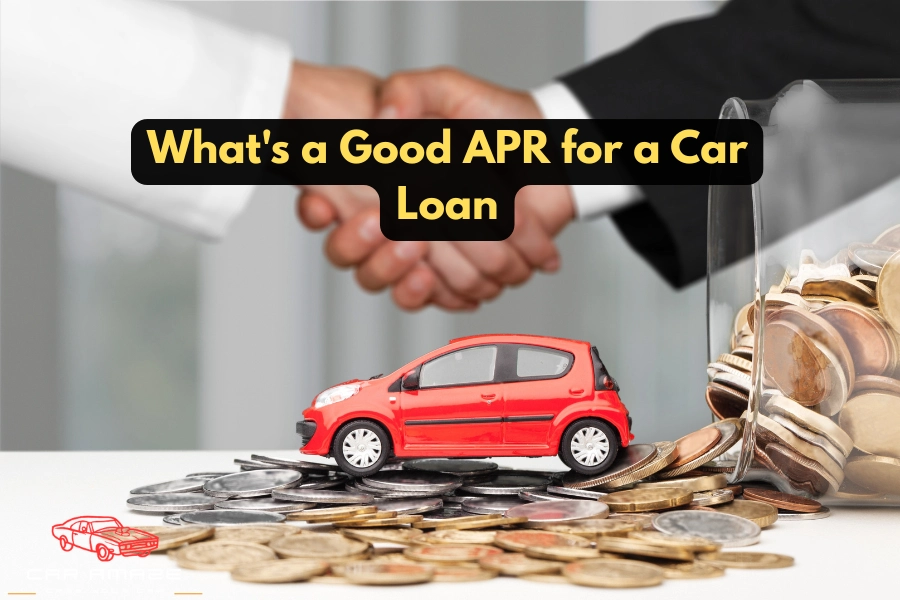
Buying a car at a cash price is straightforward, but when you finance it, many confusions happen. One of the most important numbers you may be worried about is APR. So, the big question becomes: What’s a good APR for a car loan? In this guide, I am breaking it down in a simple way so you know everything about APR before financing a car.
Table of contents
- What Is APR
- What Is a Good APR for A Car
- APR vs Interest Rate
- Key Factors That Influence Your APR
- How to Get the Best APR for Your Car
- APR Myths You Should Ignore
- What APR Should You Aim For
- Conclusion
- FAQs
What Is APR?
APR stands for Annual Percentage Rate. It shows the total yearly cost of borrowing money for your car, not just the interest. APR includes the following things:
- Interest rate
- Loan fees
- Lender costs
This makes APR the true cost of your loan. APR is a very important figure when leasing a car. Even a small APR difference can cost (or save) you thousands of dollars over time.
What is a good APR for a car? Average loan APR in 2026
Before concluding what a good APR for a car is, understand the current market. Generally, the economy, inflation, and Federal Reserve policy highly impact APR. In 2026, rates will remain higher than the ultra-low levels seen in previous years.
Average APR for New Cars (2026)
The average APR for borrowers with good credit is around 6% to 7%. If you are financing a car with bad credit, the APR will be high. Moreover, buyers with excellent credit can get lower APRs of around 3% to 5%.
Average APR for Used Cars (2026)
The good APR for a used car is approximately 7%. Generally, the APR for the used car is high, starting from 7% up to 11%. The APR for used cars is high due to the following reasons:
- Used vehicles carry more lender risk.
- Cars depreciate over time.
- Older vehicles are less valuable collateral.
If you have fair or poor credit, your APR on a used car loan could exceed 12%–15%.
Why Are Rates Higher in 2026?
As you can see, APR rates are somewhat higher in 2026. There are several reasons for this, including:
- Inflation pressures over the past few years
- Federal Reserve interest rate policies
- Overall lending risk in the market
- Bank funding costs
- Consumer credit trends
When the Fed raises benchmark rates, lenders typically raise auto loan rates as well.
Summary
So, what’s a good APR for a car? For instance, in the market where the average APR is 6% to 7%, securing a rate below 5% is considered very good. A “good APR for a car” is always relative to the following:
- Your credit score
- Whether you are buying new or used
- The current economic environment
Knowing the trends in the market helps you set realistic expectations, negotiate confidently, and save money when financing a car.
A good APR depends mostly on your credit score.
APR by Credit Score
| Credit Level | Good APR Range |
| Excellent (750+) | 3% – 5% |
| Good (700–749) | 5% – 8% |
| Fair (650–699) | 8% – 12% |
| Poor (<650) | 12% – 20%+ |
In 2026:
- Anything below 5% for a new car is considered excellent.
- Anything under 8% is generally good for a used car.
APR vs. Interest Rate — What’s the Difference?
Many car buyers think that APR and interest rates are the same thing. They are not the same, and knowing the difference can save you hundreds (or even thousands) of dollars.
Interest Rate
The interest rate is simply the percentage a lender charges you for borrowing money. It doesn’t include the extra loan fees. The interest rate reflects the base borrowing cost, your creditworthiness, and market conditions.
APR?
APR (Annual Percentage Rate) represents the total yearly cost of your loan. It includes the interest rate, loan origination fees, dealer fees (if rolled into financing), and some lender charges. The APR is usually higher than interest rates because it includes fees.
Quick Comparison
| Interest Rate | APR |
| Cost of borrowing only | Total loan cost |
| Does NOT include most fees | Includes fees |
| Usually looks lower | Shows the real cost |
| Easier to advertise | Required by law to be disclosed |
Bottom line: The APR clearly shows how much you will be paying each year to finance your car. Lenders usually disclose it so that car borrowers can compare loan offers fairly.
7 Key Factors That Influence Your APR

The APR for a car is not randomly calculated. Several factors affect the final calculation of APR for your car. Here are these:
1. Credit Score Impact on APR
The biggest factor that impacts the APR is the credit score. A credit score usually goes down due to a car repossession in one’s history, and some other factors as well. If the credit score is bad, the APR will be high.
The good thing is you can fix the credit after a car repossession and lease the new car on a good APR.
2. New vs. Used Car
New cars get a better APR because of higher resale value and lower risk. In contrast, used cars get a higher APR due to higher risk and lower resale value.
3. Loan Term Impact on Car APR
As a general rule, with a short-term loan, you can get a lower APR for a car.
4. Down Payment
The down payment also impacts the average APR. If you pay a larger down payment, you get a good APR for a car. This is because the more upfront money there is, the less risk there will be for the lender.
5. Impact of Type of Lender on APR
The type of lender also plays a key role in finalizing the APR. The credit union offers lower APR and better terms. In comparison, dealers might offer a higher APR than usual.
6. Economic Conditions
Interest rates also rise or fall based on inflation, policy changes, and lending markets. Therefore, before leasing a car, be aware of the economic conditions to make realistic expectations about APR.
7. Your Financial History
Finally, the financial history of the borrower highly impacts the APR. Lenders always check income stability, debt-to-income ratio, and employment history before delivering a car. It also impacts the final agreed-upon APR.
How to Get the Best APR for Your Car
If you want to get as good APR as possible for your car, follow these tips:
- Check your credit score first and fix errors before applying. If you have a car repossessed in your history, get reliable financial assistance for that.
- Shop around and compare the APRs of different banks, credit unions, and online lenders.
- Get pre-approved for a loan before visiting the dealership. It may give you more negotiating power and help you compare offers.
- If your credit is bad due to repossession, wait until it gets better. A repo stays on your credit for some time during which you can’t get a good APR.
- Choose shorter loan terms to get a lower APR and less interest paid.
- Consider credit unions because they often offer better financing deals than traditional banks or dealerships.
APR Myths You Should Ignore
There are some myths about APR for a car that confuse people. Look at these.
- Myth 1: Dealer Financing Is Always Best
It is not true because banks or credit unions may offer a lower APR.
- Myth 2: Lowest APR = Cheapest Loan
Sometimes rebates replace low APR offers. Therefore, always compare total loan costs.
APR Impact: Real Cost Example
Let’s compare a $30,000 loan for 60 months.
| APR | Monthly Payment | Total Interest |
| 4% | ~$552 | ~$3,100 |
| 7% | ~$594 | ~$5,640 |
| 12% | ~$667 | ~$10,000 |
So what is the difference between 4% and 12%? Well, you can see it is nearly $7,000 extra paid. That’s why good APR for a car matters.
What APR Should You Aim For?
In simple terms, here is the summary of a good APR for a car:
- Under 5% → Excellent
- 5%–8% → Good
- 8%–12% → Average
- Above 12% → Expensive
The best APR is one that fits your credit profile, financial comfort, and loan goals.
Conclusion
A good APR for a car loan is not only about finding the lowest number. It is about choosing a rate that matches your credit profile, fits comfortably within your budget, and helps reduce the total cost of the loan over time. When you understand how APR affects your monthly payments and the overall amount you will pay, you can make a smarter financial decision. Always compare offers from different lenders before committing to a loan.
FAQs
Is 7% APR good for a car loan?
Yes, in 2026, 7% is considered reasonable for good credit.
What APR should I ask for at a dealership?
Aim for anything below the market average for your credit level. Try to get the APR below 8% when financing a car.
Should I refinance if my APR is high?
Yes. Refinancing can reduce monthly payments and total interest.
Can I negotiate APR?
Yes, negotiating with your lender helps you get a lower APR, especially with pre-approval.
Do new cars always have lower APR?
Yes, new cars always have a lower APR than used cars. It is because new cars have low risks and high resale value.
Does a bigger down payment help?
Absolutely yes. The bigger down payment helps you achieve a good APR for both new and used cars.
Is 0% APR real?
You are rarely able to get 0% APR, and it is possible only if you have excellent credit, which may replace rebates.