How Much Are Junk Cars Worth? Full Value Guide

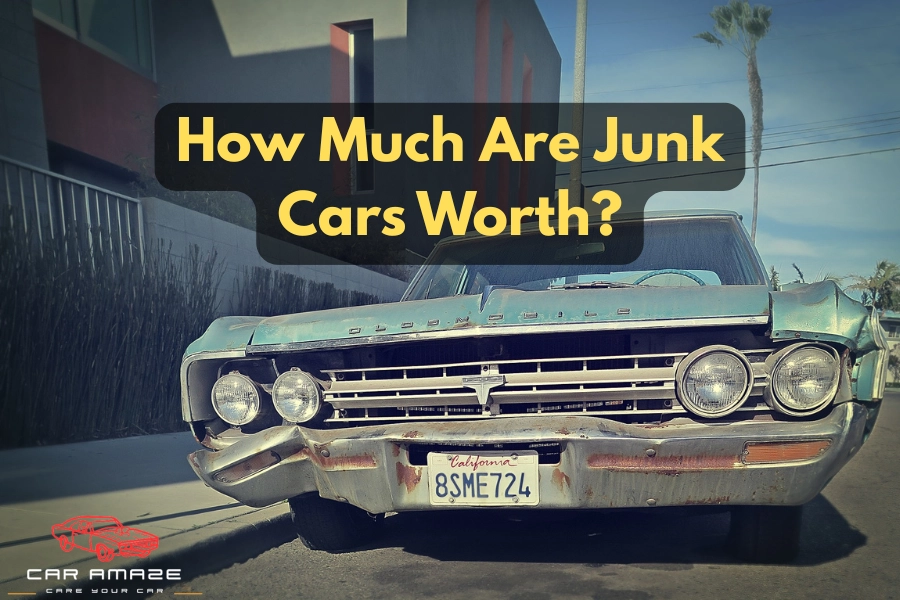
You know your old car isn’t worth much. But “not worth much” and “what it’s actually worth” are two very different numbers. Most sellers leave serious money on the table because they accept the first offer they get without knowing how junk car pricing actually works.
Junkyards make a profit by buying low and selling the metal and parts high. They count on you not shopping around. This guide breaks down exactly what your junk car is worth, what drives that number up or down, and how to walk into any sale knowing your real floor price.
How Much Are Junk Cars Worth? (Quick Answer) 📄
Most junk cars sell for $100 to $500 in pure scrap value. But that number jumps significantly once you factor in the vehicle’s weight, salvageable parts, and the catalytic converter (the single most overlooked value driver in any junk car).
Here’s a fast reference by vehicle class:
| Vehicle Type | Estimated Junk Value |
|---|---|
| Compact car | $100–$300 |
| Mid-size sedan | $150–$400 |
| Full-size sedan | $200–$500 |
| SUV / crossover | $250–$700 |
| Pickup truck | $300–$800 |
| Minivan | $200–$500 |
| Classic / collectible car | $500–$5,000+ |
These are starting points, not final offers. The sections below explain every factor that moves your number higher or lower.
Table of contents
- What Determines a Junk Car’s Value?
- The Hidden Value in Your Junk Car – Catalytic Converter
- Junk Car Value by Vehicle Type
- Parts vs. Whole Car – Which Gets You More Money?
- Where to Sell Your Junk Car – And What Each Option Pays
- How to Get the Most Money for Your Junk Car
- Can You Sell a Junk Car Without a Title?
- Conclusion
- FAQs
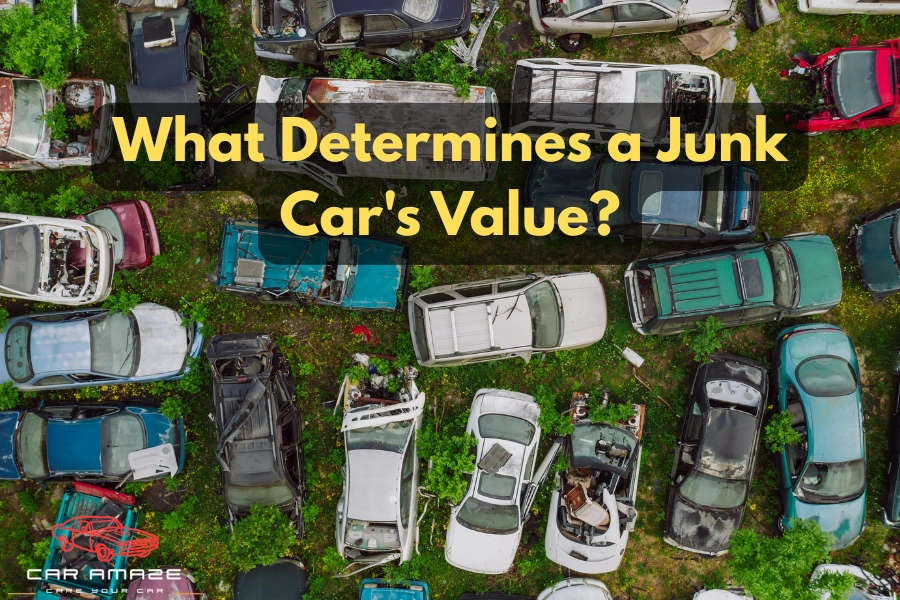
What Determines a Junk Car’s Value?
A junk car’s value is not one thing. The actual value is a combination of scrap metal value, salvageable part value, and current market conditions. Most buyers only quote you on the first two. Understanding all three is how you negotiate from a position of knowledge.
1. Vehicle Weight and Metal Content
Scrap yards price junk cars primarily by weight. Steel makes up roughly 65% of an average car or truck, forming the frame, chassis, suspension, and body panels. The heavier the car, the more raw metal it contains, and the higher the base offer.
Current scrap metal rates for cars typically range from about $120 to $200 per ton, depending on location. Here’s how that math plays out in practice:
- A compact car weighing 2,600 lbs (1.3 tons) at $150/ton = ~$195 in base scrap value
- A mid-size sedan at 3,350 lbs (1.675 tons) at $150/ton = ~$250 in base scrap value
- A pickup truck at 5,000 lbs (2.5 tons) at $150/ton = ~$375 in base scrap value
That’s the floor. Salvageable parts, market pricing, and condition push the final number well above these baseline figures.
2. Scrap Metal Market Prices
Steel, aluminum, and copper prices change daily based on global supply and demand. When manufacturing activity increases worldwide, particularly in construction and automotive production, demand for raw steel rises, and scrap yards pay more for vehicles.
Scrap metal prices tend to rise in the spring and summer months when construction and manufacturing pick up. That’s a real, actionable timing advantage most sellers never use. If your situation allows it, waiting until March through July to sell can result in a noticeably better offer than selling in December or January.
3. Make, Model, and Year
Not all junk cars are equal at the scale. Popular models with millions of units on the road generate constant demand for used parts. A Honda Civic, Ford F-150, GMC, or Toyota Camry junker attracts more interest from buyers because mechanics and DIY owners constantly need parts for those vehicles.
- Mid-age vehicles from 2008 to 2016 still have parts in demand, raising their value.
- Newer vehicles from 2018 onward are usually worth more because their engines, transmissions, and electronics can be resold or reused.
- Older vehicles from the 1990s and early 2000s are valued closer to pure scrap weight since their parts have limited resale demand.
- Classic or rare vehicles operate under entirely different rules. A 1969 Chevrolet Camaro in rough condition can command collector interest that pushes value into the thousands, far beyond any scrap calculation.
4. Vehicle Condition
Condition affects your offer more than almost any other single factor.
Running vs. non-running
A car that starts and drives typically fetches $200–$500 more than an identical non-running vehicle. A running car gives the buyer more options. For instance, they can resell it, part it out more easily, or drive it to the yard without towing costs.
Complete vs. stripped
Junkyards pay a premium for complete vehicles. A complete car means the engine, transmission, all four wheels and tires, catalytic converter, doors, and battery are all present and accounted for. Strip any of those components before selling, and most buyers will classify the vehicle as “incomplete”. Therefore, drop the offer accordingly.
If your junk car has significant damage, our guide on how to tell if a car is totaled covers how buyers assess structural damage and what that means for your payout.
5. Title Status
Your title is paperwork, but it’s worth money. Selling a junk car with a clean title is the cleanest, fastest transaction, and gets you the highest offer.
Selling without a title typically reduces your offer by $50–$200, depending on the buyer and your state’s regulations. Some states allow sale with registration plus a valid ID for vehicles over a certain age, while others require a bonded title process. Call your state DMV or check their website before assuming you can’t sell without one.
If you’ve lost your title, apply for a duplicate before selling. The fee runs $10–$25 in most states. That small cost almost always pays for itself with a higher offer.
6. Location
Your zip code affects your junk car’s value more than most people realize. Scrap yards near major metal recycling facilities and coastal ports pay slightly more because their transportation costs to process and sell the metal are lower. Areas with heavy competition between buyers, such as multiple junkyards, cash-for-cars services, and salvage yards competing for your vehicle, also produce better offers.
Rural areas with fewer buyers and greater transportation distances typically offer less. That’s exactly why getting multiple quotes is non-negotiable. The price differences of $100–$300 for the exact same vehicle are common between buyers in the same region.
The Hidden Value in Your Junk Car – Catalytic Converter
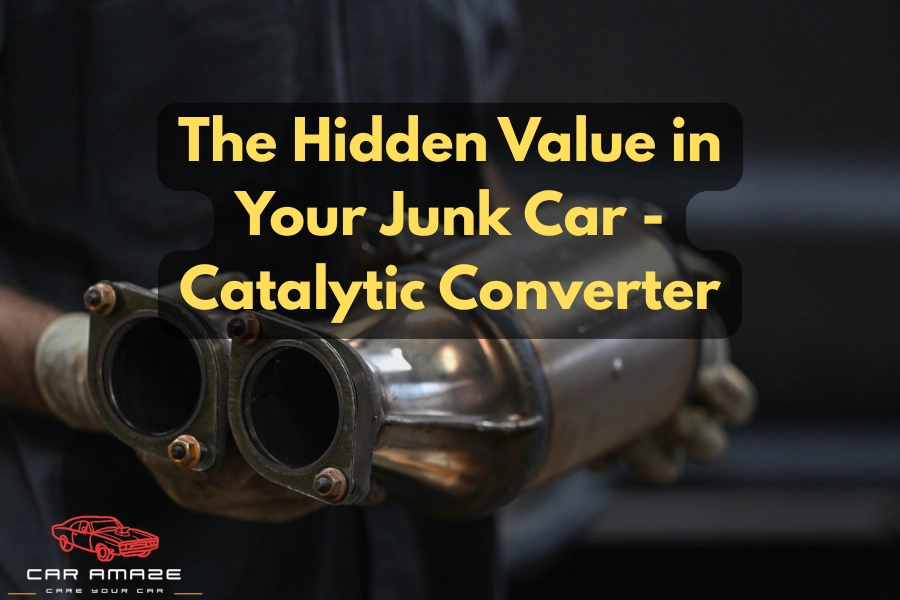
Most sellers miss this and lose money.
Your catalytic converter contains platinum, palladium, and rhodium. Scrap value typically ranges from $75 to $1,500, depending on metal prices and the vehicle.
In some cases, the converter is worth more than the rest of the car combined.
- Hybrids (e.g., Toyota Prius): $400–$1,000+
- Trucks & foreign models: often higher value
- OEM converters: worth more than aftermarket (higher metal content)
Important: Don’t remove the converter before selling. Buyers may label the car “incomplete” and cut your offer by $100–$400, costing you more overall.
Bottom line: Know your converter’s value, especially for trucks, SUVs, and Toyota hybrids, so you can negotiate with confidence.
Junk Car Value by Vehicle Type
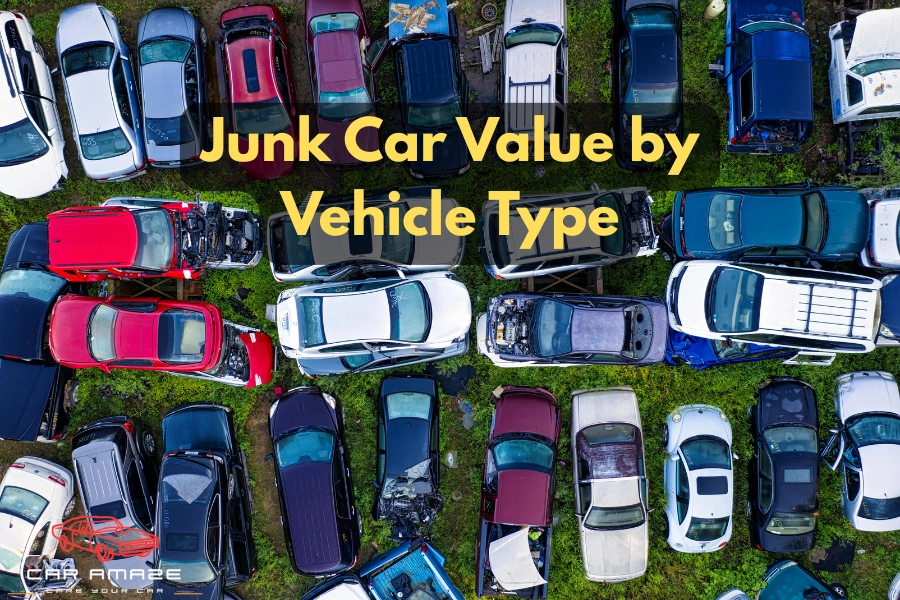
On average, compact cars weigh around 2,600 pounds, sedans approximately 3,351 pounds, SUVs range from 3,250 to 5,700 pounds, and trucks from 4,000 to 7,000 pounds. That weight range directly translates to scrap value. Here’s the full breakdown:
| Vehicle Type | Average Weight | Estimated Junk Value |
| Compact car | 2,500–3,000 lbs | $100–$300 |
| Mid-size sedan | 3,000–3,500 lbs | $150–$400 |
| Full-size sedan | 3,500–4,200 lbs | $200–$500 |
| Compact SUV | 3,100–3,800 lbs | $200–$500 |
| Full-size SUV | 4,500–5,700 lbs | $350–$700 |
| Pickup truck | 4,000–6,000 lbs | $300–$800 |
| Minivan | 3,500–4,500 lbs | $200–$500 |
| Classic / collectible | Varies | $500–$5,000+ |
These ranges assume a complete vehicle with all major components intact and scrap metal prices in the current $120–$200 per ton range. A missing engine, stripped interior, or absent catalytic converter pulls the offer toward the lower end or below it.
Parts vs. Whole Car – Which Gets You More Money?
Parting out a junk car can earn you two to three times the scrap value, but only if the conditions are right.
When parting out makes sense:
- Your vehicle is a popular model with high parts demand (Honda, Toyota, Ford, Chevy)
- Mechanical parts are still functional such as engine, transmission, alternator, starter
- You have the time, tools, storage space, and basic mechanical knowledge
- You’re willing to list parts online and deal with multiple buyers
When selling whole makes more sense:
- The car is heavily damaged or rusted beyond useful parts
- You need cash quickly
- The vehicle is too old or obscure to attract parts buyers
- You don’t have the space or tools to safely disassemble it
The most valuable individual parts to sell separately include the engine, transmission, catalytic converter, alternator, intact body panels and doors, infotainment system, and wheels with good tires. If any of these components are in sellable condition, a private listing on Facebook Marketplace or Craigslist can return significantly more than a junkyard offer.
Not sure whether your car crosses the line into true Junker territory? Our guide on junker car types breaks down exactly what qualifies a vehicle as junk and what buyers look for.
Where to Sell Your Junk Car – And What Each Option Pays
| Selling Method | Typical Payout | Speed | Effort |
| Local junkyard / salvage yard | Lowest | Same day | Low |
| Cash-for-cars service | Low–moderate | 1–3 days | Very low |
| Private sale (online listing) | Highest | Days to weeks | High |
| Dealer trade-in | Lowest | Same day | Very low |
| Donation | $0 cash (tax deduction) | Flexible | Low |
Local junkyard or salvage yard
The fastest option and the simplest transaction. Most established yards offer free towing. The trade-off is that they make their margin by buying low, so offers are typically at the lower end of the range. Always call at least two or three local yards before committing.
Cash-for-cars services
These services offer slightly more than a direct junkyard in many cases because they compete for volume. They handle all the paperwork, provide free towing, and pay on pickup. Shop at least two services and compare quotes side-by-side.
Private sale
The highest potential return, but it requires effort. Listing on Facebook Marketplace or Craigslist attracts buyers looking for project cars, specific parts, or cheap runners. If your car still drives or has valuable components, a private buyer often pays more than any commercial buyer. Expect more negotiation and more time.
Dealer trade-in
The worst option for a junk car. Dealers are not in the business of processing scrap metal or salvage parts; they’ll give you the lowest possible number and flip the car to a junkyard themselves. Only consider this if you’re trading in alongside a new purchase and the convenience justifies the lower price. Our guide on how to trade in a car with negative equity has more on maximizing trade-in situations.
Donation
If you itemize deductions, donating your junk car to a qualified charity can produce a tax deduction equal to the vehicle’s fair market value. For high-tax-bracket sellers, this can actually return more net value than a low cash offer. The IRS governs vehicle donation deductions; check IRS Publication 526 for the current rules before assuming the deduction amount.
How to Get the Most Money for Your Junk Car
Seven steps that consistently produce better offers:
- Get at least three quotes. Price differences of $100–$300 for the same vehicle between buyers in the same city are common. Never accept the first offer without checking two others.
- Keep the car complete. Don’t remove parts, not even the battery or tires, before getting quotes. A complete car is worth more than the sum of parts sold separately to a junkyard.
- Have your title ready. A clean title removes friction from the transaction and gives you negotiating leverage. If you’ve lost it, apply for a duplicate before calling buyers.
- Time your sale for spring or summer. Scrap metal prices trend upward between March and July. Selling during peak construction season typically produces better offers than selling in winter.
- Know your catalytic converter’s value. Look up your vehicle’s make and model alongside “catalytic converter scrap value” before negotiating. For trucks, SUVs, and hybrids, this knowledge alone can justify pushing back on low offers.
- Confirm free towing is included. Any reputable junk car buyer provides free towing. If a buyer deducts $75–$200 for towing from your offer, that’s not standard; move on to the next buyer.
- Be accurate about the condition. Giving buyers precise information about your car’s condition, what runs, what doesn’t, what’s present, and what’s missing, produces more accurate quotes and avoids lowball re-negotiations when the buyer arrives.
Can You Sell a Junk Car Without a Title?
Yes, in many states, especially for older vehicles. Most states allow title-free sales for vehicles over 10–15 years old, using a valid ID and current registration as proof of ownership. Requirements vary significantly by state, so check with your local DMV before assuming either way.
Expect a reduced offer of $50–$200 less than a titled vehicle. Buyers absorb additional administrative risk when no title is present, and they price that into the offer.
If selling without a title is your only option, target cash-for-cars services over direct junkyards; they handle no-title transactions more frequently and often have streamlined processes for them.
For a full breakdown of what paperwork you’ll need in any vehicle transaction, see our guide on what documents you need to buy a car; many of the same ownership documents apply when selling.
Conclusion
Junk car value comes down to weight, condition, what’s still intact, and who you sell to. Most sellers take the first offer they get, and that’s exactly why junk car buyers don’t volunteer their best price upfront.
Get three quotes. Keep the car complete. Know what your catalytic converter is worth before you pick up the phone. Those three habits alone can put an extra $200–$400 in your pocket on a sale most people treat as an afterthought.
Your junker has more value than you think. Make sure you collect all of it.
FAQs
How much are junk cars worth on average?
Most junk cars sell for $150–$500, depending on weight, condition, and current scrap metal prices. Trucks and full-size SUVs typically fetch more due to higher metal content. Vehicles with intact catalytic converters, engines, and transmissions push toward the higher end.
What is the most valuable part of a junk car?
The catalytic converter is almost always the single most valuable component. Depending on the vehicle, it’s worth $75–$1,500 at scrap, more than all other components combined in many cases.
Do junkyards pay more for running cars?
Yes. A running vehicle typically commands $200–$500 more than an identical non-running car. A drivable car gives the buyer more options and eliminates the towing cost.
How do I find out what my junk car is worth?
Get quotes from at least three sources: a local junkyard, a cash-for-cars service, and an online buyer. Compare all three before deciding. Knowing your catalytic converter’s approximate value before those calls strengthens your negotiating position.
Can I sell a junk car without a title?
In many states, yes, particularly for vehicles over 10–15 years old. Expect a $50–$200 reduction in offer compared to a titled vehicle. Contact your state DMV to confirm requirements before selling.
Does a missing catalytic converter lower my junk car’s value?
Significantly. Most buyers classify a car without its catalytic converter as an incomplete vehicle, reducing the offer by $100–$400. Never remove the converter before getting a quote; sell the car whole.