How Long Do Brakes Last on a Car? Full Guide

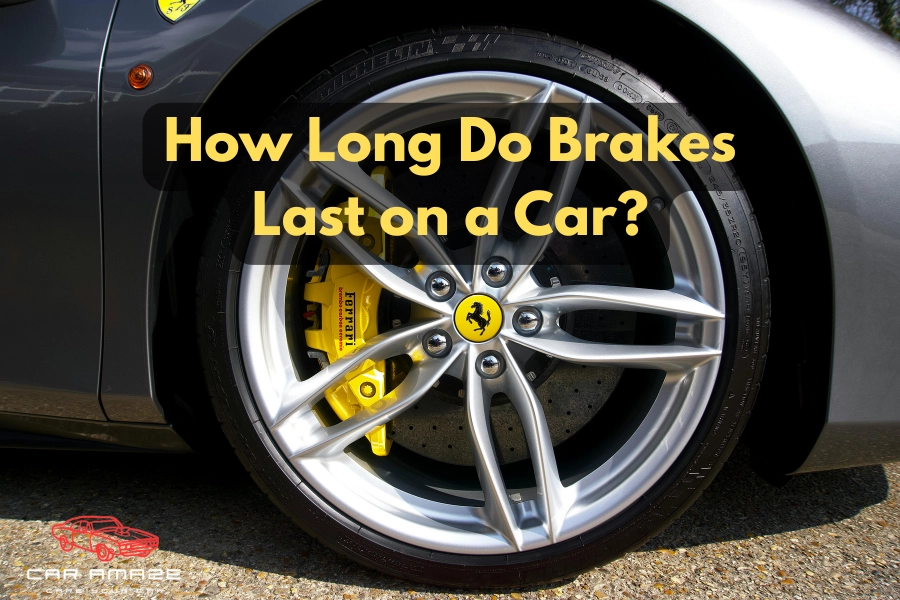
Your brakes are the single most important safety system on your car. How long do brakes last on a car? Most drivers have no idea whether their pads have 500 miles left or 15,000. Ignoring that uncertainty risks an accident. It can also turn a $150 pad replacement into a $500 rotor job the moment the metal backing grinds through. This guide tells you exactly how long every brake component lasts, what destroys them faster, and how to know when replacement is overdue.
How Long Do Brakes Last? (The Quick Answer) 📄
Brakes are not one part. The brake system in cars consists of brake pads, rotors, calipers, and brake fluid—all wear at different rates. Most drivers only think about pads. That’s the mistake that leads to expensive, avoidable rotor damage.
Here’s the full picture at a glance:
| Brake Component | Typical Lifespan | Replacement Trigger |
|---|---|---|
| Brake pads | 25,000–65,000 miles | Below 2–3mm thickness |
| Brake rotors | 50,000–70,000 miles | Worn below minimum thickness, warped, or deeply scored |
| Brake calipers | 75,000–100,000 miles | Seized, leaking, or applying uneven pressure |
| Brake fluid | Every 2 years / ~30,000 miles | Moisture-contaminated or dark in color |
Every number in that table depends on how you drive, where you drive, and what your car weighs. The sections below break each one down in full.
Table of contents
- How Long Do Brake Pads Last on a Car?
- How Long Do Brake Rotors Last?
- How Long Do Brake Calipers and Brake Fluid Last?
- How Long Do Brakes Last on a New Car?
- How Long Do Brakes Last by Vehicle Type?
- What Kills Brakes Faster? The 6 Biggest Factors
- How Long Do Brakes Last on a Car? Front vs. Rear Brakes
- Warning Signs Your Brakes Are Worn Out
- How to Make Your Brakes Last Longer
- Conclusion
- FAQs
How Long Do Brake Pads Last on a Car?
Brake pads are the component that wears out first. For most drivers, they last between 25,000 and 65,000 miles, with an average replacement interval of around 40,000 miles.
According to the Federal Highway Administration, the average American driver covers approximately 13,500–14,000 miles per year. At that rate, most drivers replace their brake pads every 2 to 4 years. The city drivers often hit that interval faster, and highway-heavy drivers may go longer.
A new brake pad starts at roughly 10–12mm thick. Once it wears down to 2–3mm, replacement is due. Most modern pads include a metal wear indicator tab that produces a high-pitched squeal when that threshold is reached. If you hear grinding instead of squealing, you’ve waited too long. The brake pad material is gone and metal is contacting your rotor.
Brake Pad Lifespan by Type
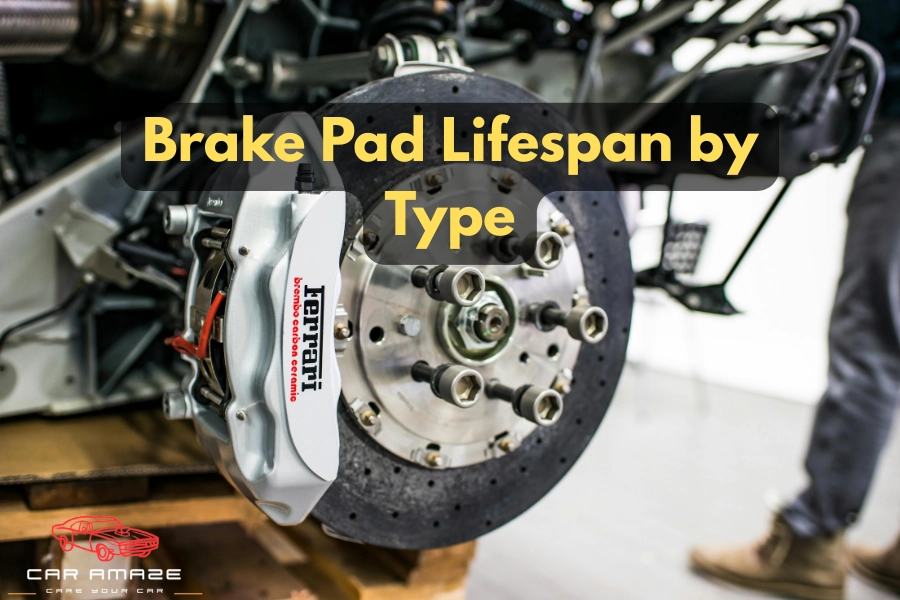
Not all pads wear at the same rate. The material makes a significant difference:
| Pad Type | Lifespan | Best For | Trade-off |
| Organic (non-metallic) | 20,000–30,000 miles | Light daily driving | Wears fastest, least heat-resistant |
| Semi-metallic | 30,000–50,000 miles | Most vehicles, mixed driving | More rotor wear, slightly noisier |
| Ceramic | 50,000–70,000 miles | Everyday driving, luxury vehicles | Highest cost upfront |
- Organic brake pads are the quietest and cheapest, but they wear down the fastest.
- Ceramic brake pads cost more upfront but save money over time because they’re gentler on rotors and last significantly longer.
- Semi-metallic pads sit in the middle and handle heat better than organic options, making them a solid choice for drivers in hilly areas or those who tow occasionally.
Check your owner’s manual for the manufacturer’s recommended pad type before switching materials.
How Long Do Brake Rotors Last?
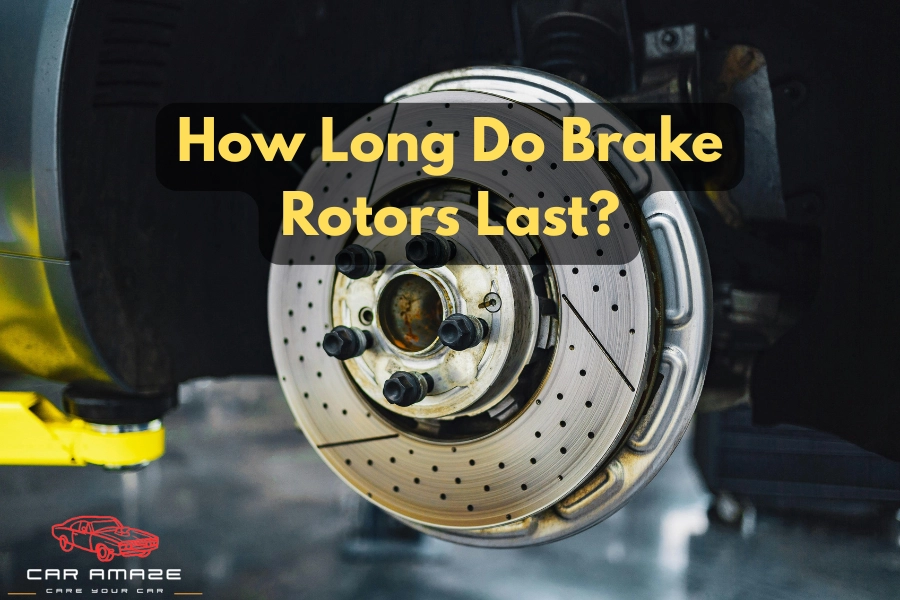
Rotors are the steel discs your brake pads clamp against to slow the car. Because they’re denser and larger than pads, they wear more slowly. They last around 50,000 to 70,000 miles, or roughly the lifespan of two sets of brake pads.
That said, rotor lifespan drops sharply when you run pads too thin. Once the pad material wears through, the metal backing plate grinds directly into the rotor surface. That kind of damage can destroy a rotor in a matter of days.
Resurfacing vs. replacement
If a rotor has light surface grooves or minor warping, a technician can machine (resurface) it. The grinding makes it smooth again at a lower cost than full replacement. However, every rotor has a minimum thickness specification set by the manufacturer. If resurfacing would bring the rotor below that threshold, replacement is the only safe option.
Many modern rotors are thinner than older designs, which means there’s less material available to resurface before hitting the discard limit.
The best way is to replace rotors in axle pairs i.e both fronts together, or both rears together. Replacing only one creates uneven braking force, which can cause your car to pull to one side under hard braking.
How Long Do Brake Calipers and Brake Fluid Last?
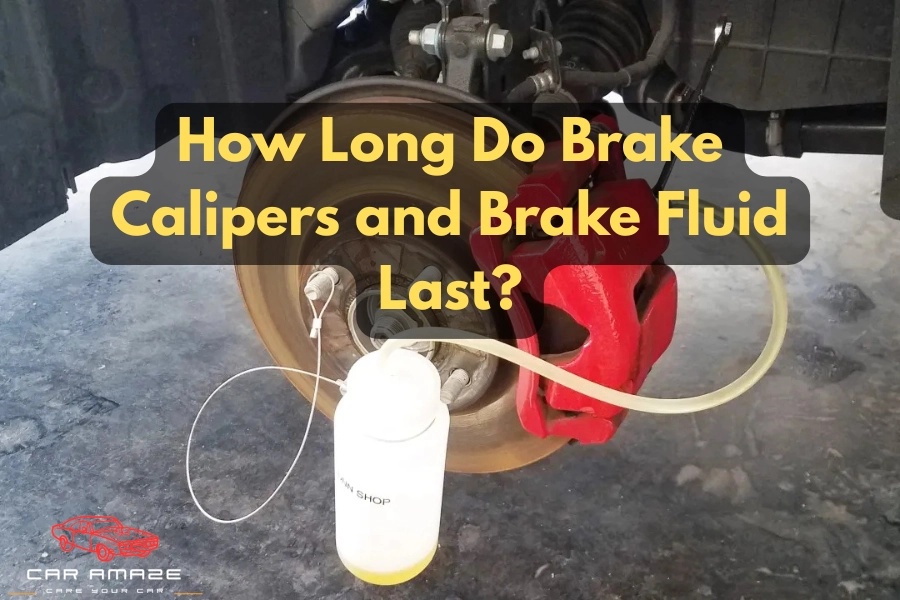
Here is the overview of lifespan of a brake calipers and brake fluid:
Brake Calipers
Calipers are the hydraulic clamps that squeeze the brake pads against the rotor when you press the pedal. They’re built to last typically 75,000 to 100,000 miles under normal conditions. When brake calipers fail, the damage is expensive.
A seized caliper keeps constant pressure on the rotor even when you’re not braking. That generates continuous friction and heat, destroying both the pad and rotor rapidly. Signs of a failing caliper include:
- The car pulling to one side
- One wheel feeling much hotter than the others after driving
- A dragging sensation when you accelerate.
Servicing brake fluid regularly (see below) is the most effective way to extend caliper life. Contaminated fluid corrodes the caliper’s internal seals from the inside out.
Brake Fluid
Brake fluid is the most overlooked component in the system. It should be replaced every 2 years or approximately 30,000 miles, whichever comes first.
Brake fluid is hygroscopic which absorbs moisture from the air over time. As water content increases, the fluid’s boiling point drops. Under hard braking, overheated fluid can vaporize, creating air bubbles in the brake lines and causing a soft, spongy pedal. That’s called brake fade, and it’s dangerous.
Contaminated fluid also corrodes caliper pistons and brake line fittings from within. A $75–$150 fluid flush every two years is cheap insurance against $400–$800 caliper replacements.
How Long Do Brakes Last on a New Car?
Factory brake pads on a new car typically last 30,000 to 50,000 miles, depending on the vehicle’s OEM pad specification and how the car is driven from day one.
One important thing to note is that new brakes need a break-in period. This process is called bedding which involves gradually transferring a thin, even layer of pad material onto the rotor surface. It typically takes the first 300–500 miles of normal driving to complete.
Skipping the bedding process or doing hard stops from highway speed in the first few hundred miles can cause uneven pad deposits on the rotor. That leads to vibration during braking and reduces pad lifespan from the very start.
For a new car, schedule your first brake inspection at 15,000 miles, regardless of how the brakes feel. By that point a technician can accurately measure pad thickness and give you a realistic timeline for first replacement.
How Long Do Brakes Last by Vehicle Type?
The 25,000–65,000 mile range is technically accurate but practically useless if you drive a heavy truck or a hybrid. Vehicle weight, drivetrain, and typical use patterns dramatically change the real-world answer. This table describes how long brakes last on a car based on each car type:
| Vehicle Type | Brake Pad Lifespan | Key Factor |
| Compact car / sedan | 40,000–60,000 miles | Lighter weight, less braking force required |
| SUV / crossover | 30,000–50,000 miles | Heavier; weight shifts forward hard under braking |
| Pickup truck (non-towing) | 30,000–45,000 miles | High vehicle weight stresses pads and rotors |
| Pickup truck (towing/hauling) | 20,000–35,000 miles | Load multiplies braking force dramatically |
| Sports car | 20,000–40,000 miles | High-speed braking; aggressive driving habits |
| Hybrid / EV | 60,000–100,000+ miles | Regenerative braking reduces physical pad use |
The hybrid and EV figure deserves attention. In a hybrid or electric vehicle, the electric motor acts as a generator when decelerating, converting kinetic energy back into stored power. This process slows the car without engaging the physical brakes at all in many situations. The result: physical brake pads on a hybrid or EV can last two to three times longer than those on a comparable gas-powered vehicle. This is one of the most compelling and least-discussed cost advantages of hybrid ownership.
What Kills Brakes Faster? The 6 Biggest Factors
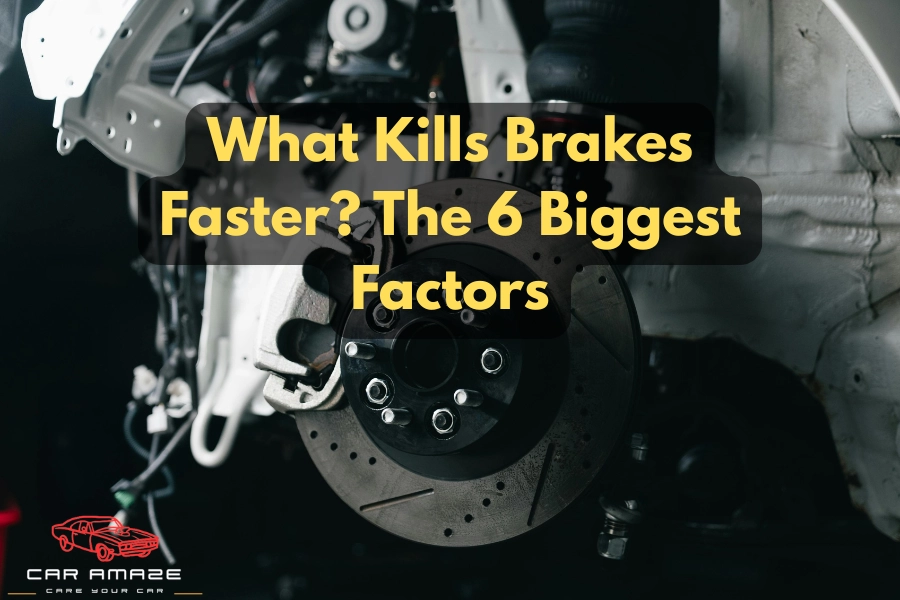
Now you understand how long brakes last on a car. Do you know that there are some factors that kill brakes faster and reduce lifespan? Have a look at these:
1. Aggressive Braking Habits
Hard, late braking from high speeds generates extreme heat and strips pad material rapidly. Smooth, gradual deceleration spreads the heat load and extends pad life significantly. Even reducing your pre-stop speed by 5 mph before applying the brakes makes a measurable difference in long-term wear.
2. City Driving vs. Highway Driving
Stop-and-go city traffic is the single harshest environment for brakes. Frequent braking from moderate speeds wears pads fast. City drivers can expect the lower end of the lifespan range like 15,000 to 30,000 miles in heavy urban traffic. Highway drivers, who rarely use their brakes at all, can push well past 70,000 miles on a single set.
If your commute is primarily city driving and you notice your car shaking while driving, that vibration through the wheel or pedal often points to brake wear. Read our guide on car shaking while driving to understand when brakes vs. other systems are the cause.
3. Hills and Mountain Terrain
Downhill braking is uniquely punishing. Holding speed on a long descent forces continuous pad-to-rotor contact, generating heat that builds faster than it dissipates. Drivers who frequently descend steep grades should budget for brake replacement at the lower end of the mileage range and consider downshifting to reduce reliance on the brakes alone.
4. Vehicle Weight and Towing
Physics is simple: stopping a heavier object requires more force. Every pound of cargo, passengers, or trailer load adds braking demand. If you regularly tow a trailer or haul heavy loads, treat brake inspections as a higher-priority maintenance item and expect replacement intervals that are 20–30% shorter than the standard range.
5. Brake Pad Material
As covered earlier, organic pads wear out fastest. If you’re replacing pads frequently and still using the cheapest option, switching to ceramic pads may save money over a longer ownership period, even though the upfront cost is higher.
6. Delaying Inspections and Replacements
This is the most expensive mistake. Running pads past their wear limit leads to pads replacement as well as rotors. At $100–$300 per axle for pads alone versus $250–$500 per axle for pads-plus-rotors, neglect doubles the repair bill. Staying on top of your tire rotation schedule is one of the easiest ways to catch brake wear early, since most shops check pad thickness during every rotation.
How Long Do Brakes Last on a Car? Front vs. Rear Brakes
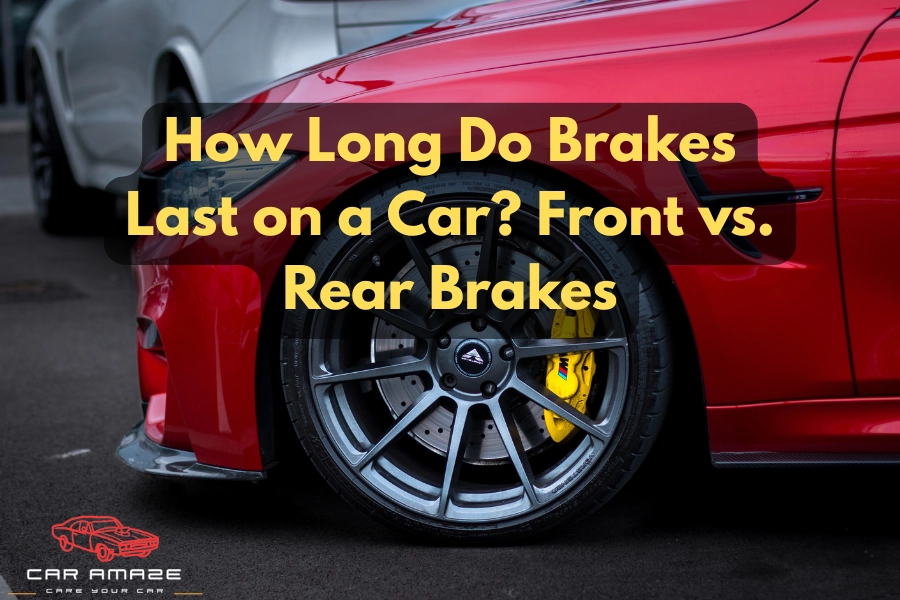
Front brakes consistently wear out faster than rear brakes. They roughly wear out twice as fast as rear brakes on most vehicles.
The reason is physics. When you brake, the car’s weight shifts forward. That load transfer increases the pressure on the front wheels, which means the front calipers and pads do the majority of the braking work. On most passenger vehicles, the front brakes handle approximately 60–70% of total braking force.
The practical result
You may replace your front brake pads two or three times before the rear pads need attention. When your technician reports worn front pads during an inspection, don’t assume the rears are in the same condition. So, when you do brake inspection on salvage cars or new cars, always ask for measurements on both axles separately.
Warning Signs Your Brakes Are Worn Out
Don’t wait for a brake failure to discover you needed new pads 10,000 miles ago. These are the warning signs that demand prompt attention:
- Squealing or squeaking: The metal wear indicator tab is contacting the rotor. Replacement is due soon but not yet critical.
- Grinding: The pad material is completely gone. Metal is scraping metal. Get this fixed immediately because rotor damage is happening in real time.
- Vibration in the pedal or steering wheel while braking: Classic sign of a warped rotor. The warping creates uneven contact with the pad, causing the pulsing sensation you feel through the wheel.
- Car pulls to one side under braking: Uneven pad wear or a seized caliper applying more force on one side. Both are serious and warrant immediate inspection.
- Spongy or soft brake pedal: Air in the brake lines or degraded brake fluid. This is a brake system safety issue, not just a wear issue.
- Brake warning light: Modern vehicles have pad-wear sensors that trigger a dashboard warning when pads reach minimum thickness. If this battery light comes on in the dashboard, schedule service within the week. Learn what other dashboard indicators mean in our guide to automatic car symbols.
- Visual inspection: Look through the wheel spokes. You can often see the brake pad pressing against the rotor. If the pad looks thinner than a pencil eraser (~2–3mm), it’s time.
How to Make Your Brakes Last Longer
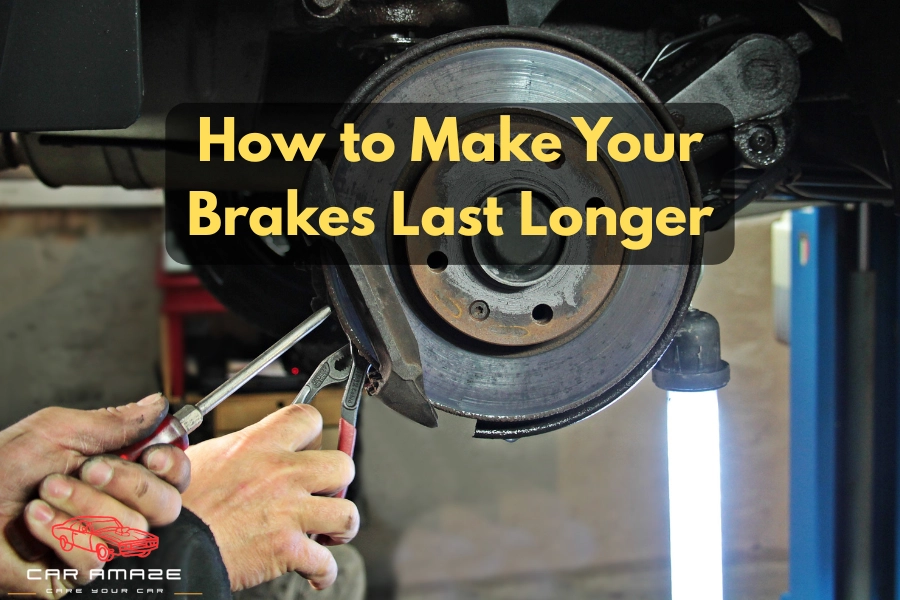
Small changes in driving behavior have a direct, measurable impact on brake lifespan. These seven habits will help you get the most out of every set:
- Coast before you brake: Lift off the accelerator well before a stop. Even dropping from 45 to 30 mph before touching the brake pedal reduces the heat and forces your pads to absorb.
- Stop using your left foot to brake: Left-foot braking often means light, constant brake contact, which generates heat without stopping the car. Use your right foot for both pedals.
- Increase your following distance: More space ahead means more time to coast and less need for hard stops. This is especially valuable in highway traffic where sudden braking is most common.
- Downshift on long descents: Dropping a gear (or using engine braking mode on an EV) slows the car without touching the brakes. This protects rotors from heat buildup on mountain grades.
- Don’t ride the brake pedal: Resting your foot lightly on the pedal while driving creates constant friction. It generates heat, wears the pad, and can warp rotors over time.
- Keep your car as light as practical: Unnecessary weight in the trunk increases braking demand every time you slow down. A lighter car stops easier.
- Inspect brakes every 12 months or 15,000 miles. Catching wear early means replacing pads before rotors are damaged. That single habit alone can save you hundreds of dollars per brake job.
How Much Does Brake Replacement Cost?
Here’s what you’ll actually pay, broken down by component and job type:
| Service | Typical Cost Range |
| Brake pads only (per axle) | $100–$300 |
| Brake pads + rotor resurfacing (per axle) | $175–$350 |
| Brake pads + new rotors (per axle) | $250–$500 |
| Brake caliper replacement (per caliper) | $200–$800 |
| Brake fluid flush | $75–$150 |
| Full brake system overhaul | $1,000–$2,500+ |
High-performance and luxury vehicles sit at a different level entirely. Carbon-ceramic rotor replacement on certain Mercedes-AMG, Porsche, or Ferrari models can exceed $10,000 per axle.
The most important cost takeaway:
Replacing pads before they damage rotors saves $150–$300 per axle. The pad replacement that costs $150 today becomes a $450 pad-plus-rotor job if you delay. Regular inspection is the cheapest maintenance decision you can make.
If you’re buying a used car and aren’t sure about the brake history, our guide on how to find out if your car is a lemon covers what to look for in a pre-purchase inspection.
Conclusion
So, how long do brakes last on a car? Brake lifespan comes down to three things: what you drive, how you drive, and how often you inspect. Most drivers get 25,000–65,000 miles from a set of pads, but city commuters, truck owners, and anyone who tows will land at the lower end.
The real money-saver is timing. Replace pads before they damage rotors, flush your brake fluid every two years, and never ignore a squeal or grind. A $150 pad swap today beats a $500 brake overhaul next month.
When in doubt, get an inspection. Your stopping distance and everyone else’s safety on the road depend on it.
FAQs
How long do brakes last on a car?
Brake pads last 25,000–65,000 miles for most drivers, with an average around 40,000 miles. Rotors last 50,000–70,000 miles. Calipers typically reach 75,000–100,000 miles before needing attention.
How long do brakes on a car usually last in years?
At the national average of approximately 13,500 miles per year, most drivers replace brake pads every 2 to 4 years. City drivers tend to replace them closer to every 2 years; highway-heavy drivers often go 4–5 years between changes.
How long do brakes last on a new car?
Factory brake pads typically last 30,000–50,000 miles. Proper break-in during the first 300–500 miles helps maximize that lifespan. Schedule a first brake inspection at 15,000 miles regardless of how the brakes feel.
Do front or rear brakes wear out first?
Front brakes wear approximately twice as fast as rear brakes. They handle 60–70% of your car’s total braking force due to weight transfer under deceleration.
How do I know when my brakes need replacing?
The most reliable signs are squealing (wear indicator contact), grinding (pads fully worn), pedal vibration (warped rotor), pulling to one side (uneven wear or seized caliper), or a brake warning light. Visual checks through the wheel spokes showing pads below 2–3mm also confirm replacement is due.
Can you drive with worn brake pads?
Only as a short-term emergency measure. Worn pads increase stopping distances, put other road users at risk, and rapidly destroy your rotors. Driving with worn brake pads turns a $150 pad replacement into a $400–$500 rotor job.