How to Check Car Fluids | Complete Step-by-Step Guide

It is important for car owners to know how to check car fluids. Most car problems are due to low levels of car fluids. They happen because a fluid ran low, turned dark, or started leaking weeks before anyone noticed. A full fluid check takes less than 15 minutes in your driveway. It is the single most effective maintenance habit that keeps repair bills from piling up.
This guide covers how to check car fluids, where to find it, how to check it, what good and bad look like, and how often to do it.
Table of contents
- What Fluids to Check in a Car
- How to Check Car Engine Oil
- How to Check Coolant (Antifreeze)
- How to Check Brake Fluid
- How to Check Car Transmission Fluid
- How to Check Power Steering Fluid
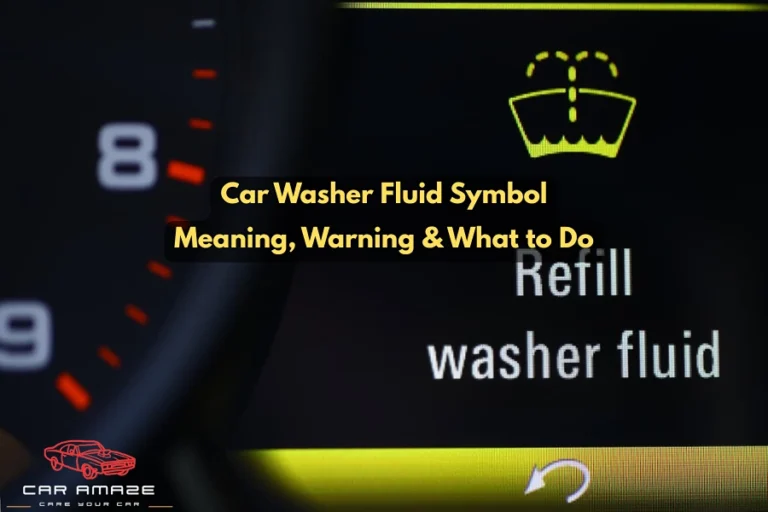
- How to Check Windshield Washer Fluid
- How to Read Car Fluid Colors – Quick Reference Guide
- How Often to Check Car Fluids
- Signs Your Car Fluids Need Attention Right Now
- Final Thoughts
- FAQs
What Fluids to Check in a Car
Before getting under the hood, here’s every fluid your car relies on:
| Fluid | Primary Job | Check Frequency |
| Engine oil | Lubricates and cools engine components | Monthly |
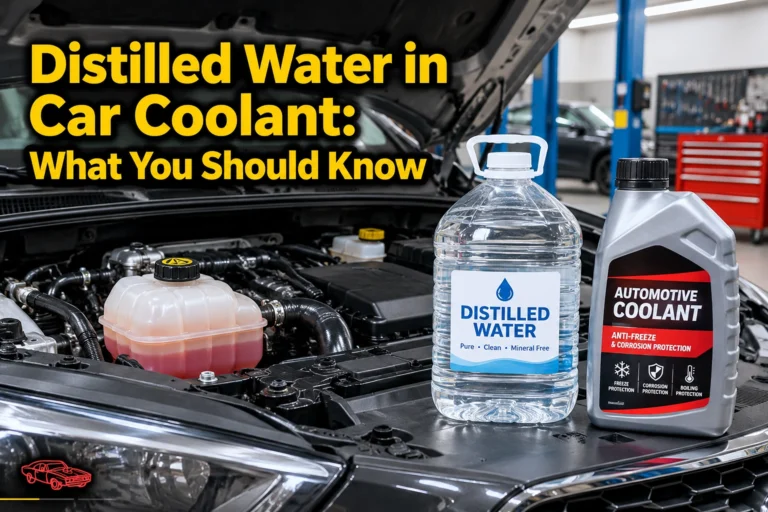
| Coolant (antifreeze) | Prevents overheating and freezing | Every 6 months |
| Brake fluid | Transfers pedal force to brakes | Every 6 months |
| Transmission fluid | Lubricates gears, enables smooth shifts | Monthly |
| Power steering fluid | Reduces steering effort | Monthly |
| Windshield washer fluid | Cleans the windshield | As needed |
Each fluid has a distinct location, color, and condition indicator. Work through them one at a time with the engine off and the car parked on level ground.
Before You Start | 4 Rules to Check Car Fluids
These apply to every fluid on the list. Skip them and you risk inaccurate readings or contaminating the system.
1. Park on level ground: A tilted surface throws off dipstick readings and reservoir levels. Even a slight incline can make a normal level read low or an overfill read normal.
2. Let the engine cool first: Coolant and some other fluids are checked cold. Opening a hot radiator cap releases pressurized steam that causes serious burns. For engine oil, wait at least 5 minutes after shutting down.
3. Clean before you open: Wipe dipstick tubes and reservoir caps with a clean rag before removing them. Dirt falling into an open system contaminates the fluid.
4. Never overfill: Too much fluid causes just as much damage as too little. Add small amounts, recheck, and stop at the full mark.
How to Check Car Engine Oil
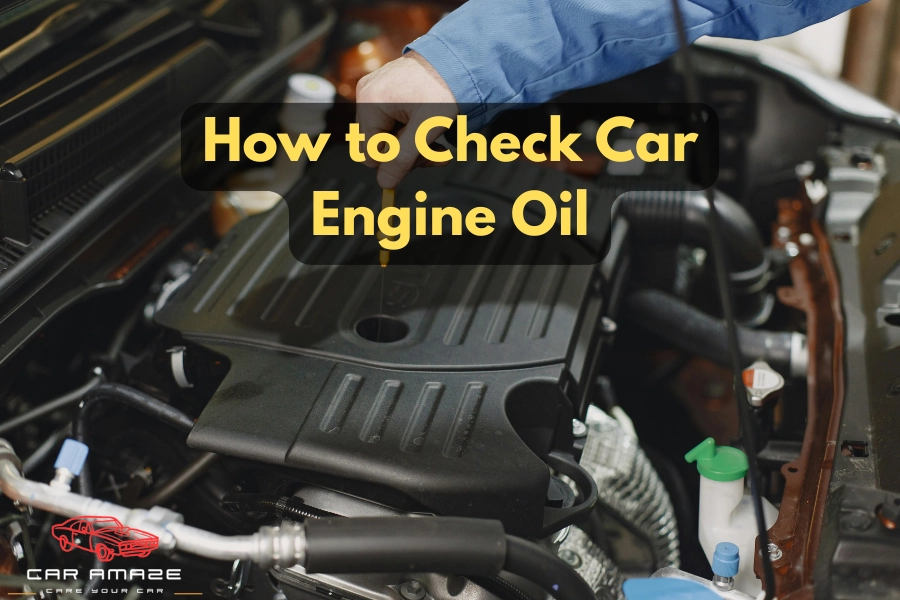
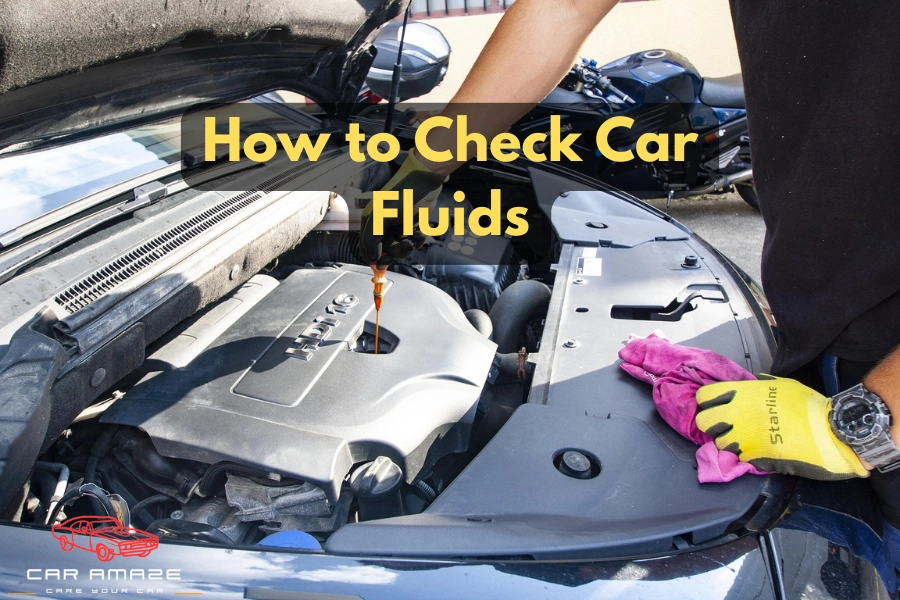
Engine oil is the most important fluid in the car. When discussing how to check car fluids, engine oil is very important. It lubricates every moving part inside the engine. Without engine oil, metal grinds against metal and engine components damage happens fast. Check it monthly and before any long road trip.
What you need
A clean rag or paper towel.
Step-by-step process to change engine oil in car
- Park on level ground and turn the engine off. Wait 5 minutes to let the oil drain back into the pan.
- Open the hood and find the oil dipstick. It usually has a brightly colored handle (yellow or orange) marked with an oil can symbol.
- Pull the dipstick out completely and wipe it clean with your rag.
- Reinsert the dipstick all the way back into the tube, then pull it out again.
- Hold the dipstick level and read the oil level at the tip. It should sit between the two marks — “MIN” and “MAX,” or “L” and “H” depending on your car.
- Check the oil’s color and texture while the dipstick is out.
Identify Good and Bad Oil
Identify the good and bad oil when changing car fluids or engine oil. The fluid should be slick and smooth and amber in color. In comparison, bad engine oil is dark brown when new but becomes black as it gets dirty.
Gritty or grainy texture on the dipstick signals metal particles is a sign of internal engine wear that warrants immediate inspection. Milky or foamy oil means coolant is mixing into the oil system, which is a serious problem.
What to do
If the level is at or below the lower mark, add the oil type specified in your owner’s manual. One quart typically raises the level from the bottom mark to the top. If you’re adding oil frequently between changes, the engine may have a leak or burning issue worth diagnosing.
According to TheZebra estimate, the general rule is to change conventional oil every 3,000 miles, blended synthetic oil every 4,000–5,000 miles, and full synthetic oil every 5,000–10,000 miles. The good engine oil also plays a key role in providing good fuel economy of the car.
How to Check Coolant (Antifreeze)

Coolant is also important to consider when checking car fluids. It keeps your engine from overheating in summer and freezing in winter. It circulates constantly while the engine runs. Low coolant is one of the fastest paths to serious engine damage. Check it every six months and always before a long drive.
Critical warning: Never open the radiator cap on a hot engine. The cooling system runs under pressure. Opening the cap while the engine is warm releases scalding pressurized fluid. Wait until the engine is completely cold.
Steps to Change Car Coolant (And Important Fluid):
- With the engine fully cold, open the hood.
- Find the coolant reservoir, a translucent plastic tank near the radiator with a colored cap marked with a radiator or temperature symbol.
- Check the fluid level against the MIN and MAX lines on the side of the reservoir. You don’t need to open the cap to read the level on most modern vehicles.
- If you need to verify the condition, open the cap and look at the fluid inside.
Indication of good and bad coolant
Traditional engine coolant is green, though many newer vehicles use coolant that is orange or even pink or blue. The fluid should be clean and translucent, no cloudiness, no debris floating in it.
In comparison, rusty or brown coolant means corrosion is building up inside the system. Oily or slimy coolant suggests an engine oil leak into the cooling system. Either condition requires a flush and system inspection.
What to do
Top off with the coolant type specified for your vehicle, mixing different types can cause chemical reactions that damage seals and hoses. A full coolant flush and replacement is typically needed every 30,000 miles or every 2 to 3 years.
How to Check Brake Fluid
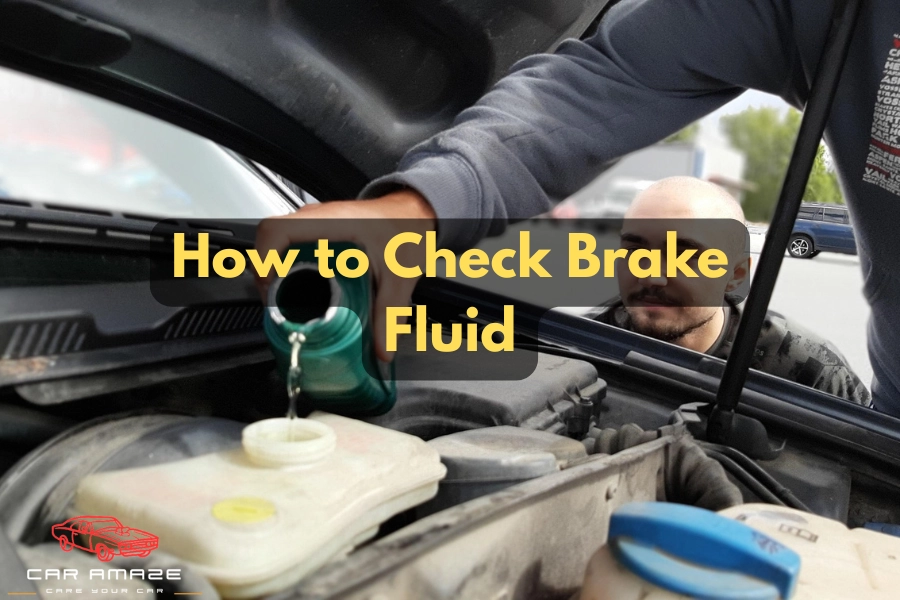
Brake fluid transfers the force from your foot on the pedal to the brake calipers at each wheel. It’s a hydraulic system, when the fluid level drops or the fluid degrades, braking performance drops with it. Check brake fluid levels at least every six months and during your regular oil change.
Steps to Change Car Brake Fluids:
- Park on level ground with the engine off and fully cooled.
- Find the brake fluid reservoir, a small, translucent plastic container located near the back of the engine bay on the driver’s side, sitting on top of the brake master cylinder.
- Check the fluid level through the reservoir walls. It should sit between the MIN and MAX lines. You don’t need to open it to read the level.
- If you need to check fluid conditions, open the cap and look at the color.
Indication of good and bad brake fluid
Brake fluid should be near the top and is an amber or white wine color when in good condition.
On the other hand, good brake fluid is nearly clear when new but quickly takes on a yellow, beige, or dark brown color when used. Dark brown fluid means it has absorbed moisture and needs replacing. Moisture in brake fluid lowers its boiling point, which can cause brake fade under hard braking.
What to do
If the level is low, top off with the DOT rating specified on the reservoir cap, DOT 3, DOT 4, and DOT 5 are not interchangeable. Never mix types. Brake fluid typically needs replacing every 20,000 to 45,000 miles. If the level keeps dropping without visible leaking, the brake pads may be worn, low fluid can indicate pad wear as much as an actual fluid loss.
For more on brake health and what the warning signs mean, see our guide on how long do brakes last on a car.
How to Check Car Transmission Fluid
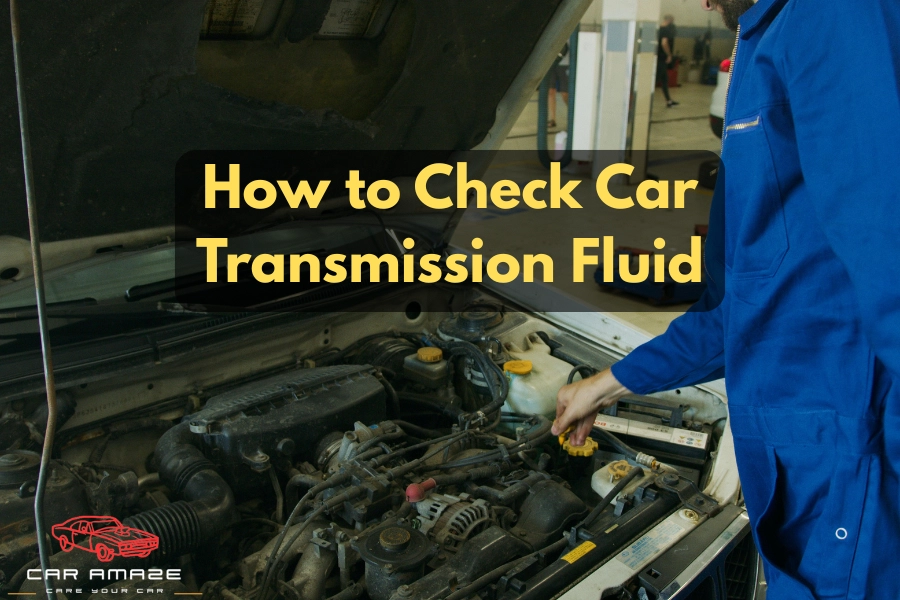
Transmission fluid lubricates the gears in your transmission and keeps seals flexible. Low or degraded fluid causes rough shifting, slipping, and eventually transmission failure, one of the most expensive repairs on any vehicle. Check it monthly.
Note: Many newer vehicles have sealed transmissions with no dipstick. If you don’t find a transmission dipstick after consulting your owner’s manual, your car requires a dealer or shop check.
Step-by-step for vehicles with a dipstick:
- For automatic transmissions, the check is done with the engine warmed up and running, unlike oil. Drive for a few minutes to bring the transmission to operating temperature.
- Park on level ground, apply the parking brake, and keep the engine running.
- With the shifter in Park, locate the transmission dipstick, usually positioned toward the back of the engine bay, often with a red or pink handle.
- Pull it out, wipe clean, reinsert fully, then pull out again.
- Read the level and check the color and smell.
Indication of good and bad transmission fluid
If you want to know how to check car fluids, you must be able to identify good and bad transmission oil. The good transmission fluid should be clear red or pink in color. Fresh automatic transmission fluid is red, but like engine oil, it darkens with use.
Dark brown fluid or a burnt smell means the fluid has degraded. Pink and frothy fluid is a serious warning. It means engine coolant has entered the transmission system and immediate service is required.
What to do
Add the transmission fluid type specified in your owner’s manual through the dipstick tube using a small funnel. Add gradually and recheck, overfilling causes foaming and shifting problems. A full transmission fluid change is typically needed every 30,000 to 60,000 miles.
How to Check Power Steering Fluid
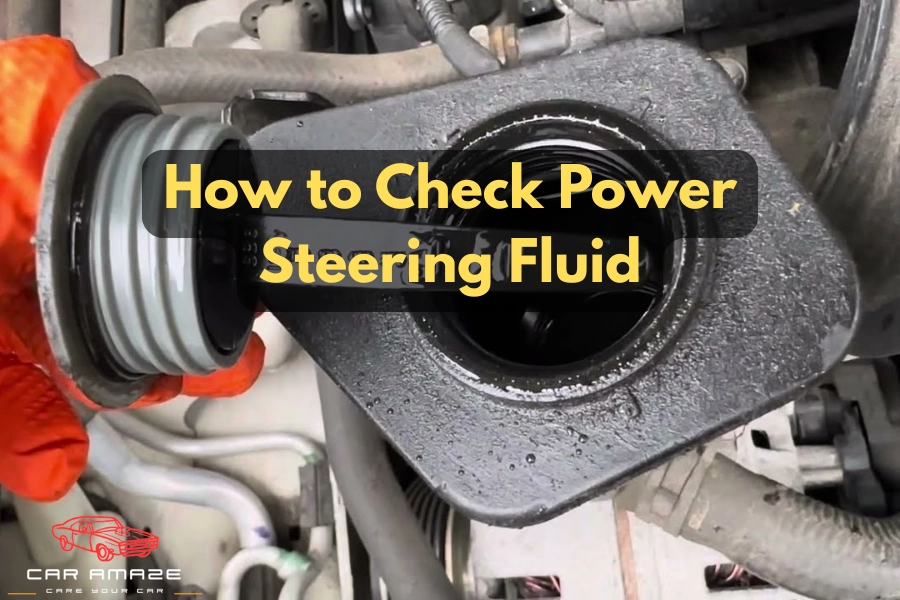
Power steering fluid pressurizes the hydraulic system that makes turning the wheel feel light and easy. When it runs low, steering becomes noticeably heavier, especially at low speeds, and you may hear a whining noise when turning. Check it monthly.
Note: Electric power steering systems don’t use fluid. If your car has EPS (common in most vehicles built after 2015), skip this section, there’s no fluid to check. Your owner’s manual will confirm which system your car uses.
Steps to change car fluids (Power steering fluid):
- With the engine off and fully cooled, open the hood.
- Find the power steering fluid reservoir, typically on the passenger side of the engine bay with a steering wheel symbol on the cap.
- Check the level either through the translucent reservoir walls or using the dipstick attached to the cap, depending on your vehicle.
- The fluid should sit between the MIN and MAX marks.
Indication of good and power steering fluid
The good power steering fluid is reddish-brown when new and feels slippery on the fingers. Whereas, the bad fluid is dark brown, black, or milky fluid that needs replacement. Foamy fluid means air has entered the system, usually due to a low level or a leak.
What to do when changing car power steering fluid
Top off with the type specified for your vehicle. Some cars use ATF (automatic transmission fluid) as power steering fluid, your owner’s manual will specify. On average, power steering fluid needs to be changed every 2 years, but check your owner’s manual for the manufacturer’s recommendation.
If you’re topping it off regularly, you have a leak somewhere in the system. That needs a proper repair, not just ongoing top-offs.
How to Check Windshield Washer Fluid
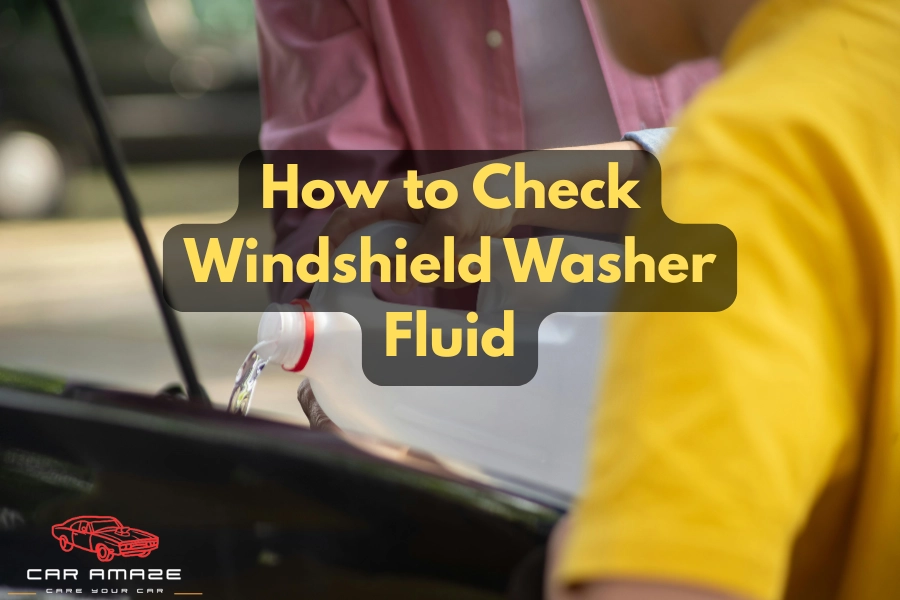
Washer fluid doesn’t affect mechanical performance, but low visibility is a safety risk. It’s also the easiest fluid to check and the only one where running dry has zero mechanical consequence.
Steps to change car windshield washer fluid
- Find the washer fluid reservoir, a translucent plastic container near the front of the engine bay with a windshield spray symbol on the cap.
- Check the level through the reservoir walls. Most have a MIN mark.
- If low, open the cap and top off with premixed washer fluid.
What to use
Only use washer fluid formulated for vehicles — not water, not household glass cleaner. Plain water freezes in winter and can clog the spray nozzles. Household cleaners can streak your windshield and damage the rubber seals.
When to refill
As needed. In winter or bug season, you may go through it quickly. Keep a spare jug in the trunk.
How to Read Car Fluid Colors – Quick Reference Guide
Spotting a puddle under your car is alarming. Knowing what each color means tells you immediately how urgent the situation is.
| Fluid Color | Likely Source | Action Required |
| Dark brown / black | Engine oil | Check oil level; schedule oil change |
| Bright red | Fresh transmission fluid or power steering fluid | Check both reservoirs |
| Dark brown-red | Old transmission fluid or power steering fluid | Fluid change due |
| Pink and frothy | Coolant mixing into transmission | Stop driving; get inspected immediately |
| Bright green / orange / blue | Coolant (antifreeze) | Check coolant reservoir; do not drive |
| Clear to amber / slippery | Brake fluid | Inspect brake reservoir; service immediately |
| Blue / light blue | Windshield washer fluid | Refill reservoir |
| Clear, no smell | Water (AC condensation) | Normal — no action needed |
| Clear with fuel smell | Gasoline or diesel | Do not drive; fire risk |
Don’t panic if you see clear, odorless water dripping near the passenger footwell area. That’s just air conditioner condensation, the one puddle under your car you don’t need to worry about. If your car AC gives a bad vinegar-like odor, check our guide on removing vinegar smell from car AC.
How Often to Check Car Fluids
Different fluids degrade and get used at different rates. Here’s the schedule to follow:
| Fluid | Check Frequency | Change Interval |
| Engine oil | Monthly | Every 3,000–10,000 miles depending on oil type |
| Coolant | Every 6 months | Every 30,000 miles or 2–3 years |
| Brake fluid | Every 6 months | Every 1–2 years |
| Transmission fluid | Monthly | Every 30,000–60,000 miles |
| Power steering fluid | Monthly | Every 2 years or per manufacturer spec |
| Windshield washer fluid | As needed | Refill only — no set change interval |
These are baselines. High-mileage vehicles, older cars, and hard-driven vehicles need more frequent attention. Any fluid that requires frequent topping off between checks signals a leak or internal issue, a one-time low reading is normal; a pattern is a problem.
Also check fluids before any road trip longer than a few hours, after any overheating event, and any time your dashboard shows a warning light related to temperature, oil pressure, or brakes. Our guide on automatic car symbols breaks down what every dashboard warning light means and which ones require immediate action.
Signs Your Car Fluids Need Attention Right Now
Don’t wait for a scheduled check if you notice any of these:
- Engine oil: Warning light on the dashboard, knocking or ticking from the engine, burning smell from the engine bay.
- Coolant: Temperature gauge climbing toward red, steam from under the hood, sweet smell from the vents or engine bay. If the engine overheats, pull over immediately — driving on an overheated engine warps cylinder heads. Read our full guide on car overheating when idle if this happens.
- Brake fluid: Soft or spongy pedal, longer stopping distances, brake warning light illuminated, pulling to one side under braking.
- Transmission fluid: Rough or delayed gear shifts, slipping between gears, grinding when shifting, transmission warning light.
- Power steering fluid: Stiff or heavy steering especially at low speeds, whining noise when turning the wheel, steering feels jerky or inconsistent.
Any of the above symptoms combined with a fluid that’s low, dark, or smells burnt means the fluid change is overdue, and possibly a repair is needed as well.
Final Thoughts
So, if you are a car driver, you must know how to check car fluids. Checking your car’s fluids is one of the few maintenance tasks that costs nothing, takes under 15 minutes, and can prevent repair bills in the hundreds or thousands. The only tools you need are a clean rag and your own two eyes. Moreover, the steps to check car fluids are the same whether your car has an engine in the back or front.
Do it monthly for oil, transmission, and power steering. Every six months for coolant and brake fluid. And every time something feels, sounds, or smells off, because your car usually tells you something is wrong long before it fails completely.
FAQs
How do I check fluids in my car?
Park on level ground, let the engine cool, then check each fluid in order: engine oil via dipstick, coolant and brake fluid through their reservoir windows, transmission fluid via dipstick with the engine warm, and power steering fluid through its reservoir. Each takes about 2 minutes.
What fluids should I check in my car regularly?
Engine oil, coolant, brake fluid, transmission fluid, power steering fluid, and windshield washer fluid. Engine oil is the most critical, check it monthly. Brake fluid and coolant should be checked every 6 months.
How often should I check car fluids?
Engine oil, transmission fluid, and power steering fluid monthly. Coolant and brake fluid every 6 months. Washer fluid as needed. Always check all fluids before a long road trip.
What are the different fluids in a car and what do they do?
Engine oil lubricates moving parts. Coolant regulates engine temperature. Brake fluid transfers pedal force to the brakes. Transmission fluid lubricates the gearbox. Power steering fluid pressurizes the steering system. Washer fluid cleans the windshield.
What does it mean if my car fluid is dark?
Dark engine oil means it’s due for a change, this is normal with use. Dark brown brake fluid means it’s absorbed moisture and needs replacing. Dark transmission fluid with a burnt smell means the fluid is degraded and a fluid change is overdue.
Can I check car fluids with the engine running?
Engine oil should be checked with the engine off and cooled. Coolant and brake fluid are checked with the engine cold. Transmission fluid on most vehicles is checked with the engine running and warm. Always check your owner’s manual for vehicle-specific instructions.