
How Many Axles Does a Car Have? Detailed Overview

Your car just made a clicking noise when you turned out of the parking lot. Or maybe a mechanic mentioned your axle during a routine inspection and you had no idea what they were talking about. Either way, not knowing how many axles your car has, or what they actually do, puts you in a bad position when something goes wrong.
An axle problem left unchecked leads to uneven braking, tire wear, and eventually a car that won’t move at all. The repair bill grows fast when you catch it late.
Here is exactly how many axles your car has, what type they are, how they connect to your brakes, and what warning signs to watch for before a small issue turns expensive.
How Many Axles Does a Car Have? 📄
Most standard passenger cars have 2 axles. One at the front and one at the rear. The number of CV axles varies by drivetrain: FWD cars have 2, AWD and 4WD cars have 4. Larger vehicles like semi-trucks can have 5 or more.
Table of contents
- What Is a Car Axle?
- How Many Axles Does a Standard Car Have?
- How Many Axles Does a 4-Wheel Car Have?
- How Many CV Axles Does a Car Have?
- Axle Count by Vehicle Type
- How Do Axles and Brakes Connect?
- How Many Axles Do Electric Cars Have?
- How to Count Your Car’s Axles in 3 Steps
- Signs Your Axle Needs Attention
- Axle Replacement Costs — What to Expect
- Conclusion
- FAQs
What Is a Car Axle?
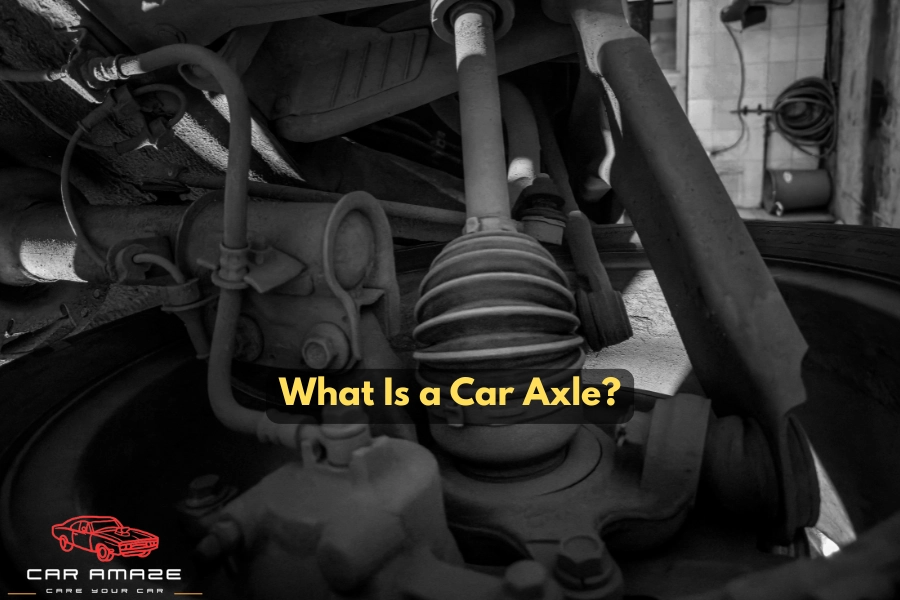
An axle is a steel shaft that connects a pair of wheels and transfers torque from the engine to make them spin. Every car needs axles to move, without them, the wheels have no power and no structural support.
Axles do three things on every car:
- Support the vehicle’s weight: the car, passengers, and cargo all rest on the axle assemblies
- Transmit engine power: torque travels from the transmission through the axle to the wheels
- Enable steering and suspension movement: especially on front axles, the design allows the wheels to turn and absorb road impacts
The material is typically carbon or chrome-molybdenum steel, chosen for strength under constant load.
How Many Axles Does a Standard Car Have?
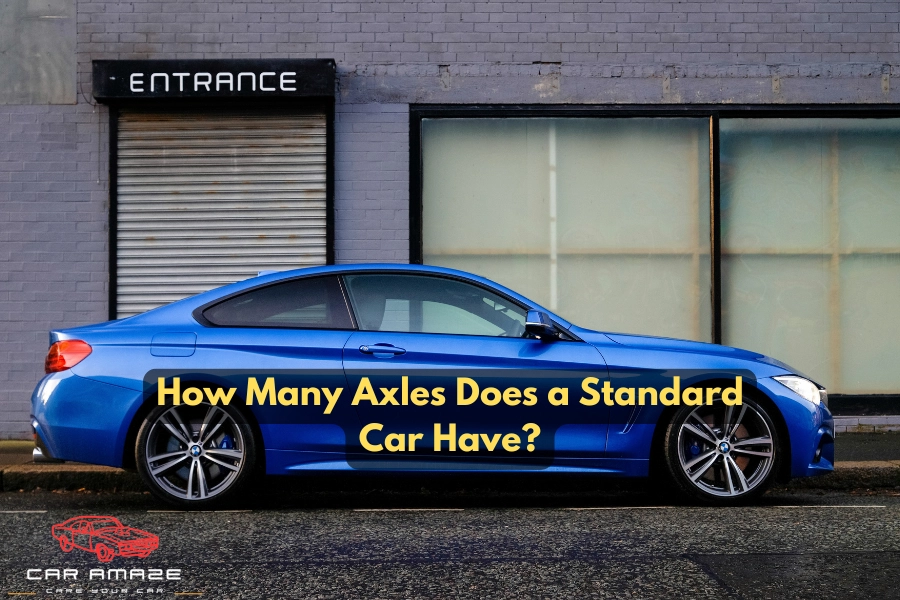
Most passenger cars have 2 axles. One axle sits at the front of the car. One sits at the rear. Each axle connects a left wheel to a right wheel, which is why a standard four-wheeled car needs exactly two of them.
This applies to:
- Sedans (Toyota Camry, Honda Accord, Kia K5)
- Hatchbacks (Honda Civic, Mazda3, VW Golf)
- Coupes (Ford Mustang, Dodge Challenger, Chevy Camaro)
- Crossovers (Toyota RAV4, Honda CR-V, Nissan Rogue)
- Standard SUVs (Ford Explorer, Jeep Grand Cherokee, Chevy Tahoe)
Two axles. Four wheels. That is the standard layout for every everyday passenger vehicle on the road.
How Many Axles Does a 4-Wheel Car Have?
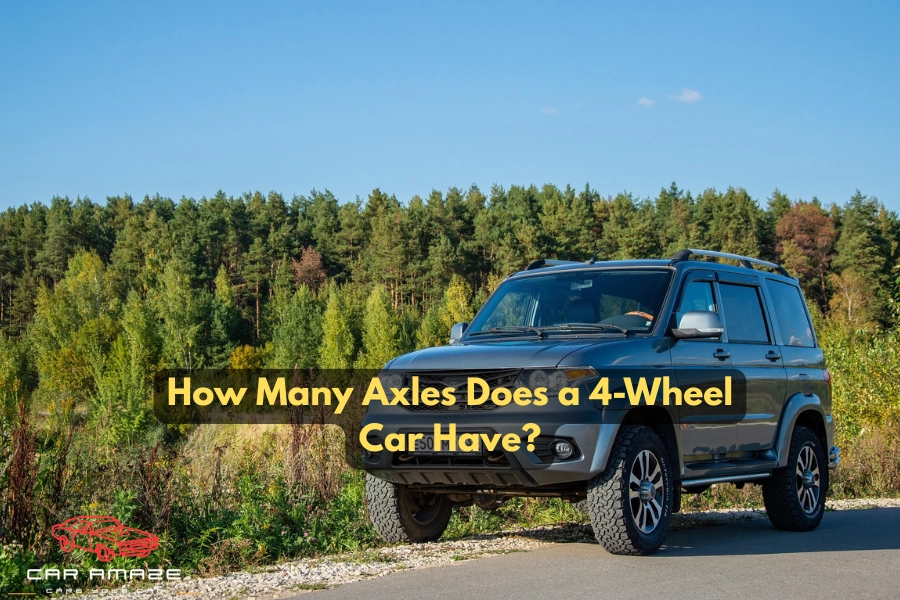
The 4-Wheel car still has 2 axles.
This is one of the most common points of confusion. Four-wheel drive and all-wheel drive do not add more axles, they change how power is delivered through the existing two axles.
- A Jeep Wrangler in 4WD? Two axles.
- A Subaru Outback AWD? Two axles.
- A Ram 1500 4×4? Two axles.
The difference is not axle count. The difference is whether one axle drives the wheels or both do.
| Drivetrain | Axles | Which Axle Drives |
| Front-Wheel Drive (FWD) | 2 | Front axle only |
| Rear-Wheel Drive (RWD) | 2 | Rear axle only |
| All-Wheel Drive (AWD) | 2 | Both axles |
| Four-Wheel Drive (4WD) | 2 | Both axles (selectable) |
Only when you move into heavy commercial vehicles, large trucks, buses, semi-trailers, does the axle count go beyond two.
How Many CV Axles Does a Car Have?
This is where the answer splits depending on your drivetrain.
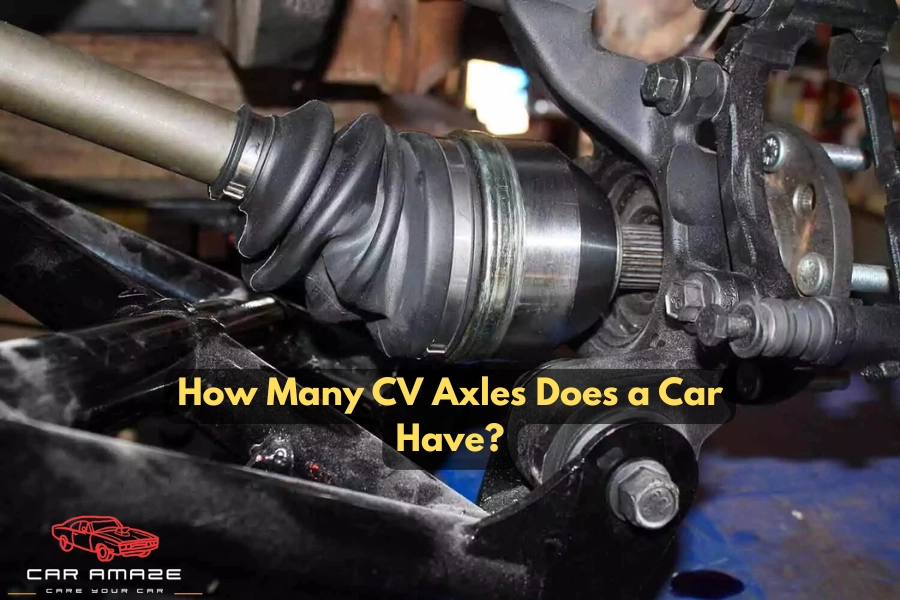
A CV axle (constant velocity axle) is the modern shaft design used in most passenger vehicles with independent suspension. Unlike old solid axles, CV axles flex at both ends through CV joints, allowing the wheels to move with the suspension and steer without interrupting power delivery.
Here is the exact count by drivetrain:
Front-Wheel Drive (FWD): 2 CV axles. One per front wheel, connecting the transaxle to each wheel hub. The rear has a dead axle (no CV axles back there, it just supports weight).
Rear-Wheel Drive (RWD) with independent rear suspension: 2 CV axles and both at the rear wheels. Examples include newer BMW 3 Series and Mercedes C-Class.
RWD with solid rear axle: 0 CV axles. Older trucks and body-on-frame SUVs use a solid rear axle with no CV joints.
All-Wheel Drive (AWD) and Four-Wheel Drive (4WD): 4 CV axles ( one per wheel, front and rear).
CV Axle Count by Drivetrain — Quick Reference
| Drivetrain | CV Axles | Example Models |
| FWD | 2 | Honda Civic, Toyota Corolla, VW Jetta |
| RWD (solid axle) | 0 | Ford F-150 (solid rear), Jeep Wrangler |
| RWD (independent) | 2 | BMW 3 Series, Chevrolet Corvette |
| AWD | 4 | Subaru Crosstrek, Audi Q5, Toyota RAV4 AWD |
| 4WD | 4 | Jeep Wrangler 4WD, Ram 1500 4×4, Ford Bronco |
Axle Count by Vehicle Type
Not every vehicle stays at two axles. Here is how axle count scales with vehicle size and purpose:
| Vehicle Type | Typical Axle Count |
| Passenger car / SUV / Pickup | 2 |
| Heavy-duty pickup (e.g., Ford F-350 dually) | 2 (but dual rear wheels on one axle) |
| Box truck / Straight truck | 2–3 |
| City bus | 2–3 |
| Semi-truck (tractor only) | 3 |
| Full tractor-trailer combination | 5–6 |
| Mercedes G63 AMG 6×6 | 3 |
| Heavy military/construction vehicles | 4–8 |
A dually pickup like the Ford F-350 is a common source of confusion, it has six wheels but still only two axles. The rear axle simply carries two wheels on each side instead of one.
How Do Axles and Brakes Connect?
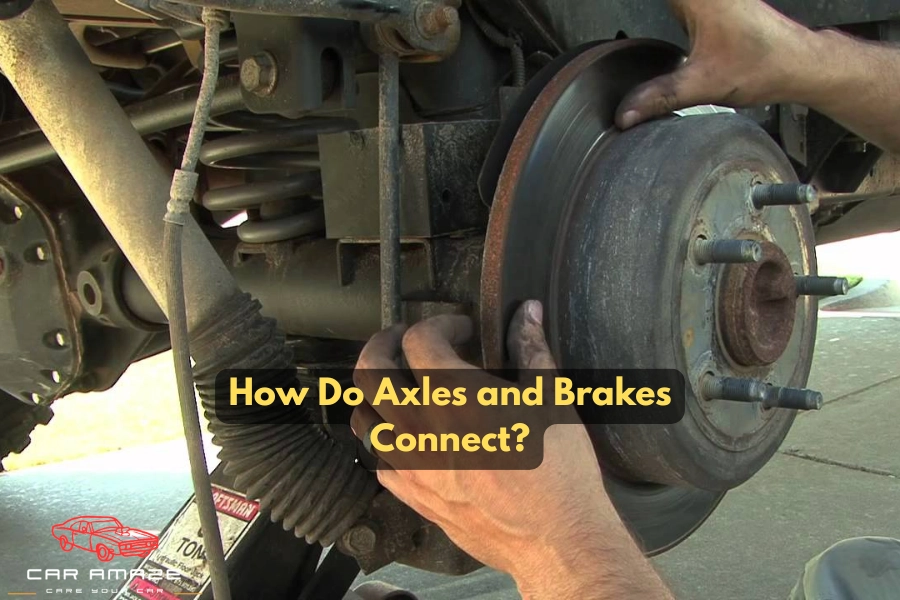
This is something almost no one explains clearly, but it matters when something goes wrong.
Your brake rotors and calipers mount directly onto the axle hub at each wheel. The front brake assembly sits on the front axle hub. The rear brake assembly sits on the rear axle hub. This means the axle and the braking system share the same mounting point at every corner of the car.
When a CV axle wears out or becomes damaged, it directly affects braking in three ways:
1. Vibration during braking:
A bent or worn axle shaft causes the wheel hub to wobble. That wobble gets worse when brake pressure is applied, and you feel it through the pedal and steering wheel.
2. Uneven brake wear
If one CV axle is damaged and causing that wheel to sit at a slight angle, the brake pad on that corner grinds unevenly. One side wears faster than the other.
3. ABS sensor interference
The ABS wheel speed sensor sits directly on or near the axle hub. A damaged axle can send incorrect speed data to the ABS module, causing the ABS warning light to come on or the system to activate when it should not.
If your brakes feel uneven, vibrate, or your ABS light is on without an obvious brake-related cause, get the CV axles inspected alongside the brake components. For a deeper look at brake wear, see our guide on how long do brakes last on a car.
How Many Axles Do Electric Cars Have?
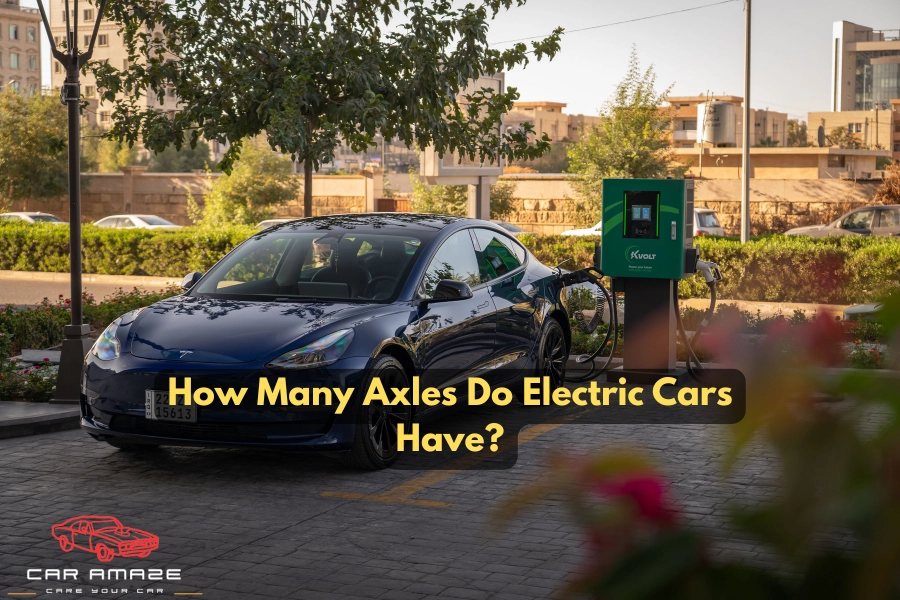
Electric vehicles still use axles, only the design just works differently.
Number of axles in single-motor RWD electric car
In a single-motor RWD electric car like the base Tesla Model 3, there are 2 axles and 2 CV axles at the rear. The electric motor sits at the rear axle and drives both rear wheels through a fixed-ratio gearbox.
Number of axles in dual-motor AWD electric car
In a dual-motor AWD electric car like the Tesla Model 3 Long Range or Model Y AWD, there are still 2 axles but now 4 CV axles — one motor at the front axle, one at the rear. No driveshaft runs the length of the car. Each motor powers its own axle independently.
This setup gives electric AWD cars faster torque response between front and rear compared to mechanical AWD systems, because there is no transfer case or clutch pack involved — just two motors responding instantly to the controller.
How to Count Your Car’s Axles in 3 Steps
You do not need a mechanic or a service manual. Do this yourself in under two minutes:
Step 1: Stand at the side of your car.
Look at the car from the side profile. Count how many rows of wheels you can see. Each row = one axle. A standard car has two rows, one at the front, one at the rear. That gives you your total axle count.
Step 2: Look underneath at the half-shafts.
CV axles (also called half-shafts) are visible as metal shafts running from the center of the car out toward each wheel hub. On a FWD car, you will see two shafts at the front. On an AWD car, you will see shafts at all four corners.
Step 3: Check your owner’s manual or door jamb sticker.
The drivetrain type is listed here. Use the table above to confirm your CV axle count based on FWD, RWD, AWD, or 4WD.
Signs Your Axle Needs Attention
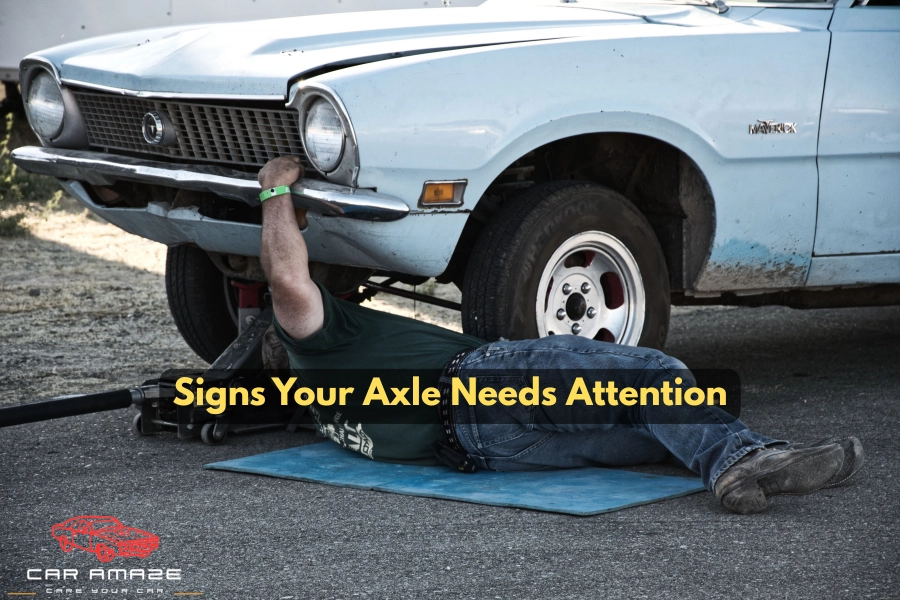
Axles are built to last, but they do wear out. Catch these warning signs early and you can often fix a CV boot for under $50 instead of paying $500–$800 for a full axle replacement.
Clicking or popping when turning
The most common symptom of a worn outer CV joint. It usually gets louder on low-speed sharp turns. If you hear this, do not ignore it. See what else can cause issues when turning in our guide on car shaking while driving.
Vibration during acceleration
A damaged or bent axle shaft causes the whole car to shudder when you press the gas, especially at highway speeds. This overlaps with other drivetrain issues, read more in our article on car hesitation when accelerating.
Grease on the inside of the wheel or tire
A torn CV boot leaks grease outward. If you see dark grease splattered behind the wheel, the boot has cracked and the CV joint is running dry. Left alone, the joint fails completely.
Clunking from underneath when shifting
A loose or failing inner CV joint makes a distinct thunk when you go from Park to Drive or during low-speed acceleration changes.
Car won’t move despite the engine running
A completely broken axle shaft means the engine has no way to deliver power to the wheels. This is a tow-truck situation.
Axle Replacement Costs — What to Expect
Repair costs vary by vehicle type, drivetrain, and whether you catch the problem early.
| Repair Type | Estimated Cost |
| CV boot replacement (early catch) | $40–$150 per side |
| CV axle replacement (passenger car) | $300–$800 per side |
| CV axle replacement (truck/SUV) | $500–$1,200 per side |
| Solid rear axle repair | $800–$1,500+ |
| Labor rate | $100–$150 per hour |
Many mechanics recommend replacing both left and right CV axles at the same time if one has failed. Both axles have operated under the same conditions and the same mileage, so the second one is typically not far behind.
Conclusion
Most cars on the road today run on two axles. The number of CV axles shifts based on your drivetrain, two for FWD, four for AWD and 4WD. Electric cars follow the same pattern, just without the driveshaft running in between.
What matters most is knowing the warning signs before they turn into a repair bill. A clicking noise when turning or grease behind a wheel means your CV boot or CV joint needs attention now, not later. A $50 boot replacement beats a $700 axle swap every time.
Keep an ear out, check underneath occasionally, and your axles will likely outlast 100,000 miles without issue.
FAQs
Does a 4WD car have 4 axles?
No. A 4WD car has 2 axles, the same as any standard passenger vehicle. Four-wheel drive means power goes to all four wheels, not that the car has four axles.
How many CV axles does an AWD car have?
Four — one for each wheel. FWD cars have two CV axles (front only), and RWD cars with solid rear axles have none.
Can a bad axle affect my brakes?
Yes. A worn CV axle causes hub wobble, uneven brake pad wear, and can interfere with the ABS wheel speed sensor, triggering false ABS activation.
How long do car axles last?
Most CV axles last 70,000–130,000 miles under normal driving conditions. A torn CV boot shortens that lifespan significantly if not replaced.
Do electric cars have axles?
Yes. Electric cars still use axles to transfer motor power to the wheels. A single-motor EV has 2 CV axles. A dual-motor AWD EV has 4 CV axles.
How do I know if my car has a solid axle or CV axles?
Check your drivetrain type and look under the car. CV axles are visible shafts with rubber boots near each wheel hub. A solid rear axle looks like a single thick beam running across the back of the car with no individual shafts.
What happens if I drive with a broken CV axle?
A cracked or damaged CV axle gets worse with every mile. A completely snapped axle leaves you stranded and can cause wheel-off situations at speed, which is a serious safety risk. Get it inspected at the first sign of clicking or vibration.








Hi my family member I want to say that this post is awesome nice written and come with approximately all significant infos I would like to peer extra posts like this