Questions to Ask When Buying a Used Car

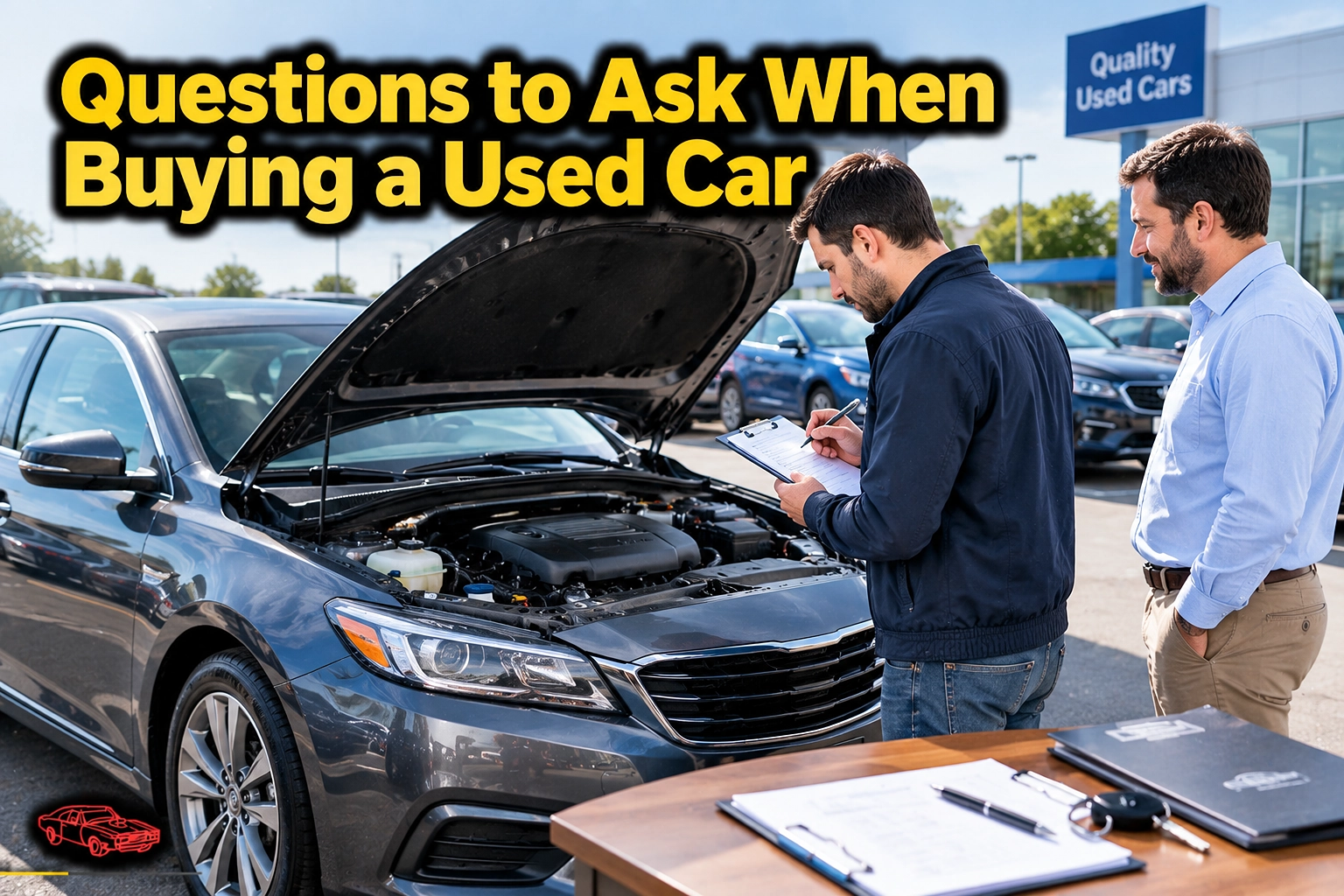
Buying a used car can save you thousands of dollars, but a good-looking vehicle can hide accident damage, neglected maintenance, title problems, or expensive mechanical issues. Asking the right questions before you buy helps uncover problems before they become your responsibility. In this guide, you’ll find the most important questions to ask when buying a used car, plus how to verify the seller’s answers.
Table of contents
- Why Asking the Right Questions Matters When Buying a Used Car
- Questions to Ask Before You Go See the Used Car
- Questions to Ask About the Car’s History
- Questions to Ask About Maintenance and Service
- Questions to Ask About Accidents and Repairs
- Questions to Ask Before a Test Drive
- Questions to Ask About a Pre-Purchase Inspection
- Questions to Ask About the Price
- Questions to Ask About the Title and Paperwork
- Questions to Ask a Used Car Dealer
- Questions to Ask a Private Seller
- Good Questions to Ask During the Test Drive
- How to Verify the Seller’s Answers Before Buying
- Red Flags in the Seller’s Answers
- What Should You Ask Yourself Before Buying the Car?
- 10 Questions You Should Never Skip When Buying a Used Car
- More Questions To Ask When Buying A Used Car
- Final Takeaway
Why Asking the Right Questions Matters When Buying a Used Car
A used car can look clean, drive well, and still have a history you don’t know about. The seller may also be unaware of some problems, especially if the vehicle has changed hands several times. That’s why buying a used car shouldn’t be based on appearance or a seller’s promises alone. Most importantly, if you are buying an electric car, check whether buying a used electric car is worth it.
Ask about the car’s history, maintenance, accidents, title, mileage, mechanical condition, and ownership. Then verify the important answers with documents, a vehicle history report, a VIN check, a test drive, and an independent inspection.
The Federal Trade Commission recommends getting a vehicle history report and having a used car inspected by an independent mechanic before buying it. A history report can provide useful information, but it isn’t a substitute for a mechanical inspection.
Questions to Ask Before You Go See the Used Car
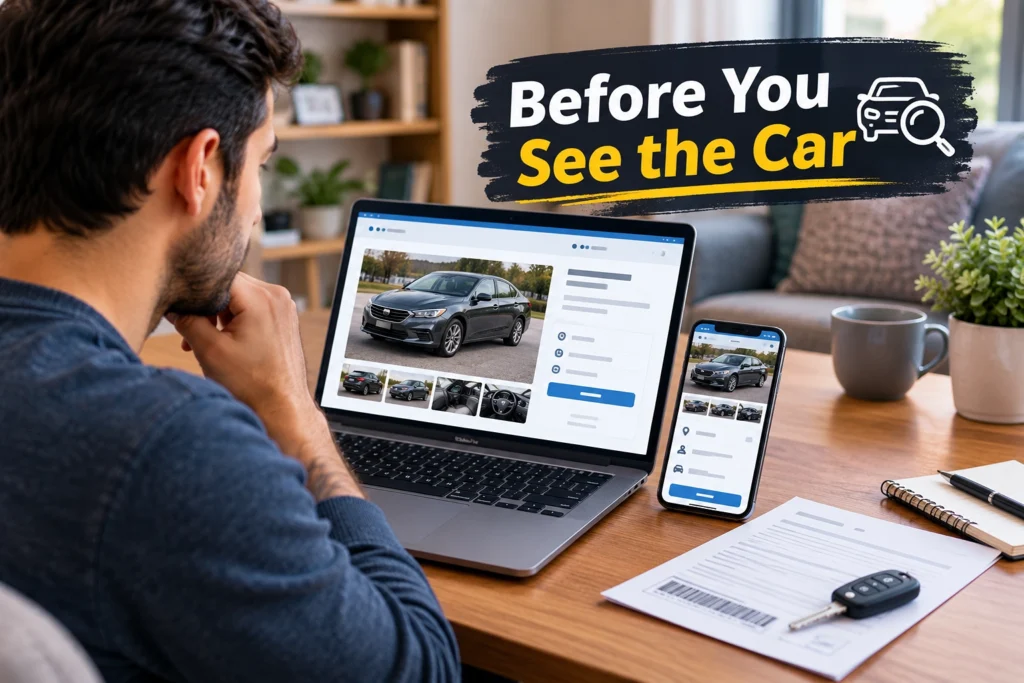
You don’t have to wait until you’re standing beside the vehicle to start asking questions. Some of the best questions can be asked before you arrange a meeting. This can save you time by eliminating questionable vehicles before you travel to see them.
1. Why are you selling the car?
This is a simple question, but the answer can tell you a lot.
A normal answer might be that the owner bought another vehicle, needs a larger car, is moving, or simply doesn’t need the vehicle anymore. Be cautious if the explanation is vague, constantly changes, or doesn’t match the vehicle’s condition.
The answer itself isn’t proof of anything, but it gives you something to compare against the rest of the vehicle’s history.
2. How long have you owned it?
Ask when the seller purchased the vehicle and whether they bought it from a dealer, private owner, auction, or another source. A very short ownership period isn’t automatically a problem, but it is worth asking why the vehicle is already being sold.
3. Are you the owner listed on the title?
The person selling the car should be able to explain their ownership and provide the appropriate title documentation. If someone is selling a vehicle on behalf of another person, ask why and make sure the paperwork allows the transaction to be completed properly.
4. What is the current mileage?
Ask for the exact mileage rather than relying only on the listing.
Later, compare the odometer reading with the title, maintenance records, inspection documents, and vehicle history information. NMVTIS vehicle history information includes odometer readings when available, making mileage discrepancies worth investigating.
5. Does the car have a clean title?
Don’t assume that “clean-looking” means “clean title.” Ask directly whether the vehicle has ever had a salvage, rebuilt, flood, junk, or other branded title.
NMVTIS tracks title and brand information, including labels such as salvage, flood, and junk, along with total-loss and odometer information.
6. Can you send me the VIN?
The VIN is one of the most useful pieces of information you can get before seeing a used car. Use it to check vehicle history information and safety recalls. NHTSA’s recall lookup lets consumers search for unrepaired safety recalls using a vehicle’s VIN.
If a seller refuses to provide the VIN without a reasonable explanation, consider that a warning sign.
7. Has the car ever been in an accident?
Ask this directly even if the listing says “no accidents.” A vehicle history report can help, but you should still ask the seller and inspect the vehicle. Not every incident necessarily appears in every history record.
Ask what happened, where the damage occurred, and whether any structural, suspension, airbag, or body components were repaired.
8. Are there any mechanical problems or warning lights?
Ask the seller to identify anything currently wrong with the vehicle. That includes:
- Check-engine lights
- ABS warning lights
- Airbag warnings
- Battery or charging warnings
- Transmission problems
- Overheating
- Oil leaks
- Coolant leaks
- Steering problems
- Brake problems
- Electrical issues
A seller who openly explains a minor problem may actually give you more confidence than someone who repeatedly claims the vehicle is “perfect.”
9. Do you have service and maintenance records?
Ask whether the seller has receipts, invoices, dealership records, or other maintenance documentation. Records can help verify claims about oil changes, brakes, tires, major repairs, and scheduled maintenance.
10. Is there any remaining loan or lien on the vehicle?
If the vehicle is financed, ask how the existing loan or lien will be handled before you exchange money. Do not assume the seller can simply hand you the keys and title later.
Questions to Ask About the Car’s History
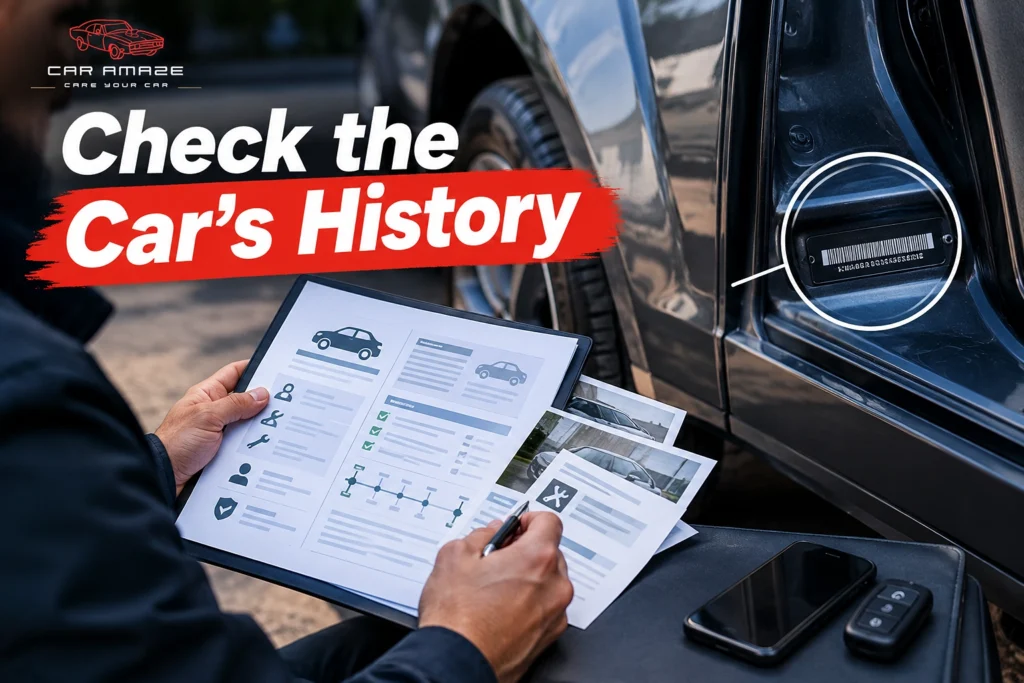
Once you’re seriously considering the vehicle, dig deeper into its past.
11. How many previous owners has the car had?
A vehicle with several owners isn’t necessarily bad, but knowing its ownership history can help you understand how it was used. Compare the seller’s answer with available vehicle history information.
12. Was the car ever used as a rental, rideshare, fleet, or company vehicle?
A car’s mileage doesn’t tell the whole story. A vehicle that spent years in heavy commercial or rideshare use may have experienced more frequent starts, stops, passengers, and city driving than a privately owned commuter vehicle.
13. Has the car ever been flooded?
Flood damage can cause electrical, corrosion, safety, and mechanical problems that may not be obvious during a quick inspection. Ask directly about flood exposure and check available title and history information. NMVTIS maintains brand information that can include flood-related designations. Especially if the car has hail damage, check whether it is worth fixing the damage.
14. Has the car ever had major repairs?
Ask specifically about major engine, transmission, suspension, electrical, cooling-system, or structural repairs. Don’t stop at “yes” or “no.” Ask:
- What failed?
- What was replaced?
- When was it repaired?
- Who performed the repair?
- Are there receipts?
15. Has the engine or transmission ever been replaced?
A replacement engine or transmission isn’t automatically a reason to reject a car.
In some cases, a properly installed replacement component can be perfectly acceptable. The important thing is knowing why it was replaced and whether there is documentation showing what was installed and who performed the work.
16. Has the odometer ever been repaired or changed?
Ask if there has ever been an issue with the odometer or instrument cluster.
Then compare the current mileage with available records. A significant unexplained mileage discrepancy deserves further investigation.
Questions to Ask About Maintenance and Service
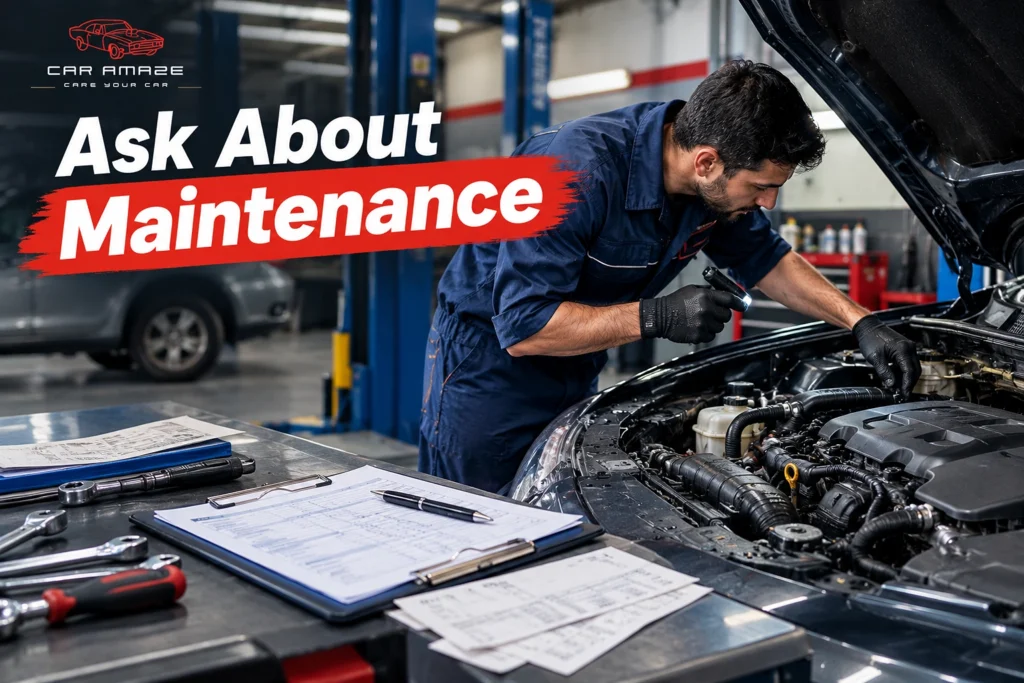
Maintenance history is one of the most useful things to investigate when buying a used vehicle.
17. Do you have the car’s service records?
Ask for actual documentation rather than relying only on a verbal statement that the vehicle was “always maintained.” Look for records showing routine services and major repairs.
18. When was the last oil change?
Ask for the date and mileage of the most recent oil change. If possible, compare the answer with the maintenance records and the service sticker or digital maintenance history.
19. When were the brakes last replaced?
Ask about:
- Brake pads
- Rotors
- Calipers
- Brake fluid
Brake work can become an immediate expense after purchase, so knowing their condition helps you evaluate the actual cost of the car.
20. When were the tires replaced?
Ask when the current tires were installed and check their condition yourself. Look at tread depth, uneven wear, cracking, and the tire date codes. Four worn tires can turn an apparently good deal into a much more expensive purchase.
21. Has the battery been replaced recently?
A weak battery may not be a major problem, but it is another expense to account for. Also ask whether the vehicle has experienced charging or electrical problems.
22. Has the timing belt or timing chain been serviced?
This question is especially important for vehicles with timing belts that have scheduled replacement intervals. Ask for documentation showing whether the belt and related components were replaced.
If the vehicle uses a timing chain, ask whether there have been any known timing-related repairs or noises.
23. What maintenance is due next?
This is one of the most useful questions to ask. The seller may tell you that the vehicle runs perfectly, but scheduled maintenance could still be approaching. Ask what service is due at the current mileage and what major maintenance is expected soon.
24. Are there any repairs you know the car needs right now?
Give the seller an opportunity to disclose problems. Ask about everything from small issues such as broken switches or worn tires to larger concerns such as oil leaks, transmission behavior, suspension noise, or warning lights.
Questions to Ask About Accidents and Repairs
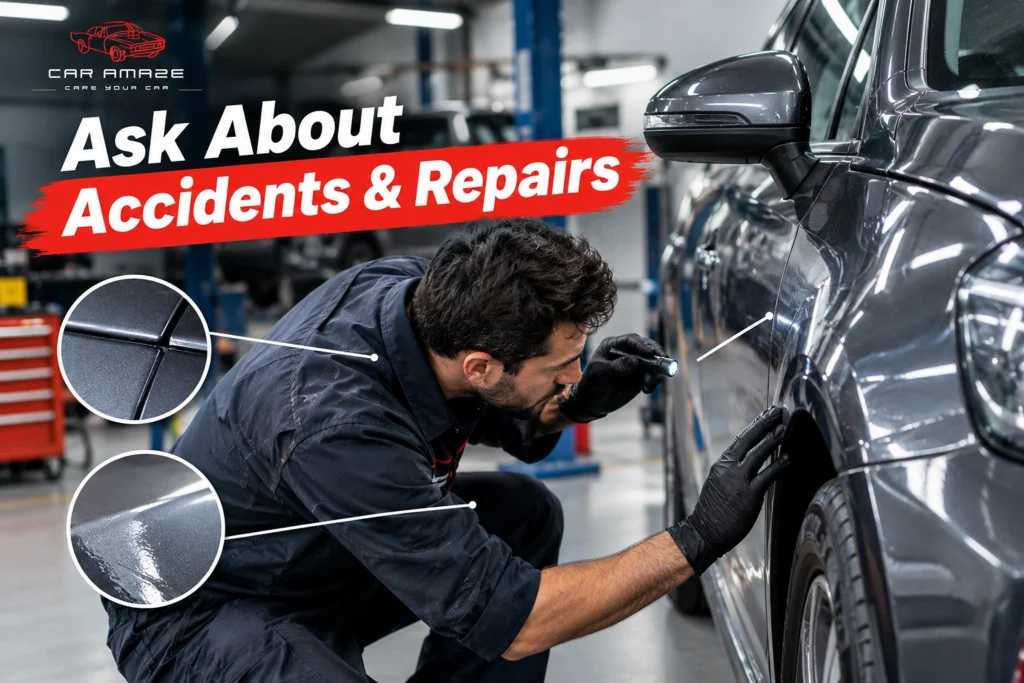
A vehicle can look excellent after a repair, so accident history deserves special attention.
25. Has the car ever been in an accident?
Ask for details rather than accepting a simple yes or no. Find out:
- When did it happen?
- What part of the vehicle was damaged?
- Was another vehicle involved?
- Was the car towed?
- Were airbags deployed?
- Was the frame or structure damaged?
- Where was it repaired?
26. What areas of the car were damaged?
A damaged bumper is very different from structural damage. Ask exactly which panels and components were affected.
27. Where was the repair work done?
Ask whether repairs were completed at a dealership, collision center, independent body shop, or by an individual. Then ask whether repair invoices are available. Also, assess the extent of the damage and check whether the damaged car is still tradeable.
28. Do you have receipts for the repairs?
Receipts can help establish what was actually replaced and when. They can also give an independent mechanic useful information during a pre-purchase inspection.
29. Were any body panels replaced?
Look carefully at panel gaps, paint texture, color differences, and overspray. A professional inspection can help identify repairs that aren’t obvious to an ordinary buyer.
30. Has the car ever been repainted?
Repainted panels aren’t necessarily a problem. Cars can be repainted for cosmetic reasons or after relatively minor damage. The important question is why the panel was repainted and whether the underlying repair was properly completed.
31. Were the airbags ever deployed?
If the answer is yes, ask what caused the deployment and whether the airbags and related safety systems were properly replaced. This is an area where an independent inspection is especially valuable.
32. Has the frame or structural area ever been damaged?
Structural damage deserves serious attention. If the seller mentions frame or structural repairs, have the vehicle professionally inspected before considering the purchase.
Questions to Ask Before a Test Drive
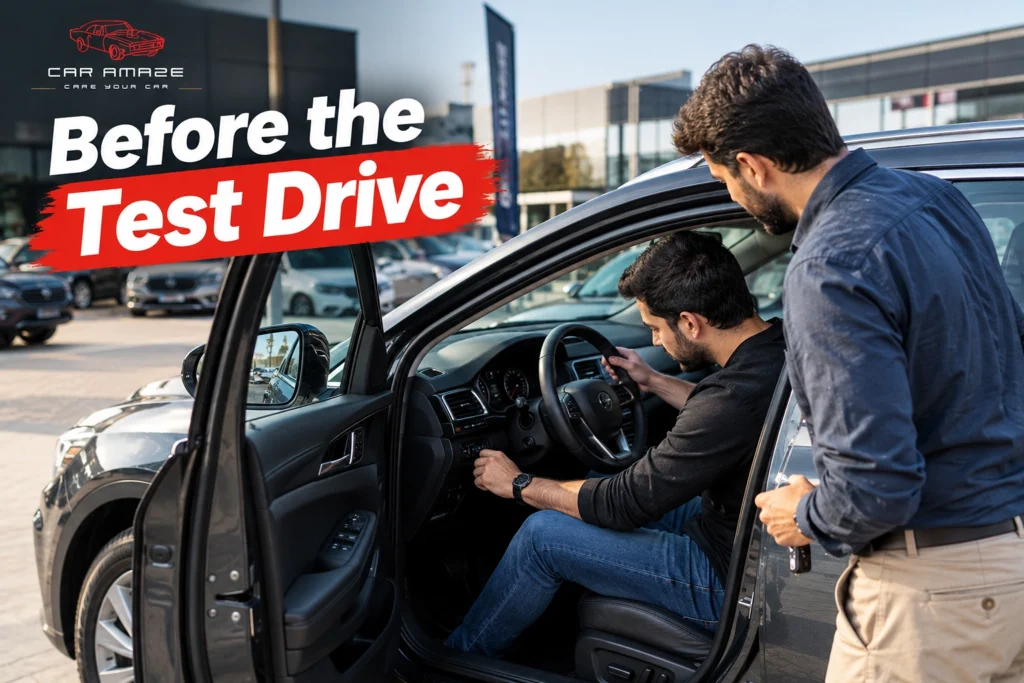
A test drive shouldn’t be a five-minute trip around the block with the radio playing. Before driving, ask the seller:
33. Can I take the car for a proper test drive?
You want enough time to evaluate the vehicle under different conditions. If the seller refuses a reasonable test drive without a legitimate explanation, reconsider the purchase.
34. Can I start the car when the engine is completely cold?
A cold start can reveal problems that may be less noticeable after the engine has warmed up. Pay attention to starting behavior, unusual noises, excessive smoke, warning lights, and idle quality.
35. Are there any unusual noises?
Ask the seller if they already know about:
- Engine ticking
- Knocking
- Belt noise
- Suspension clunks
- Brake squealing
- Wheel-bearing noise
- Transmission noises
Then listen for yourself.
36. Does the engine idle smoothly?
With the vehicle stopped, observe the engine’s idle. Unusual shaking, unstable RPM, misfires, or strange noises deserve further investigation.
37. Does the transmission shift smoothly?
During the test drive, pay attention to:
- Delayed engagement
- Harsh shifts
- Slipping
- Jerking
- Unusual noises
- Difficulty selecting gears
A transmission problem can be one of the more expensive used-car repairs.
38. Does the car pull to one side?
On a safe, appropriate road, notice whether the vehicle tracks normally. Pulling can have several causes, including tire problems, alignment issues, brake problems, or suspension components.
39. Do the brakes make any unusual noises?
Listen for grinding, severe squealing, vibration, or other unusual behavior. Also notice whether the pedal feels unusually soft or the vehicle pulls while braking.
40. Are there any warning lights on the dashboard?
Check the dashboard before, during, and after the test drive. Don’t assume a warning light is harmless just because the seller says it has “always been there.”
41. Does the air conditioning and heater work properly?
Test both heating and cooling if possible. Also check the fan speeds, vents, defroster, and any climate-control functions.
Questions to Ask About a Pre-Purchase Inspection
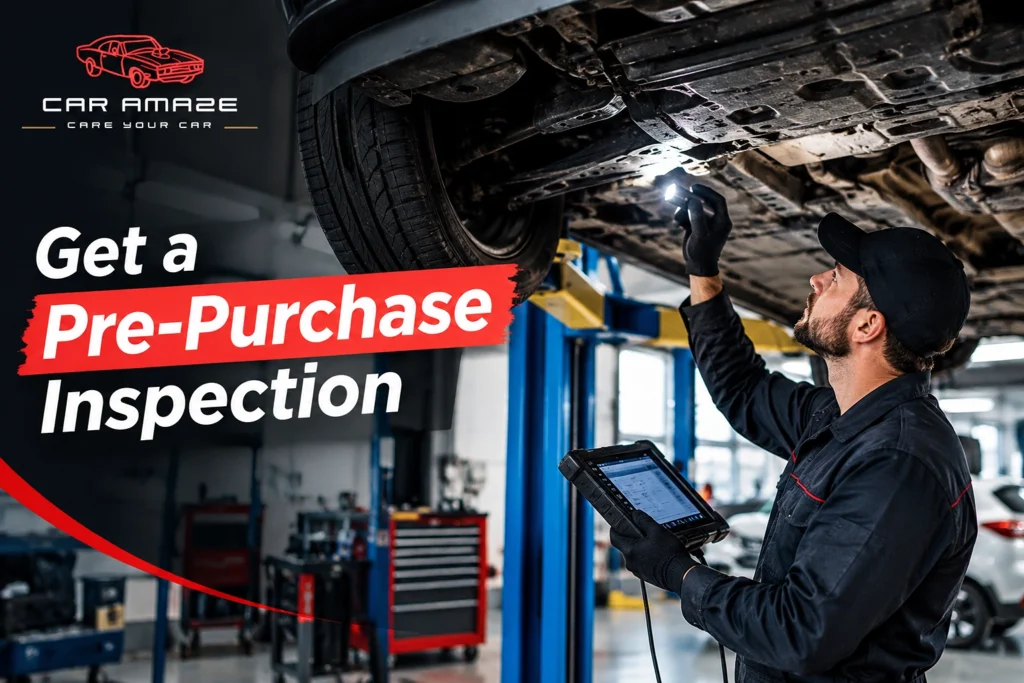
One of the most important questions when buying a used car is:
42. Can I have the car inspected by my own mechanic?
The answer should ideally be yes. An independent mechanic can inspect areas that an ordinary buyer may not be able to evaluate properly. The FTC recommends independent inspections even when a dealer has already inspected or certified the vehicle.
43. Can I choose where the inspection is performed?
You should generally want a mechanic or inspection facility that you trust. A seller suggesting a convenient shop isn’t automatically suspicious, but you shouldn’t feel pressured to use someone chosen by the seller.
44. Can the mechanic scan the vehicle for diagnostic trouble codes?
A diagnostic scan can provide additional information about electronic systems and stored faults. It shouldn’t replace a physical inspection, but it can be a valuable part of one.
45. Can I get a written inspection report?
A written report gives you something concrete to review when deciding whether to buy, negotiate, or walk away. If the mechanic identifies problems, get an estimate of repair costs before making an offer.
Questions to Ask About the Price

Don’t look only at the advertised price.
46. How did you determine the asking price?
This can help you understand whether the seller based the price on market values, recent repairs, vehicle condition, or simply chose a number they wanted. You should still research comparable vehicles yourself.
47. Is the price negotiable?
It doesn’t hurt to ask. If the inspection identifies legitimate repairs or upcoming maintenance, you can use documented costs as part of your negotiation.
48. Are there any additional fees?
This is especially important when buying from a dealer. Ask about documentation fees, dealer fees, add-ons, taxes, registration, and any other charges.
49. What is the total out-the-door price?
Don’t negotiate only around the advertised number. Ask for the complete price in writing before signing anything. The FTC recommends getting the out-the-door price in writing when buying from a dealer so you can identify additional charges and compare offers.
50. Are there dealer-installed add-ons?
Ask whether the car has items such as:
- Protection packages
- Window tint
- Security systems
- Extended warranties
- Service contracts
- Paint protection
- Accessories
Make sure you understand which items are optional and which are actually required.
Questions to Ask About the Title and Paperwork
Paperwork is just as important as the vehicle itself.
51. Do you have the original title?
Ask to see the title before you finalize the transaction. The title should contain information that matches the vehicle and seller.
52. Does the name on the title match the seller?
If the person selling the vehicle isn’t the person named on the title, stop and determine exactly why. You don’t want ownership problems after handing over your money.
53. Is the title clean?
Ask directly about salvage, rebuilt, flood, junk, and other title brands. Remember that title branding and history information can be checked through appropriate vehicle-history sources. NMVTIS specifically tracks title and brand information.
54. Is there an existing lien?
If the vehicle still has an outstanding loan, ask how the lien will be satisfied and how you will receive valid ownership documentation. Don’t simply rely on a verbal promise that the loan will be paid later.
55. Does the VIN on the title match the vehicle?
Compare the VIN on the title with the VIN physically displayed on the vehicle. NHTSA notes that a vehicle’s 17-character VIN can be found on the lower-left windshield area and in other vehicle documents. A VIN mismatch is a serious reason to stop and investigate.
56. Are all the necessary documents available?
Depending on your state and situation, this may include:
- Title
- Registration
- Bill of sale
- Lien release
- Inspection documentation
- Warranty documents
- Service records
For a broader paperwork checklist, see our guide on what documents do I need to buy a car.
Questions to Ask a Used Car Dealer
Buying from a dealer introduces some additional questions.
57. Is the car being sold as-is or with a warranty?
Don’t assume a dealer vehicle automatically comes with comprehensive warranty protection. Ask exactly what coverage applies.
The FTC’s Used Car Rule requires dealers to display a Buyers Guide on used vehicles. The guide indicates whether the vehicle is sold “as is” or with a warranty and provides other important information.
58. What does the warranty cover?
If there is a warranty, ask:
- Which components are covered?
- How long does coverage last?
- Is there a deductible?
- Who pays for covered repairs?
- Are there exclusions?
Get important promises in writing.
59. Can I see the Buyers Guide?
Yes, ask to see it. The Buyers Guide is an important document when purchasing a used vehicle from a dealer. The FTC says dealers must display it on used vehicles offered for sale and provide it to buyers after the sale.
60. What is the complete out-the-door price?
Ask the dealer to provide the total price rather than discussing only the monthly payment. A low monthly payment can hide a longer loan term or additional charges.
61. What is the return or cancellation policy?
Don’t assume you automatically have a federal right to return a used car after signing a contract. Ask about the dealer’s actual policy and get it in writing before completing the purchase.
Questions to Ask a Private Seller
Private-party purchases require extra attention because there may not be a dealership providing documents, warranties, or other protections.
Ask:
- Are you the legal owner?
- Why are you selling?
- How long have you owned the car?
- How many owners has it had?
- Has it ever been in an accident?
- Does it have a clean title?
- Do you have maintenance records?
- Can I verify the VIN?
- Are there any liens?
- Can my mechanic inspect it?
- Are there any known problems?
- What documents will you provide?
- How will we complete the title transfer?
If the seller becomes uncomfortable with reasonable questions, pressure tactics appear, or important documentation is missing, consider walking away.
Good Questions to Ask During the Test Drive
Use the test drive to confirm what you’ve already been told.
| Question or Check | What to Watch For |
| Does the engine start easily? | Long cranking, smoke, unusual noises |
| Does it idle smoothly? | Shaking, misfires, unstable RPM |
| Does the transmission shift smoothly? | Jerks, slipping, delayed engagement |
| Does it brake normally? | Grinding, vibration, pulling |
| Does the steering feel normal? | Excessive play or pulling |
| Are warning lights staying off? | Check-engine, ABS, airbag warnings |
| Does the AC work? | Weak or inconsistent cooling |
| Does the suspension feel normal? | Clunks, excessive bouncing |
| Does the vehicle accelerate normally? | Hesitation, misfires, unusual noises |
| Does the car track normally? | Pulling or steering corrections |
A test drive can’t identify every problem, so don’t use it as a substitute for an independent inspection.
How to Verify the Seller’s Answers Before Buying
One of the biggest mistakes a used-car buyer can make is treating the seller’s answer as proof.
Instead, use this simple rule:
Ask → Check → Verify.
| Seller’s Claim | How to Verify It |
| “The title is clean.” | Review the title and vehicle history |
| “It’s never been in an accident.” | Check history and have the car inspected |
| “The mileage is original.” | Compare mileage across records |
| “It’s been maintained perfectly.” | Review service receipts |
| “There are no recalls.” | Check the VIN through NHTSA |
| “It has no major problems.” | Get an independent inspection |
| “The brakes are new.” | Check service records and inspect them |
| “The transmission is perfect.” | Test drive and have it inspected |
| “I’m the owner.” | Check the title and identification |
| “There is no loan.” | Verify lien/title status |
NHTSA’s VIN lookup can identify certain unrepaired safety recalls, while NMVTIS information can help with title brands, total-loss history, salvage history, and odometer information.
Red Flags in the Seller’s Answers
Not every unusual answer means the vehicle is bad. But several warning signs together should make you slow down. Watch for these red flags:
The seller refuses to provide the VIN
There is little reason for a legitimate seller to hide the vehicle identification number from a serious buyer.
The seller refuses an independent inspection
This is one of the biggest concerns. If someone won’t allow you to have a used car inspected by your own mechanic, you’re being asked to accept significantly more risk.
The seller’s story keeps changing
Pay attention if the explanation about ownership, accidents, mileage, or repairs changes during the conversation.
The seller says “no accidents” but the vehicle shows signs of repair
Look for inconsistent paint, uneven panel gaps, overspray, mismatched panels, or other evidence that deserves professional inspection.
The title isn’t available
Don’t hand over your money simply because the seller says the title will arrive later.
The VIN doesn’t match
A VIN mismatch can indicate a serious documentation problem. The FTC specifically warns consumers to check that the VIN corresponds with the vehicle they are buying.
The seller pressures you to pay immediately
Pressure is often used to prevent buyers from having enough time to research, inspect, or reconsider a purchase.
The price is far below the market
A low price can be legitimate, but you need to understand why.
A cheap car with major hidden repairs isn’t necessarily a bargain.
The seller won’t let you inspect the car properly
If you’re prevented from examining the vehicle, taking a reasonable test drive, checking documentation, or arranging an inspection, walk away.
What Should You Ask Yourself Before Buying the Car?
After you’ve asked the seller everything, take a moment to question your own decision. Ask yourself:
- Does the vehicle actually fit my needs?
- Can I afford the purchase and ongoing maintenance?
- Does the history make sense?
- Have I verified the VIN?
- Does the title match the seller and vehicle?
- Have I reviewed the maintenance records?
- Did an independent mechanic inspect it?
- Do I know what repairs are likely to be needed soon?
- Is the asking price reasonable for the vehicle’s condition?
- Am I comfortable with the vehicle’s history?
- Am I buying because it’s a good car or because I’m being pressured?
If you can’t confidently answer these questions, you’re probably not ready to buy.
10 Questions You Should Never Skip When Buying a Used Car
If you don’t have time to go through the entire list, start with these:
- Why are you selling the car?
- How long have you owned it?
- Has it ever been in an accident?
- Does it have a clean title?
- Can I see the VIN?
- Can I see the vehicle history report?
- Can I see the maintenance records?
- Are there any current mechanical problems or warning lights?
- Can I have an independent mechanic inspect it?
- What is the complete price, including all fees?
These questions won’t guarantee that a used car is trouble-free, but they can uncover many problems before you commit to the purchase.
More Questions To Ask When Buying A Used Car
Here are some more questions that you should also ask when buying a used car:
What Questions Should I Ask When Buying a Used Car?
Start by asking about the vehicle’s ownership, accident history, title, mileage, maintenance, mechanical condition, repairs, and reason for sale. Then ask for the VIN, service records, title, and vehicle history information.
Most importantly, verify important answers rather than relying solely on what the seller tells you.
What Are the Most Important Questions to Ask When Buying a Used Car?
The most important questions concern:
- Accident history
- Title status
- Ownership
- Mileage
- Maintenance records
- Mechanical problems
- Existing liens
- Recalls
- Major repairs
- Inspection
- Total purchase price
If you only remember one thing, remember to ask whether you can have the car independently inspected before buying it.
What Are Good Questions to Ask When Buying a Used Car From a Private Seller?
Ask why the seller is selling, how long they’ve owned the vehicle, whether they have the title, whether the car has been in an accident, whether maintenance records are available, whether there are any liens, and whether you can have an independent mechanic inspect the vehicle.
What Should I Ask a Dealer When Buying a Used Car?
Ask whether the vehicle is sold as-is or with a warranty, what the warranty covers, whether there are dealer-installed add-ons, what the complete out-the-door price is, and whether you can see the Buyers Guide.
The FTC says the Buyers Guide tells buyers whether the dealer is selling the vehicle “as is” or with a warranty and provides other important information about the vehicle and warranty terms.
Should I Ask for a Vehicle History Report?
Yes. A vehicle history report can help identify information such as title history, brands, odometer information, and other available records. NMVTIS information specifically includes title, brand, odometer, total-loss, and salvage information.
However, a history report should not be your only check. Pair it with a physical inspection and independent mechanical inspection.
Should I Get a Used Car Inspected by a Mechanic?
Yes, especially before buying an expensive vehicle.
An independent mechanic may identify mechanical or structural problems that aren’t obvious during a short test drive. The FTC recommends an independent inspection even when a dealer has already inspected the vehicle.
Should I Ask for the VIN Before Seeing the Car?
Yes. Getting the VIN early allows you to research the vehicle before spending time traveling to see it. You can also use the VIN to check for unrepaired safety recalls through NHTSA.
What Are Red Flags When Buying a Used Car?
Common red flags include a seller who refuses an independent inspection, won’t provide the VIN, can’t produce the title, gives inconsistent answers, pressures you to buy immediately, or claims the vehicle has no problems while refusing reasonable inspection.
A single red flag doesn’t always mean you should walk away, but several together deserve serious caution.
What Paperwork Should I Ask for When Buying a Used Car?
At minimum, ask about the title, registration, bill of sale, lien documentation when applicable, maintenance records, warranty documents if applicable, and any other paperwork required by your state.
Final Takeaway
The best questions to ask when buying a used car are the ones that help you uncover problems and verify what the seller tells you.
Ask about the car’s history, accidents, title, ownership, mileage, maintenance, repairs, mechanical condition, recalls, and price. But don’t stop with the seller’s answers. Check the VIN, review available history information, examine the paperwork, take a proper test drive, and have the vehicle inspected by an independent mechanic.
A used car doesn’t have to be perfect to be a good purchase. What matters is knowing what you’re buying, understanding its condition, and making sure the price makes sense for the vehicle’s actual history and condition.