What Is a Transfer Case on a Car? (Guide for 4WD & AWD Vehicles)

Many drivers are aware of the transmission or differential in the car. But what is a transfer case on a car? Very few drivers knew about the transfer case on the car, even though it plays a key role. If you drive a 4WD truck, an AWD SUV, or an off-road vehicle, the transfer case is the most important component in them. In this guide, I will clearly explain:
- What is a transfer case on a car?
- What does a transfer case do?
- How it works
- Types of transfer cases
- Signs of a bad transfer case
- Maintenance tips
- And common FAQs drivers ask
Continue reading this guide thoroughly to know about all of this.
Table of contents
- What Is a Transfer Case?
- How Does a Transfer Case Work?
- Transfer Case Functions
- Types of Transfer Cases
- Transfer Case vs. Transmission vs. Differential
- Signs of a Bad Transfer Case
- Transfer Case Maintenance Tips
- Some Additional Queries About the Transfer Case on a Car
- Conclusion
- FAQs
What Is a Transfer Case?
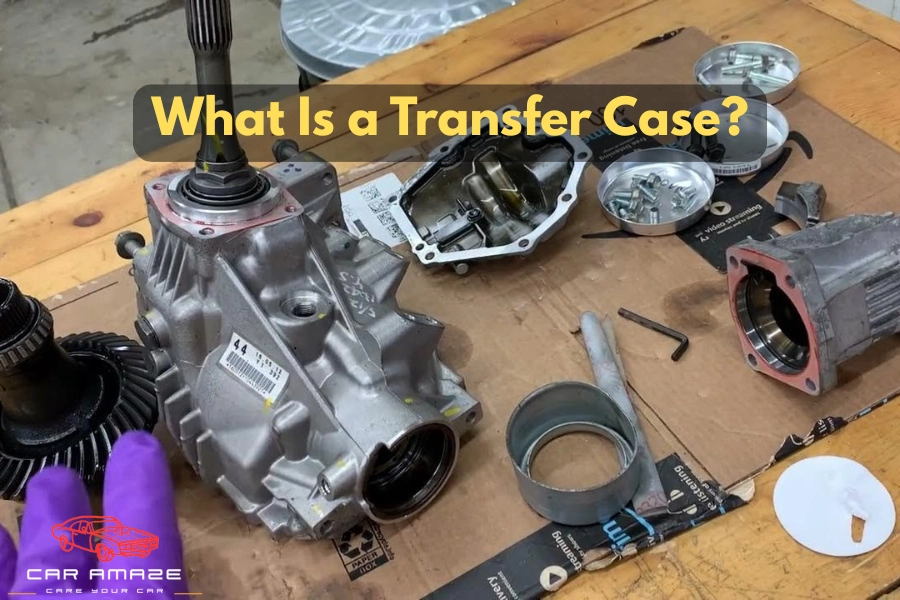
So, what is a transfer case in a car?
A transfer case is a drivetrain component in a car. Its role is to transfer power from the transmission to both the front and rear axles.
In simple terms, the transmission creates power flow, whereas the transfer case distributes that power. It is commonly found in:
- Four-Wheel Drive (4WD) vehicles
- All-Wheel Drive (AWD) vehicles
- Off-road trucks and SUVs
Important Note: If your vehicle only has two-wheel drive (2WD), it does not have a transfer case.
Transfer Case Meaning (Simple Definition)
A transfer case is a gearbox attached to the transmission. It splits engine torque between the front and rear driveshafts. This way, the transfer case plays a key role in powering all four wheels in the car. Without it, you can’t move 4 tires in the 4WD and all-wheel drive cars.
Why the Transfer Case Matters
The transfer box in automobile systems is critical for:
- Improved traction on slippery roads
- Off-road capability
- Towing power
- Stability in snow, mud, sand, or rain
If you’ve ever switched your truck into 4WD, you activated the transfer case, which functions the same in both front-engine and rear-engine vehicles.
How Does a Transfer Case Work?
Let’s discuss what a transfer case does and how it works. To learn this, we need to understand the flow of power in cars.
Power Flow in a 4WD/AWD Vehicle
Here is the complete flow of power from engine to wheels in 4WD/AWD cars:
Engine → Transmission → Transfer Case → Front & Rear Axles → Wheels
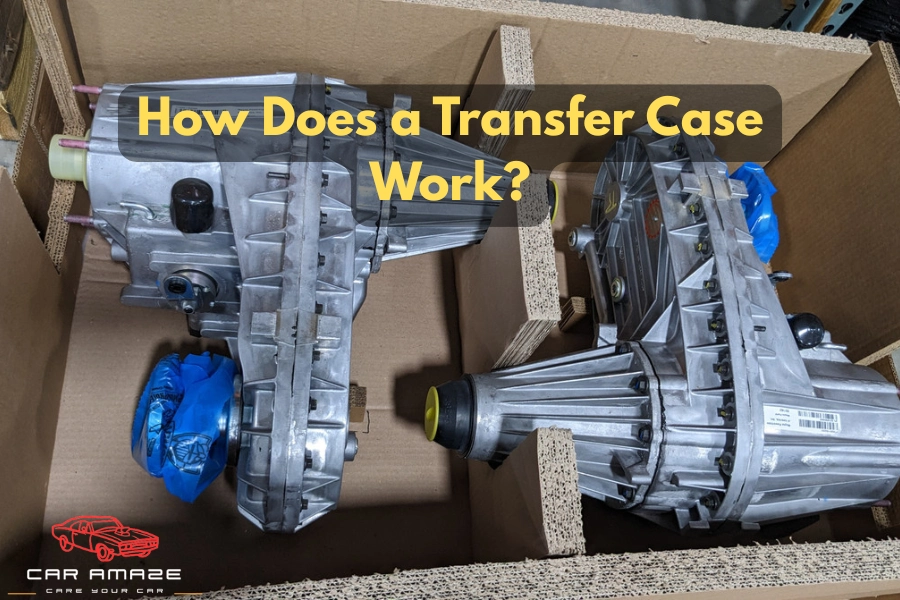
Now the thing to focus on is what a transfer case does in this whole workflow. Actually, the transfer case sits directly behind the transmission and connects to the rear driveshaft and the front driveshaft. The role of the transfer case is to split torque between the rear and front driveshafts.
The Mechanical Basics
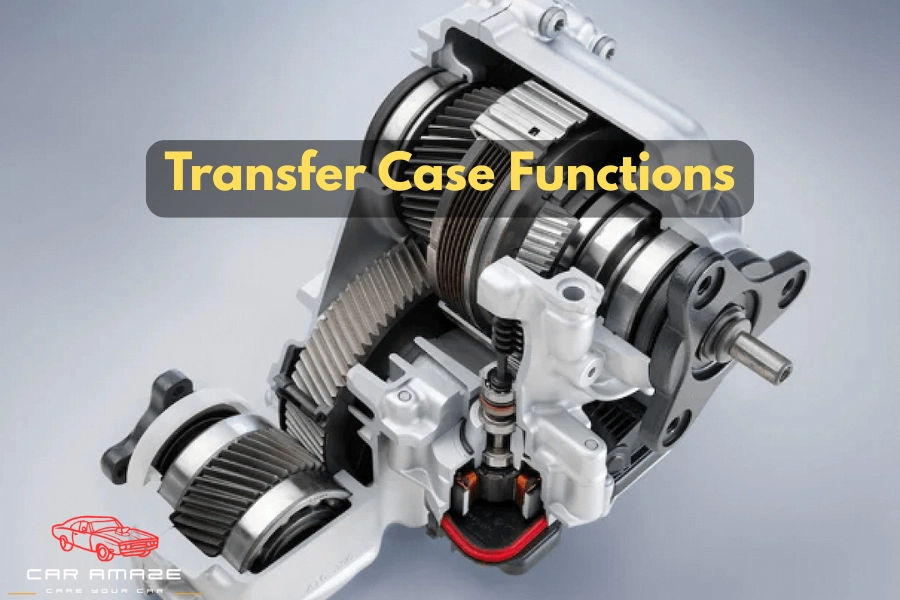
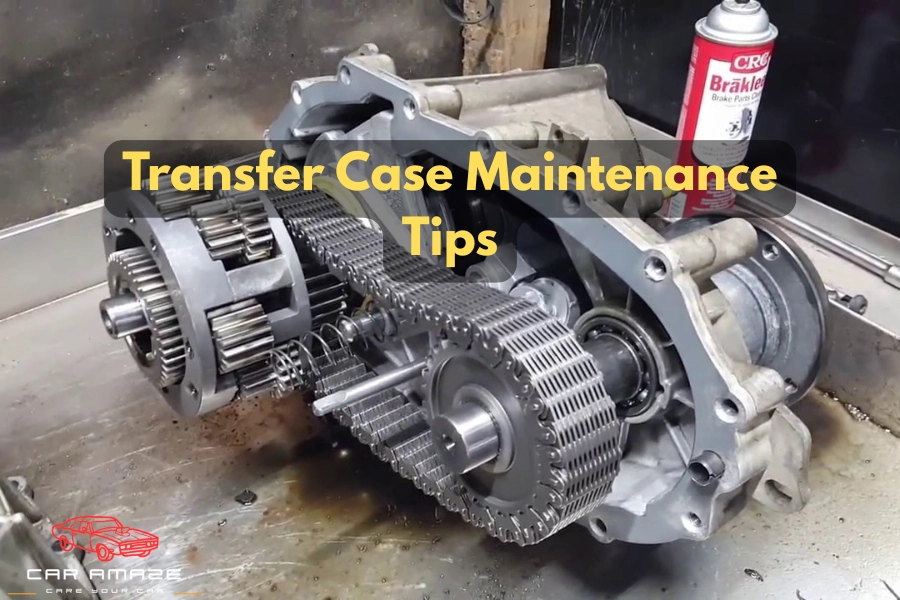
Inside a transfer case, you will see the following main components:
- Gears
- Chains
- Shafts
- Bearings
- Center differential (in some systems)
When the transmission output shaft spins, the transfer case redirects that rotational force to both axles. Some systems use gear-driven setups, while some use chain-driven setups. The gear-driven setups are for stronger, heavy-duty purposes, whereas the chain-driven systems are for lighter, quieter purposes.
Power Distribution Explained
Here is how power is distributed:
- The engine produces torque.
- Transmission adjusts speed and torque ratio.
- The transfer case splits power.
- Driveshafts carry power to the front and rear differentials.
- Differentials send power to the wheels.
- In AWD systems, this happens automatically.
- In many 4WD systems, you manually engage it.
Transfer Case Functions (What Does a Transfer Case Do?)
Let’s answer directly:
What Does a Transfer Case Do?
The main function of a transfer case is to distribute power between the front and rear axles. But it does more than that.
Main Functions of Transfer Case
1. Power Split
The most important job of transfer case is:
- Sends engine power to both front and rear axles.
- Enables all-wheel traction.
Without this, your vehicle would remain 2WD.
2. Traction Enhancement
The transfer case power all four wheels and:
- Improves grip in snow
- Helps in mud and sand
- Reduces wheel spin
This is why AWD and 4WD vehicles perform better in harsh conditions.
3. Mode Selection (In 4WD Vehicles)
Many 4WD systems allow you to select:
- 2WD
- 4WD High (4H)
- 4WD Low (4L)
The transfer case makes this possible.
Why Low-Range Matters
One of the most powerful features is low-range gearing.
Low-range:
- Increases torque output
- Reduces vehicle speed
- Provides more control
It’s useful for:
- Rock crawling
- Climbing steep hills
- Towing heavy loads
- Navigating rough terrain
This is a key part of the 4WD transfer case function.
Types of Transfer Cases
Not all transfer cases are built the same. Different car models come with specific transfer cases. Here is the overview of common types:
1. Part-Time Transfer Case
This type is commonly found in traditional 4WD trucks, such as older Jeep or Toyota models. The part-time transfer case lets you manually select between 2-wheel and 4-wheel drive.
For cars with part-time transfer cases, only switch to 4-wheel drive when the surface is like snow, mud, or gravel. The reason behind this is that part-time systems do not have a center differential. If 4WD is engaged on dry pavement, it can cause drivetrain binding. This binding puts high stress on car components and may lead to damage over time.
2. Full-Time / AWD Transfer Case
The full-time or AWD transfer case can provide power to all four wheels continuously. It uses a center differential to manage the difference in wheel speeds. This keeps your car safe from drivetrain binding when driving on dry roads.
This system is commonly found in vehicles such as Subaru’s AWD models, Audi Quattro systems, and Toyota AWD SUVs.
3 Chain-Driven vs. Gear-Driven Transfer Cases
The transfer cases also differ based on their internal components. There are two types: chain-driven and gear-driven.
- Chain-driven transfer cases are lighter and quieter. It is used in modern SUVs where comfort and efficiency are priorities.
- The gear-driven transfer case is stronger and more durable. That is why it is used in heavy-duty vehicles where toughness, power, and reliability are necessary.
GMC and Buick vehicles typically use automatic, full-time AWD transfer cases in their all-wheel-drive models.
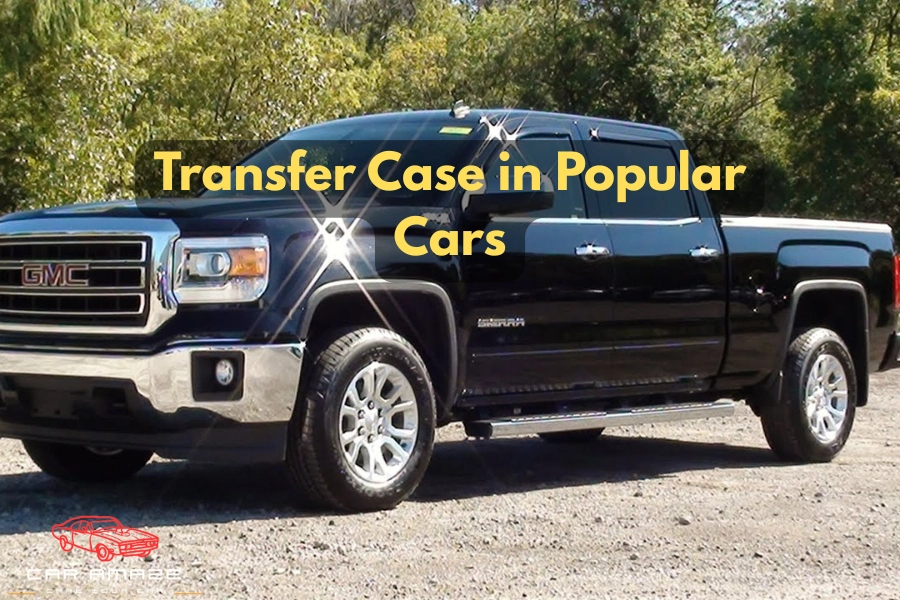
Transfer Case Types in Popular Cars
GMC and Buick SUVs that feature all-wheel drive typically use full-time or automatic AWD systems, designed to provide smooth traction and stability on paved roads. GMC trucks, along with Toyota, Ford, and Jeep trucks and SUVs, often come with part-time 4WD systems that include selectable high- and low-range gearing for off-road capability. Crossovers from Honda, Nissan, and Chevrolet generally employ front-wheel-biased AWD systems, which automatically distribute power to the rear wheels as needed for improved stability and traction on-road.
Transfer Case vs. Transmission vs. Differential
Many drivers are confused about the transfer case, transmission, and differential. Let’s clarify these terms:
Transmission: The transmission controls gear ratios, adjusts speed and torque, and connects the engine to the drivetrain. Its role does NOT include splitting power from front to rear.
Transfer Case: Its key role is to split torque between the front and rear axles. It is available in 4WD and AWD vehicles.
Differential: The role of the differential is to split the torque between the left and right wheels. It is located on each axle.
Summary:
- Transmission = speed control
- Transfer case = power distribution between front/rear
- Differential = power distribution between the left and right wheels.
Signs of a Bad Transfer Case
If you have a 4WD or AWD car with a transfer case, you must be aware of the signs of a bad transfer case. If your transfer case begins failing, you may notice:
Strange Noises
Strange noises like grinding, whining, and clunking when shifting. These noises are often caused by worn gears or bearings.
Difficulty Shifting or Blinking 4WD Light
Difficulty shifting into 4WD, trouble engaging 4H or 4L, or a blinking 4WD light can all indicate a transfer case issue. This may indicate actuator or internal damage.
Fluid Leaks
Transfer cases use specialized fluid. If you see fluid leakage like oil spots under the vehicle, it is a sign of a bad transfer case. It could be due to a failing seal.
4WD Not Engaging
Another sign of a bad transfer case is 4WD not engaging. If your front wheels don’t receive power, the transfer case may be malfunctioning. It can also occur if the chain is not stretched or there is damage to internal components.
Transfer Case Maintenance Tips
Proper maintenance prevents expensive repairs.
Common Transfer Case Symptoms Checklist
- Unusual noises while driving
- Vibration under load
- Trouble switching modes
- Fluid leaks
- Warning lights
If you notice these, inspect them immediately.
Change Transfer Case Fluid
Fluid lubricates gears and chains.
Typical interval to change fluid:
- Every 30,000 to 60,000 miles (Check your owner’s manual.)
Old fluid leads to:
- Overheating
- Premature wear
- Internal damage
Check for Leaks
Inspect output shaft seals, input seals, and case housing. Leaks reduce lubrication and cause failure.
Engage 4WD Periodically
Even if you rarely use 4WD:
- Engage it occasionally
- Keeps components lubricated
- Prevents actuator seizure
This is especially important in AWD systems.
Some Additional Queries About the Transfer Case on a Car
Here are answers to some additional queries regarding the transfer box in an automobile:
Can a Car Run Without a Transfer Case?
No, if the vehicle is designed as AWD or 4WD. Removing the transfer case would disconnect power to one axle and make the drivetrain incomplete. However, 2WD does not have a transfer case and runs without it.
How Much Does a Transfer Case Replacement Cost?
Costs vary widely depending on vehicle type. On average, the repair cost is around $500 – $1,500, and the replacement cost is around $1,500 – $4,000+. Moreover, the repair and replacement cost of a transfer case in a heavy vehicle is expensive due to its complexity.
What is the Difference Between AWD and 4WD Transfer Cases?
The 4WD transfer case is driver-controlled and includes high and low range. It is especially designed for off-road vehicles. 4WD systems prioritize off-road performance.
In comparison, AWD transfer cases always stay active and feature automatic torque distribution. In this, no driver input is required. AWD systems prioritize convenience and safety.
How Often Should Transfer Case Fluid Be Changed?
Most manufacturers recommend changing the fluid after every 30,000 to 60,000 miles. Frequent towing or off-roading may require changing the fluid earlier.
Conclusion
So now you know:
- What is a transfer case on a car?
- What does a transfer case do?
- How it works
- Types of systems
- Signs of failure
- Maintenance tips
The transfer case is the central component in the 4WD and AWD cars. It plays a key role in distributing power to all 4 wheels. It is usually available in 4WD and AWD cars, which are made to run in snow, rain, mud, mountains, or with too heavy a load.
FAQs
What is a transfer case on a car?
A transfer case is a drivetrain component that sends power from the transmission to both the front and rear axles in AWD and 4WD vehicles.
What does a transfer case do?
A transfer case distributes engine power between the front and rear wheels. It plays a key role in the 4WD or AWD functionality and improves traction.
What are the signs of a bad transfer case?
Common signs include strange noises, difficulty shifting into 4WD, fluid leaks, vibrations, or the 4WD system not engaging properly.
Can you drive with a bad transfer case?
Driving with a failing transfer case is risky, as it can lead to loss of traction, drivetrain damage, or complete 4WD system failure.
How often should the transfer case fluid be changed?
Most vehicles require transfer case fluid changes every 30,000 to 60,000 miles to ensure smooth operation and prevent internal damage.