
How to Tell If My Car Is PZEV (Easy 5-Step Guide for Drivers)

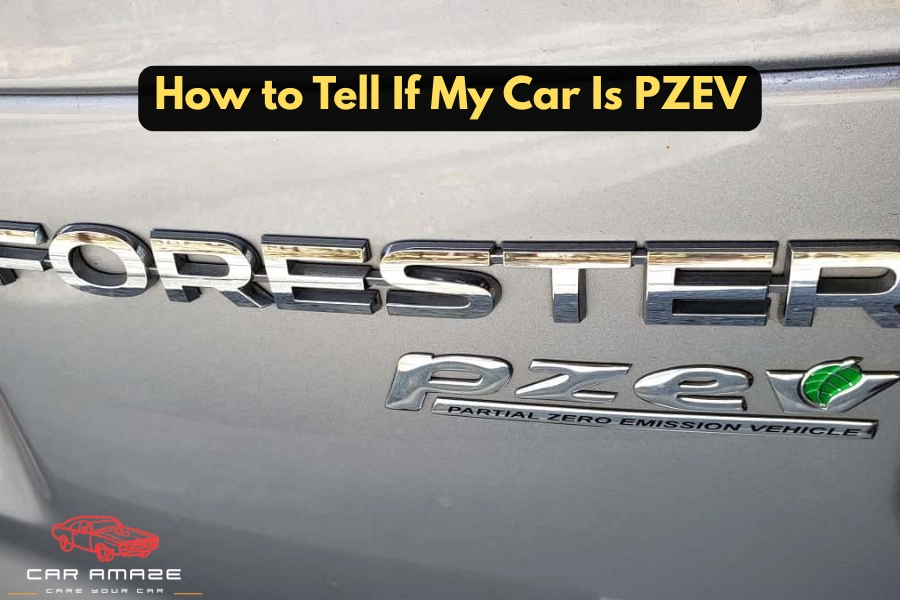
Knowing how to tell if my car is PZEV is essential for car owners. Many drivers hear about low-emission vehicles but are not sure how to tell if their car is PZEV. The PZEV vehicles are those that produce extremely low emissions and are better for the environment.
The tricky part? There’s no big “PZEV badge.” Therefore, it might be tricky to tell if your car is PZEV. But do not worry. In this guide, I have prepared a 5-step easy guide for you so that you can easily check if your car is PZEV or not.
This guide is about PZEV checking, along with tips, mistakes to avoid, and expert insights to make the process easy.
Quick Answer: How to Tell If My Car Is PZEV 📄
There are five easy ways to check if your car is PZEV.
- Check the Under-Hood Emissions Label (VECI Label): Look for wording like “PZEV,” “Partial Zero Emission Vehicle,” “SULEV/PZEV,” or “California emissions compliant.”
- Check Your VIN Number: Use your dashboard VIN, registration papers, or a VIN decoder to confirm PZEV status.
- Check the Owner’s Manual or Documents: Look for emissions certification and PZEV warranty details (usually 150,000 miles).
- Check Manufacturer Specifications: Search online or contact the dealer to verify if your car model has a PZEV version.
- Look at Where the Car Was Sold: Some regions have strict emission rules. Cars sold in California, New York, or the Northeast US are more likely to be PZEV.
The most accurate method is the under-hood emissions label, but you can also use documents or manufacturer info.
Table of contents
- What Is a PZEV? (Simple Explanation)
- 5 Easy Ways to Tell If Your Car Is PZEV
- Common Mistakes When Checking PZEV
- PZEV vs SULEV vs ZEV (Easy Comparison)
- Does PZEV Affect Performance?
- Benefits of PZEV Cars
- Conclusion
- FAQs
What Is a PZEV? (Simple Explanation)
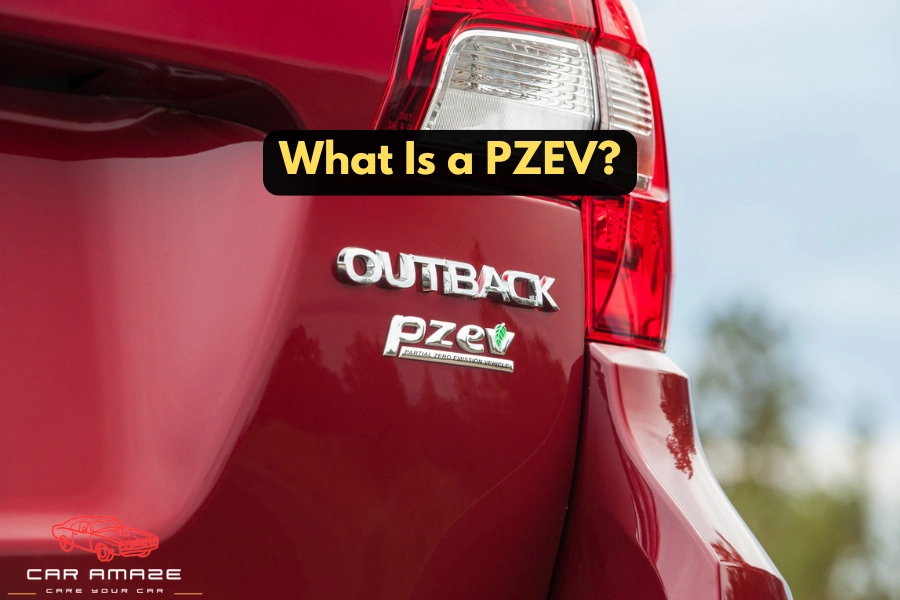
A PZEV (Partial Zero Emission Vehicle) is a gasoline-powered car that produces very low emissions. It meets strict standards set by the California Air Resources Board (CARB) and is cleaner than regular gasoline cars.
Key Features of a PZEV:
- Runs on gasoline (not electric)
- Produces extremely low emissions
- Meets SULEV (Super Ultra Low Emission Vehicle) standards
- Comes with a long emissions warranty (up to 15 years / 150,000 miles)
In short, a PZEV is an environmentally friendly car that runs on gasoline and produces very low emissions. It is well optimized for the environment without affecting the performance.
5 Easy Ways to Tell If Your Car Is PZEV
Here are the 5 easy ways to tell if your car is PZEV or not. Follow these methods step by step to confirm your vehicle.
Method 1: Check the Under-Hood Emissions Label (VECI) (Most Important)
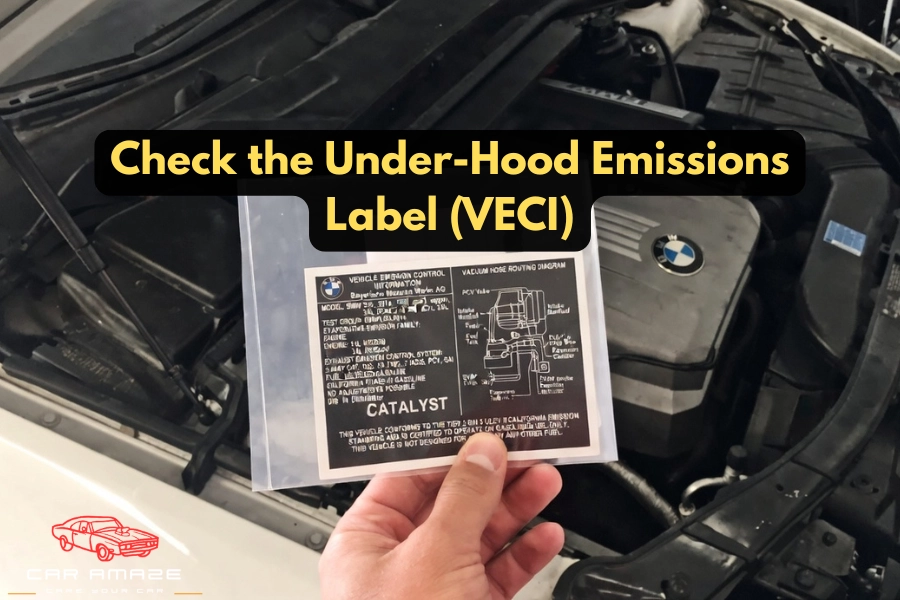
Checking the VECI label (Vehicle Emission Control Information) is the fastest and most reliable way to identify a PZEV car. It can easily help you identify the PZEV status of your car.
Where to Find VECI
Finding the VECI number is not a difficult task. Here are some common places to look for:
- Under the hood
- Near the radiator support
- On the underside of the hood
- Around the engine bay
What to Look For In VECI
After you have found the PZEV number, look for any of these terms:
- PZEV
- Partial Zero-Emission Vehicle
- SULEV / PZEV
- California emissions compliant
If you find these, congratulations! Your car is a PZEV (Partial Zero Emission Vehicle).
Important Tip Regarding VECI
When checking the VECI number, make sure you check if there is anything that shows your car is not PZEV. For example, if the label says “Not for sale in California emissions states,” your car is NOT a PZEV.
This method is the easiest and the only solution to check if my car is PZEV.
Method 2: Check VIN Number to Tell If Your Car is PZEV
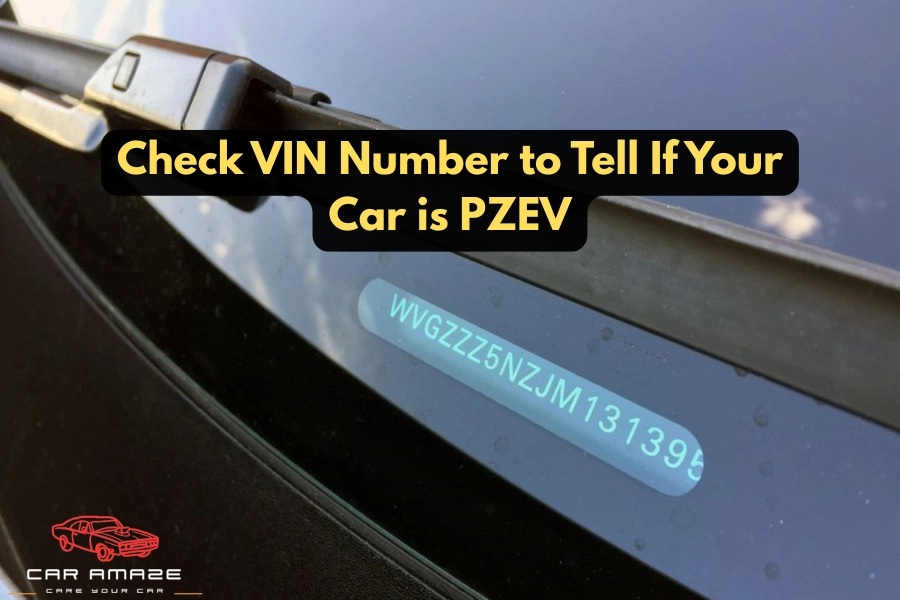
In some cars, the VIN (Vehicle Identification Number) can also help verify if your car is PZEV. A VIN number does not tell the PZEV status directly, but you can use it in some alternative ways.
Where to Find VIN
The VIN number is not hard to find. These are some common places where a VIN number exists:
- Dashboard (near windshield)
- Driver-side door frame
- Registration documents
How to Use VIN to Tell if Your Car is PZEV
Now the question is how you can use VIN to tell if your car is PZEV. Here are some ways:
- Use a VIN decoder tool. Many online VIN decoders can show emissions certification, including PZEV status, for specific models.
- Contact a dealership and get the PZEV status of your car using the VIN. This is one of the most accurate ways to verify.
- Search manufacturer databases using VIN and find if your car is PZEV.
Important Warning:
There is no fixed VIN digit that always means PZEV. Avoid myths like:
“Z in VIN = PZEV” ❌ (Not reliable)
Method 3: Check Owner’s Manual or Documents to Verify PZEV
Your car’s official documents often include emissions information. You can check the following sections in the owner’s manual to verify if your car is PZEV:
- Emissions certification section
- Warranty details
- Environmental compliance notes
Key Indicator
If your car has:
150,000-mile emissions warranty
That is a strong sign that it may be a PZEV vehicle.
Method 4: Check Manufacturer Specifications for PZEV Checkup
Many automakers and car dealers clearly mention PZEV versions of their cars. When you buy a new or used vehicle, ask the car dealer about PZEV status or search for car specs, including PZEV, online.
Popular Brands with PZEV Models:
- Subaru
- Toyota
- Honda
- Hyundai
- Certain models of GMC and Buick have also been certified as Partial Zero Emissions Vehicles (PZEV).
How to Tell If Your Car is PZEV Using Manufacturer Specifications:
The easiest way is to search online for “[Your car model] PZEV specification.” For example:
- Honda Accord PZEV specs
- Subaru Outback PZEV version
This is one of the easiest ways to confirm car specifications and find out if your car is PZEV.
Method 5: Look at Where the Car Was Sold
PZEV vehicles are most common in regions with strict emissions rules. So, you can also check the car’s origin to tell if your car is PZEV or not.
Common Areas With Strict Emission Rules:
- California
- New York
- Northeast United States
If your car was originally sold in these areas, it has a higher chance of being PZEV.
Bonus Method to Tell if Your Car is PZEV
If you’re still unsure and unable to tell if your car is PZEV, try these methods:
Visit a dealership: You can visit a dealership and confirm whether the car is PZEV. They will check the VIN database and manufacturer records for you and verify the PZEV status.
Ask a mechanic: They can inspect the emissions label and identify system components. The experts will accurately look for the PZEV status of your car.
What Exactly to Look for on the Emissions Label
When checking if your car is PZEV, use this quick PZEV identification checklist:
- “PZEV” mentioned
- “California emissions compliant.”
- SULEV standard listed
- Long emissions warranty mentioned
- No “non-California emissions” warning
If you see most of these, your car is very likely a PZEV vehicle.
Practical Tips to Identify a PZEV Car
Use these expert tips for faster results:
- Always check the under-hood label first
- Cross-check with VIN + manufacturer specs
- Don’t rely on assumptions or online guesses
- Verify warranty details
- If unsure, ask a dealer or mechanic
Common Mistakes When Checking PZEV
Many drivers make simple mistakes that lead to confusion and misidentify their vehicle’s emissions status. Make sure you avoid the following mistakes:
Mistake 1: Assuming All Cars Are PZEV
Not all gasoline cars are PZEV; only specific models are. Even cars from the same brand may not have PZEV versions. Therefore, always check the emission label or manufacturer specifications before making a final decision.
Mistake 2: Trusting VIN Myths
There is no universal VIN code for PZEV. Some websites or forums claim that certain letters or numbers indicate PZEV, but these are often unreliable. The best way is always to cross-check with an official VIN decoder or dealer information.
Mistake 3: Ignoring the Emissions Label
The underhood label is the most accurate source. Skipping this step can lead to false assumptions about your car’s VIN (Vehicle Identification Number).
Mistake 4: Confusing PZEV with Hybrid
PZEV compliance also depends on types of car engine. The PZEV is for cars that are:
- Gas-powered
- Not electric
- Not hybrid
Just because a car has low emissions does not make it a hybrid. Many people assume hybrids automatically meet PZEV standards. But the reality is different. PZEV refers specifically to gasoline cars with extremely low emissions.
PZEV vs SULEV vs ZEV (Easy Comparison)
These are all labels for cars that are good for the environment, but they differ in how much pollution they make.
PZEV (Partial Zero Emission Vehicle): A gasoline car that produces almost no pollution. It also comes with extra protections like a 15-year emissions warranty.
SULEV (Super Ultra Low Emission Vehicle): Gas cars that are clean, but slightly more polluting than PZEV.
ZEV (Zero Emission Vehicle): Fully electric cars that don’t produce any tailpipe emissions.
Understanding these terms helps avoid confusion.
| Type | Fuel Type | Emissions Level |
| PZEV | Gasoline | Extremely low |
| SULEV | Gasoline | Very low |
| ZEV | Electric | Zero emissions |
Does PZEV Affect Performance?

Now you know the methods to tell if your car is PZEV. The common question of most drivers is whether the car is PZEV, and whether it will affect the performance? The simple answer is no, PZEV does not affect performance.
You get:
- Same engine power
- Same fuel economy
- Same driving experience
The only difference is cleaner emissions.
Benefits of PZEV Cars
PZEV vehicles offer several advantages without changing how you drive. Key benefits of PZEV cars include:
- Cleaner air and lower pollution
- Longer emissions warranty
- No performance loss
- No need to charge like electric cars.
- More affordable than EVs
Conclusion
So, these 5 methods are enough to tell if your car is PZEV. Start with the under-hood emissions label, which is the most reliable method. Then confirm using your VIN, owner’s manual, or manufacturer specifications. Cars sold in emissions-regulated states are also more likely to be PZEV.
Moreover, remember that PZEV vehicles are only those that run on gasoline. Hybrid and electric cars are not in the PZEV category or type. PZEVs are cleaner gasoline vehicles that produce fewer emissions.
FAQs
Does airbag deployment mean the car is totaled?
No. Airbag deployment alone does not automatically total a car. Insurance companies determine a total loss by comparing repair costs with the vehicle’s actual cash value.
How much does it cost to replace airbags?
Replacing airbags can cost between $1,000 and $4,000 per airbag, depending on the vehicle and airbag type. Multiple airbags can push repair costs above $10,000.
Can insurance repair a car after airbags deploy?
Yes. Insurance companies may approve repairs if the total repair cost is below the total loss threshold.
How do insurance companies decide if a car is totaled?
Insurers compare repair costs with the vehicle’s actual cash value. If repair costs exceed about 70–75% of the car’s value, the vehicle may be declared a total loss.
Is it worth fixing a car after airbags deploy?
It depends on the vehicle’s value and repair costs. For newer vehicles with high value, repairs may still be financially reasonable.
Can you drive a car after airbags deploy?
The car might still run, but it should not be driven until the airbag system and safety components are inspected and repaired.
Can a car pass inspection after airbags deploy?
Only if the airbag system is properly repaired and replaced. Driving with deployed airbags typically fails safety inspections.




It’s always a joy to stumble upon content that genuinely makes an impact and leaves you feeling inspired. Keep up the great work!
Thank you so much! I truly appreciate your encouragement and support.