
What Voltage Should a Car Battery Be? (Normal, Low & High)


Your car battery is the heart of your vehicle’s electrical system. But what voltage should a car battery be to work properly? Knowing about this is important to avoid unexpected breakdowns, diagnose problems early, and extend your battery’s life. Drivers who don’t know about this may face challenges later.
If your car is slow to start, headlights look dim, or electronics act strangely, low or incorrect battery voltage could be the reason. In this guide, you’ll learn the ideal car battery voltage, how to check it, and what low or high readings really mean.
Table of contents
- What Is Car Battery Voltage?
- What Voltage Should a Car Battery Be When Off?
- Car Battery Voltage While Running and Starting
- Steps to Check Car Battery Voltage
- Low and High Range of Car Battery Voltage
- Why Is My Car Battery Voltage Going Up and Down?
- How Battery Voltage Affects Car Performance
- How Long Does a Car Battery Last
- Conclusion
- FAQs
What Is Car Battery Voltage? (Simple Explanation)

Car battery voltage is the electrical pressure that powers your vehicle. It helps start the engine and runs electronics like lights, radio, and sensors.
Most cars use a 12-volt battery system. The alternator supports this voltage and keeps the battery charged while driving. Without proper voltage, your car simply would not start or run properly.
What Voltage Should a Car Battery Be When Off?
When your engine is off, the voltage of a car battery should ideally be:
- 12.6V–12.8V → Fully charged
- 12.4V–12.7V → Acceptable range
- Below 12.2V → Weak battery
- Below 12.0V → Serious issue
Battery Charge Level Breakdown
Here is the battery charging percentage based on the available voltage:
| Voltage | Charge Level |
| 12.6V+ | 100% |
| 12.5V | 90% |
| 12.4V | 75% |
| 12.2V | 50% |
| 12.0V | 25% |
| 11.8V↓ | Dead |
Tip: Always check voltage after the car has been off for a few hours for accurate results. The battery voltage helps you understand the power or charging level of your car’s battery.
Car Battery Voltage While Running and Starting
Your car battery works differently when the engine is running as compared to when starting. So, what voltage should a car battery be when the engine is on versus stopped? When the engine is on, the alternator controls voltage. In comparison, during startup, the voltage is fully provided by the battery, and it must provide enough power to crank the engine. Understanding both situations helps you diagnose battery and charging system issues more accurately.
What Voltage Should a Car Battery Be When Running?

When the engine is running, the alternator charges the battery and powers the car’s electrical systems. The voltage should typically be:
- 13.7V–14.7V → Normal charging
- Below 13V → Undercharging problem
- Above 15V → Overcharging issue
If the voltage is too low, the battery may not charge properly. This low-voltage condition leads to frequent breakdowns. If it’s too high, it can overheat the battery and damage sensitive electronics.
In most cases, abnormal readings point to a faulty alternator, voltage regulator, or wiring issue. You can even feel the car hesitate when accelerating sometimes. These issues should be checked immediately.
What Voltage Does a Car Battery Need to Start?

To start your car, the battery must deliver enough voltage to crank the engine:
- Minimum required: ~10.5V
- Healthy start: 12V or higher
In rare cases, a car might start at low voltage, but it will put extra strain on the battery and starter motor. This can lead to faster battery wear and starting problems over time.
If your car struggles to start, it’s a sign. If your car’s battery voltage is too low, the car will struggle to start. You might need to jumpstart a car if the voltage is near the end. This situation needs charging or replacement.
How to Check Car Battery Voltage (Step-by-Step Guide)

Checking the voltage of a car battery is not a difficult task. You just need some simple, affordable tools and easy steps to follow.
Tools You Need
Make sure that you have these tools before checking the car battery voltage:
- Multimeter
- Safety gloves
Initial steps to check the car battery voltage
Here is the process to check the battery voltage:
- Set your multimeter to DC volts (20V range).
- Connect the red probe to the positive (+) terminal.
- Connect the black probe to the negative (–) terminal.
- Read the voltage on the screen.
When the engine is off (What It Means)
When the engine is turned on, the multimeter will show the following details:
- Your battery’s actual charge level.
- Normal reading: 12.4V–12.6V+
- Lower voltage = weak or discharged battery
Best time to test: after the car has been off for a few hours
When the Engine Is RUNNING (What It Means)
On the other hand, when the engine is running, it shows your charging system (alternator) performance
- Normal reading: 13.7V–14.7V
- Low or high = charging system problem
Key Difference (When Checking Car battery Voltage)
When the engine is turned off, the multimeter tests battery health. In contrast, when the engine is running, the multimeter tests the alternator/charging system.
What Voltage Should a Car Battery Be (Low and High Range)

Below I have clearly explained the low and high voltage ranges for the car battery.
What is the Low Car Battery Voltage:
Here is the breakdown of what voltage is low for a car battery:
- Voltage below 12.4V means the battery is weak.
- A reading below 12.0V means a bad battery.
- And below 11V means the battery is in critical condition.
Symptoms of Low Voltage
Below are some signs and symptoms of low car battery voltage:
- Slow engine crank
- Clicking sound when starting
- Dim headlights
- Electronics malfunction
- Battery light is on in the car
What is the high car battery voltage?
The voltage above 14.8V–15V is considered to be the high car voltage for a car battery. The main causes of high voltage in a car battery are a faulty alternator and a bad voltage regulator. It is associated with the following risks:
- Battery overheating
- Acid leakage
- Damage to electronics
So, you must be aware of what voltage a car battery should be. Regularly monitor voltage and make sure that it is neither too low nor too high.
Why Is My Car Battery Voltage Going Up and Down?
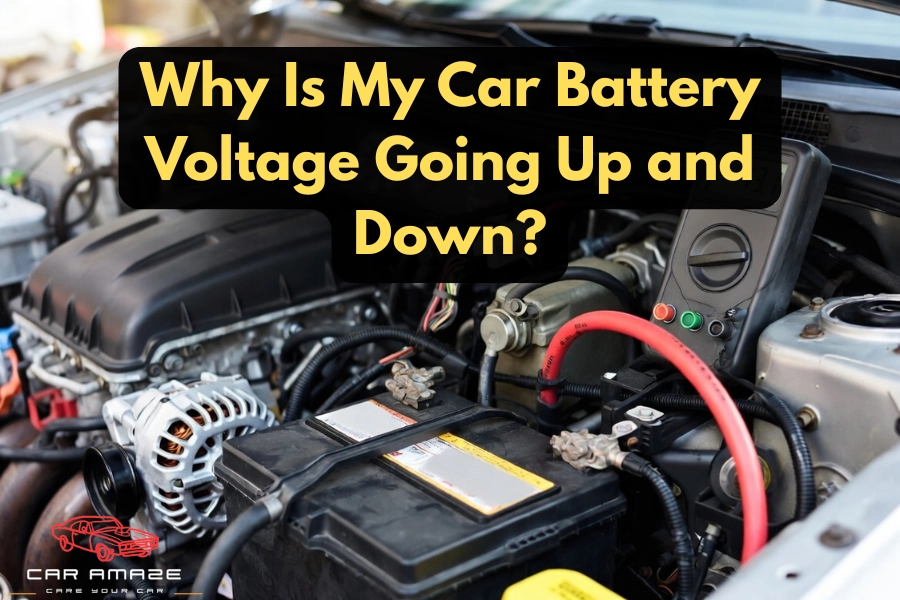
You might be confused about why the battery voltages go up or down. The voltage fluctuations can happen due to:
- Alternator inconsistency
- Corroded battery terminals
- High electrical load (AC, lights, etc.)
- Weak or aging battery
These issues don’t happen randomly. Several common reasons include:
- Cold weather is reducing efficiency
- Old battery losing capacity
- Parasitic drain from electronics
- Short trips do not charge the battery fully
- Loose or corroded connections
Should You Charge Your Battery If Voltage Is Low?
Yes, you must charge the battery if the voltage is below the average limit. Here is the breakdown:
- If the voltage range is 12.0V–12.4V, recharge is recommended.
- Below 10V means risk of permanent damage to the car battery.
If your battery doesn’t hold a charge after charging, it’s time to replace it.
How Battery Voltage Affects Car Performance
The battery voltage highly affects the overall car performance and efficiency. Low or unstable voltage can lead to the following:
- Hard starting
- Increased strain on the alternator
- Electrical system failures
- Poor performance of sensors and the ECU
Therefore, always keep monitoring your car battery voltage. You should be aware of what voltage a car battery should be. The moment you find a sign of low battery voltage or find low battery voltage using a multimeter, charge or replace it immediately.
How to Maintain Proper Battery Voltage
Here are some tips to maintain the optimal voltage on a car battery:
- Clean battery terminals regularly.
- Drive your car frequently.
- Avoid very short trips.
- Use a trickle charger if needed.
How Long Does a Car Battery Last?
The average lifespan of a battery varies based on battery quality, usage, and maintenance. However, the average lifespan of a car battery is 3–5 years. In some cases, with extreme care, it can last up to 5–7 years.
Extreme weather plays a big role in battery lifespan. The heat speeds up wear, whereas the cold reduces performance.
Conclusion
So, what voltage should a car battery be? In short, to keep your car running smoothly, remember these key numbers:
- 12.6V (engine off) means the battery is fully charged.
- 13.7V–14.7V (running) means the battery is normally charging.
- A reading below 12V shows a problem in the battery.
- And below 10.5V highlights a serious battery issue
Regular voltage checks can help you avoid sudden breakdowns and extend your battery life.
FAQs
Is 12.2 volts OK for a car battery?
12.2 volts is considered borderline and indicates the battery is about 50% charged. It can still work, but you should recharge it soon to avoid starting problems.
What voltage is too low for a car battery?
A voltage below 12V is considered low and usually means the battery is discharged or weak. If it drops below 11V, the battery is in critical condition and may fail to start the car.
Can a car start at 11 volts?
Yes, a car may sometimes start at 11 volts, but it is not reliable. Starting at such a low voltage puts extra strain on the battery and starter.
Is 14.7 volts too high for a car battery?
No, 14.7 volts is still within the normal charging range when the engine is running. However, if the voltage goes above 15 volts, it may indicate an overcharging problem.
Why is my battery only 12V when running?
If your battery reads only 12V while the engine is running, it likely means the alternator is not charging properly. This could be due to a faulty alternator, bad wiring, or a failing voltage regulator.
Does cold weather reduce battery voltage?
Yes, cold weather can reduce battery efficiency and lower voltage output. This is why cars are harder to start in winter, especially with a weak battery.
How often should I check battery voltage?
You should check your car battery voltage at least once every 2–3 months. Regular checks help you catch problems early and avoid unexpected breakdowns.
What is normal alternator voltage?
A normal alternator voltage range is between 13.7V and 14.7V when the engine is running.