
Are Subarus Good Cars? Reliability, Costs & More

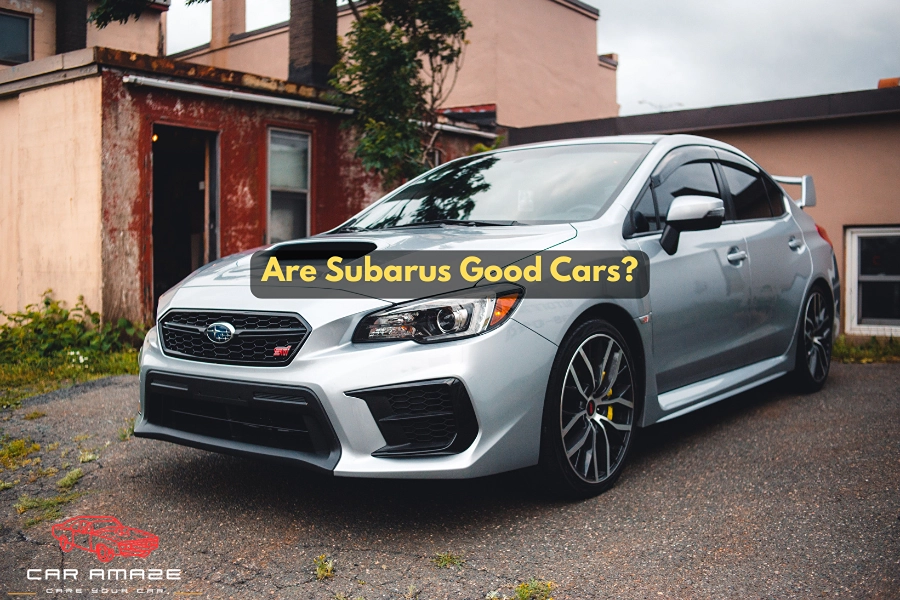
A Subaru can look like an easy choice if you want a safe, practical vehicle with all-wheel drive. But buying one based only on the Subaru badge can lead to the wrong decision, especially on the used market. Different models and model years can have very different ownership experiences. The good news is that current Subaru reliability is strong, while knowing the model’s weak points can help you avoid an expensive mistake.
Table of contents
- Are Subarus Good Cars?
- How Reliable Are Subarus?
- What Are the Downsides of Owning a Subaru?
- Are Subarus Good Cars for Everyday Driving?
- Are Subarus Good Used Cars?
- Which Subarus Are Good Cars to Buy?
- Subaru Model Comparison: Which One Should You Buy?
- Buying Used or New Subarus Cars
- Subaru Reliability, Common Problems & Ownership Costs
- Common Subaru Problems to Watch For
- Common Questions About Subaru Cars
- Check Recalls Before Buying a Used Subaru
- Who Should Buy a Subaru?
- Are Subarus Worth Buying in 2026?
- What Should You Check Before Buying a Used Subaru?
- Subarus Maintenance and Comparison with Other Models
- Final Verdict
- FAQs
Are Subarus Good Cars?
Yes, Subarus are generally good cars, particularly for drivers who value all-wheel drive, safety, practicality, and long-term ownership. But that doesn’t mean every Subaru is equally reliable or that every model is the best choice for every buyer.
Current Consumer Reports data puts Subaru in a strong position. For 2026
- Subaru ranks #1 overall among mainstream brands
- #2 for new-car reliability
- #3 for owner satisfaction
- Subaru ranks #12 for used-car reliability
- #20 for maintenance and repair costs
which shows why buying a used Subaru requires more attention to its specific model, year, and condition.
Subaru also has a broad range of vehicles. A Crosstrek, Forester, Outback, Ascent, WRX, and BRZ are built for very different buyers. Judging all of them by the same standard doesn’t tell you much about what ownership will actually be like.
Subaru: Quick Pros and Cons
| Pros | Cons |
| Standard AWD on most models | Maintenance can be more involved |
| Strong safety reputation | Fuel economy isn’t always class-leading |
| Good owner satisfaction | CVT concerns on certain models and years |
| Practical interiors | Some older engines had known problems |
| Good choice for snow and poor weather | Not every model suits every buyer |
| Strong selection of SUVs and crossovers | Used-car reliability varies |
So, are Subarus a good car for the average driver?
They can be. The strongest case for Subaru comes from buyers who will actually use its strengths. If you regularly drive through snow, rain, steep roads, or other poor conditions, standard AWD can be a meaningful advantage.
If you live somewhere with mild weather and simply want the cheapest, simplest daily driver, another brand may make more sense.
How Reliable Are Subarus?
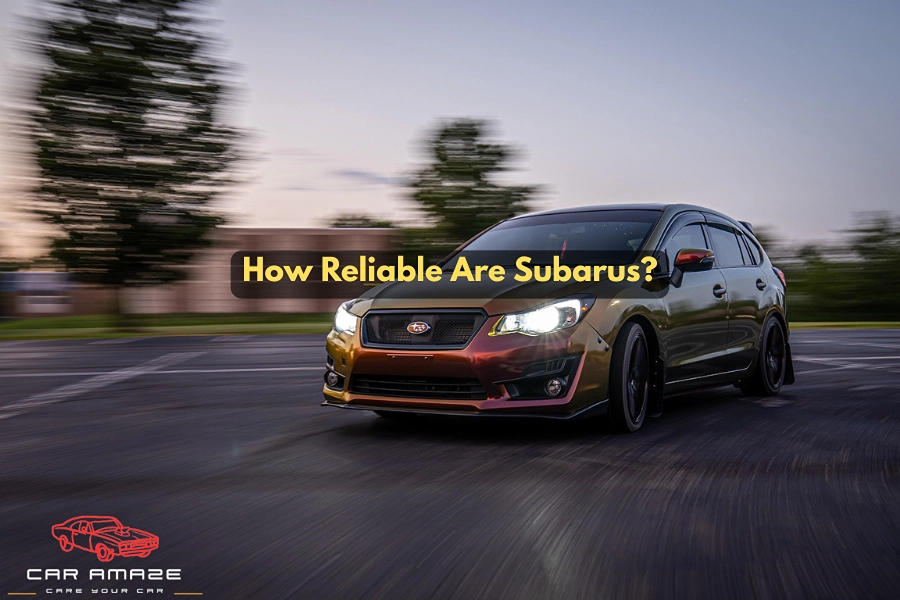
Subaru’s current reliability record is one of its strongest selling points.
Consumer Reports currently ranks Subaru second among all brands for predicted new-car reliability for 2026, while also placing it first among mainstream brands overall. Its overall brand position considers reliability, owner satisfaction, safety, and road-test performance.
Subaru’s own summary of the Consumer Reports rankings says the brand was named Best Overall Automotive Brand for 2026, with nine recommended Subaru models listed by the manufacturer.
That doesn’t mean every Subaru will run trouble-free.
Reliability surveys work with averages. A particular car can have an excellent record and still develop a major problem, while another car from the same model year can run for years without a serious repair.
That’s why you should look at three things separately:
- Brand reliability
- Model and model-year reliability
- Condition and maintenance history of the individual vehicle
The third point becomes especially important when you’re shopping for a used Subaru. You may also read our guide on whether Buick is a good car.
Why Subaru Reliability Has a Strong Reputation
Several characteristics have helped Subaru build its reputation over the years.
Standard All-Wheel Drive
Subaru is known for making all-wheel drive a central part of its lineup rather than treating it as a costly option on most models.
That makes Subaru particularly appealing to drivers who regularly encounter snow, rain, gravel roads, steep roads, or other conditions where additional traction is useful. Consumer Reports also identifies standard full-time AWD as one of the defining characteristics of the brand.
AWD doesn’t make a vehicle impossible to lose control of, and it doesn’t replace appropriate tires. But it can help a vehicle maintain traction when conditions become difficult.
Boxer Engines
Most traditional Subaru models use a horizontally opposed “boxer” engine design.
The pistons move horizontally toward and away from each other rather than moving vertically in a conventional inline engine. Consumer Reports notes that this design reduces vibration and contributes to a low center of gravity.
That low center of gravity can contribute to stable handling, while the engine layout has become one of Subaru’s defining mechanical characteristics.
Strong Safety Focus
Safety is another major reason buyers consider Subaru.
The Insurance Institute for Highway Safety (IIHS) has awarded multiple Subaru models strong safety ratings, although ratings vary by model and year. When comparing vehicles, it’s better to check the rating for the exact model year you’re considering rather than assuming every Subaru has the same result.
Safety also matters when comparing used cars because crash-test standards and available driver-assistance systems change over time.
Practical Vehicle Lineup
Subaru has built much of its reputation around vehicles that are easy to live with rather than vehicles designed purely for luxury or performance.
The Crosstrek and Forester appeal to buyers who want a compact SUV. The Outback offers more cargo space and long-distance practicality, while the Ascent gives families a larger three-row option.
That broad lineup makes Subaru useful for several types of drivers.
What Are the Downsides of Owning a Subaru?
A fair answer to are Subarus good cars also needs to discuss where they fall short.
A Subaru’s strengths can come with trade-offs, and some buyers may find those trade-offs unnecessary.
Maintenance Can Be More Involved
Subaru’s AWD system and boxer engine layout are different from the simpler mechanical setups found in some competing vehicles.
That doesn’t automatically make a Subaru unreliable. It does mean that certain repairs can require more specialized knowledge or additional labor.
Consumer Reports currently places Subaru at #20 among brands for maintenance and repair costs, despite its strong overall and new-car reliability rankings.
That distinction matters.
A vehicle can be relatively reliable while still costing more to repair when something eventually needs attention.
CVT Concerns
Many modern Subaru models use a continuously variable transmission, or CVT.
CVTs have been a frequent topic among Subaru owners, particularly when discussing older vehicles. Online discussions also show that owners have very different experiences, with some reporting years of trouble-free operation and others describing expensive transmission problems.
You shouldn’t assume that every Subaru CVT will fail.
Instead, when buying a used Subaru, pay attention to the specific transmission, model year, service history, mileage, driving conditions, and previous use.
A used WRX that has been heavily modified and driven aggressively deserves a much closer inspection than a stock vehicle with complete maintenance records.
Older Subaru Engine Problems
Subaru’s reputation for head-gasket problems didn’t come from nowhere.
Certain older Subaru engines developed head-gasket issues, and the problem became a major part of the brand’s reputation among used-car shoppers. Owner discussions also point out that these concerns are much more relevant to certain older generations than to current Subaru models.
This is why you shouldn’t automatically reject a Subaru simply because you’ve heard that “all Subarus blow head gaskets.”
The better approach is to research the engine and model year, inspect the vehicle carefully, and verify its maintenance history.
Are Subarus Good Cars for Everyday Driving?
For many drivers, yes.
A Subaru can work well as a daily driver because the lineup emphasizes practical interiors, useful cargo space, all-weather traction, and safety.
The question becomes more specific when you consider where and how you drive.
Subaru may be a good fit if you:
- Deal with snow regularly
- Drive on unpaved roads
- Want standard AWD
- Need useful cargo space
- Plan to keep your car for several years
- Prefer a practical vehicle over a luxury-focused one
Another vehicle may suit you better if you:
- Rarely encounter poor weather
- Prioritize maximum fuel economy
- Want the lowest possible repair costs
- Don’t need AWD
- Want strong acceleration from a basic daily driver
That distinction is important because a good car doesn’t mean the best car for everyone. All other car models are also suitable for a specific group of people including Honda, Toyota, GMC, BMW, etc.
Yes, some used Subarus can be excellent buys, but you need to be more selective than you would be with a new vehicle.
Consumer Reports specifically notes that some used Subarus are good choices, while its current used-car reliability ranking is lower than its new-car reliability position.
The badge should be the starting point of your research, not the final reason to buy.
When looking at a used Subaru, check:
- Exact model year
- Engine type
- Transmission
- Service records
- Current mileage
- Accident history
- Rust
- Oil leaks
- Signs of overheating
- AWD operation
- Tire condition
- Previous modifications
- Open recalls
A clean service history can tell you far more about a particular used Subaru than a generic reliability rating.
What Makes a Used Subaru a Good Buy?
A strong candidate usually has:
- Complete maintenance records: You want evidence that routine servicing wasn’t ignored.
- A clean vehicle history: Accident damage, flood damage, hail damage, or poorly repaired bodywork can turn a good model into a bad purchase.
- Matching tires: Subaru’s AWD system makes tire condition especially important. Significant differences in tire circumference can put additional stress on the drivetrain.
- No major warning lights: Never dismiss an illuminated check-engine, transmission, battery light, ABS, TPMS, or AWD warning as something minor without diagnosing it.
- Limited modifications: This matters particularly with performance-oriented models such as the WRX. Heavily modified cars can have a very different ownership history from stock examples.
- A professional inspection: A pre-purchase inspection can uncover leaks, worn suspension components, underbody rust, or other problems that aren’t obvious during a short test drive.
Which Subarus Are Good Cars to Buy?
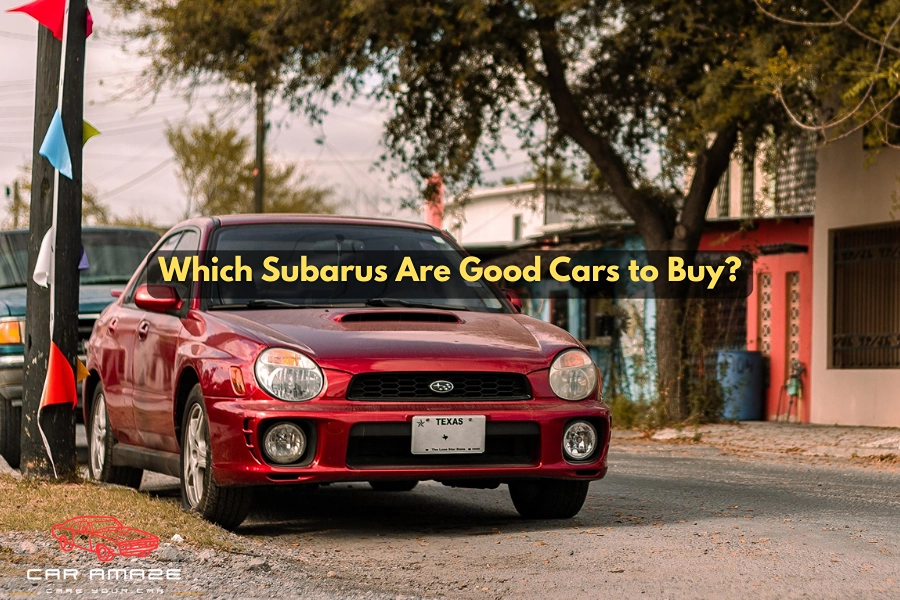
Not every Subaru is built for the same buyer. A compact Crosstrek, family-focused Ascent, and performance-oriented WRX can have completely different strengths and weaknesses. If you’re asking are Subarus good cars to buy, the model matters just as much as the brand.
Which Subaru Models Are Good Cars to Buy?
Here’s a quick look before we examine each model:
| Subaru model | Best for | Main strength | Main concern |
| Crosstrek | Small SUV buyers | AWD and practicality | Limited power on some versions |
| Forester | Families and daily driving | Visibility and space | Not built for sporty driving |
| Outback | Road trips and families | Cargo space and comfort | Larger than a compact SUV |
| Impreza | Budget-conscious buyers | Practical AWD hatchback | Less power |
| Ascent | Larger families | Three-row seating | Size and fuel consumption |
| WRX | Performance drivers | Strong performance | Higher ownership demands |
| Legacy | Sedan buyers | Comfortable AWD sedan | Sedan market is shrinking |
| BRZ | Sports-car buyers | Handling and driving feel | Limited practicality |
The best choice depends on what you expect from the car. A buyer who needs a family vehicle shouldn’t shop for a WRX simply because it has a Subaru badge, while someone who wants a fun weekend car may find a Forester too ordinary.
Is the Subaru Crosstrek a Good Car?
The Crosstrek is one of Subaru’s strongest choices for buyers who want a relatively small vehicle with SUV-like practicality and standard all-wheel drive.
Its size makes it easier to maneuver and park than larger Subaru SUVs, while its ground clearance and AWD system make it useful for drivers who regularly encounter poor road conditions.
The Crosstrek also makes sense for buyers who want something more practical than a traditional sedan without stepping into a large SUV.
Pros of the Crosstrek
- Standard AWD
- Compact exterior
- Useful cargo area
- Good visibility
- Suitable for light off-road use
- Strong safety focus
Potential drawbacks
The Crosstrek isn’t designed to be a performance vehicle. Some versions can feel modest in acceleration, especially when carrying passengers or climbing steep roads.
If your priorities are easy ownership, practicality, and all-weather driving rather than speed, the Crosstrek is one of the Subaru models worth considering.
Is the Subaru Forester a Good Car?
The Forester has long been one of Subaru’s core family vehicles.
Its upright design gives the driver a good view of the road, while the cabin provides useful passenger and cargo space. That makes it particularly appealing to families, older drivers, and anyone who values visibility over sporty handling.
The Forester also combines its practical design with standard AWD.
Why buyers choose the Forester
- Excellent outward visibility
- Spacious cabin
- Useful cargo capacity
- Standard AWD
- Comfortable driving position
- Strong safety focus
Where it falls short
The Forester isn’t the Subaru to choose if acceleration and cornering performance are your top priorities.
It is built more around practicality than excitement.
For a family looking for a sensible daily vehicle, however, the Forester can be one of the most balanced options in the lineup.
Is the Subaru Outback a Good Car?
The Outback sits somewhere between a traditional wagon and an SUV.
That unusual combination is part of its appeal. It gives buyers substantial cargo space, a comfortable cabin, available ground clearance, and standard AWD without requiring the size of a large three-row SUV.
The Outback is especially attractive for people who spend a lot of time on the road.
Why the Outback is popular
- Large cargo area
- Comfortable long-distance driving
- Standard AWD
- Good ground clearance
- Useful for outdoor activities
- Available higher-performance versions
It can work particularly well for families who travel frequently or people who carry bicycles, camping equipment, luggage, or other large items.
What to consider
The Outback is larger than the Crosstrek and Impreza, so it may feel unnecessary for someone who mainly drives around a city.
Fuel consumption can also be higher than smaller Subaru models.
If you need space and regularly travel in difficult weather, the Outback makes a stronger case.
Is the Subaru Impreza a Good Car?
The Impreza is one of the more sensible choices for someone who wants a smaller Subaru.
It combines compact-car dimensions with Subaru’s AWD system, making it interesting for buyers who don’t want an SUV.
Its hatchback configuration also gives it more practical cargo space than many traditional small sedans.
The Impreza makes sense for:
- Daily commuters
- Small families
- City drivers
- Buyers who want AWD without an SUV
- People who want a practical compact car
Its main limitation
The Impreza isn’t particularly quick.
If you want strong acceleration or a sporty driving experience, a WRX is a completely different proposition.
But for basic transportation with all-weather capability, the Impreza can be a sensible choice.
Is the Subaru Ascent a Good Car?
The Ascent is Subaru’s larger family SUV, with three rows of seating.
That makes it fundamentally different from the Crosstrek and Forester.
If you need to carry several passengers regularly, the Ascent gives you significantly more room than Subaru’s smaller SUVs.
Why families consider the Ascent
- Three rows
- Large passenger capacity
- Useful cargo space
- Standard AWD
- Family-focused features
- Towing capability
What to consider
The larger size comes with trade-offs.
The Ascent consumes more fuel than Subaru’s smaller vehicles and can feel cumbersome in tight urban areas.
It also makes less sense if you rarely carry more than four or five people.
For larger families, however, the additional space can justify the extra size and cost.
Is the Subaru WRX a Good Car?
The WRX is where the Subaru lineup takes a very different direction.
Instead of focusing primarily on comfort and practicality, the WRX is designed around performance.
Its turbocharged engine, AWD system, and sporty suspension make it appealing to drivers who actually enjoy driving.
But performance also changes the used-car buying equation.
A WRX that has been modified, tuned, raced, or driven aggressively can have considerably more wear than a stock example with a documented maintenance history.
Why people buy a WRX
- Strong acceleration
- AWD performance
- Sporty handling
- Manual transmission availability on applicable versions
- Distinctive driving experience
Why used buyers need to be careful
Ask whether the car has been:
- Tuned
- Modified
- Heavily driven
- Used for track days
- Involved in accidents
- Poorly maintained
A completely stock WRX with excellent records can be a very different proposition from a heavily modified example.
For performance buyers, the WRX can be one of the most enjoyable Subarus to own. For someone looking for cheap and simple transportation, it’s probably the wrong choice.
Is the Subaru Legacy a Good Car?
The Legacy is Subaru’s traditional midsize sedan.
It offers something that many competitors don’t: all-wheel drive in a conventional sedan format.
That’s useful for buyers who want the traction benefits of AWD but don’t want an SUV.
Strengths
- Comfortable ride
- Spacious interior
- AWD
- Good visibility
- Practical daily transportation
Weaknesses
The sedan market has become much smaller as buyers have shifted toward SUVs and crossovers.
That means the Legacy may not have the same market appeal as a Forester or Outback.
Still, if you specifically want an AWD sedan, it can be an interesting used-car option.
Is the Subaru BRZ a Good Car?
The BRZ is another major departure from Subaru’s mainstream lineup.
It’s a lightweight sports car built around handling and driver involvement rather than cargo space or family practicality.
The low seating position, rear-wheel-drive layout, and sports-car proportions make it fundamentally different from the AWD Subaru models most people associate with the brand.
The BRZ is a good choice if you want:
- A lightweight sports car
- Sharp handling
- A more engaging driving experience
- Rear-wheel drive
- A weekend or second vehicle
It’s not ideal if you need:
- Lots of cargo space
- Easy rear-seat access
- Three-row seating
- Maximum practicality
- A comfortable family vehicle
The BRZ demonstrates why judging Subaru as one single type of car doesn’t work. The right Subaru depends heavily on what you want the vehicle to do.
Subaru Model Comparison: Which One Should You Buy?
| If you need… | Consider |
| A small AWD vehicle | Crosstrek |
| A practical family SUV | Forester |
| More cargo and road-trip capability | Outback |
| A compact AWD car | Impreza |
| Three rows | Ascent |
| Performance | WRX |
| An AWD sedan | Legacy |
| A sports car | BRZ |
This is one of the most important points for anyone researching are Subarus good cars to buy.
Don’t start by asking which Subaru is “the best.” Start by deciding what you need from the vehicle, then compare the models that actually fit that purpose.
Buying Used or New Subarus Cars
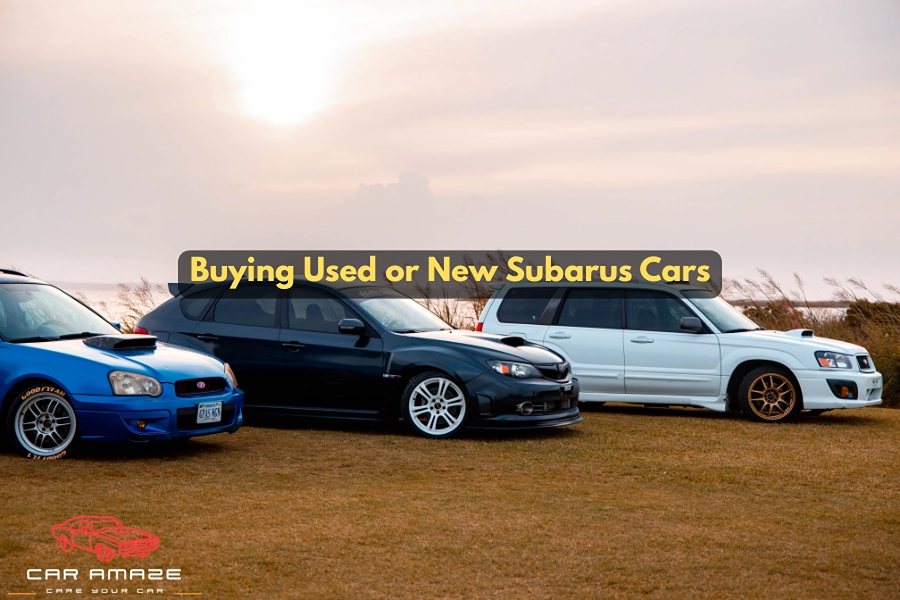
Should you prefer a used or new Subarus car? Have a look at comparison below:
Are Subarus Good Cars to Buy New?
A new Subaru has several advantages over a used example.
You know the vehicle’s history from day one, receive the manufacturer’s warranty, and avoid many of the unknowns that come with buying a vehicle that has already had one or more owners.
Current reliability data also gives Subaru a strong position among new vehicles. Consumer Reports ranks Subaru second for predicted new-car reliability for 2026.
However, new doesn’t automatically mean better value.
A lightly used Subaru with complete service records can save a substantial amount of money compared with buying new.
The right choice depends on the price difference, financing, warranty coverage, expected ownership period, and condition of the used vehicle.
Are Subarus Good Cars to Buy Used?
They can be, but the inspection matters.
A used Subaru should be evaluated as an individual vehicle rather than simply as “a Subaru.”
Before buying, check the vehicle history report, maintenance records, recall status, tire condition, underbody, engine bay, transmission behavior, and signs of previous modifications.
For older vehicles, pay particular attention to oil leaks, cooling-system problems, rust, and evidence of neglected maintenance. However, make sure that the car is not totaled or lemon.
A pre-purchase inspection from an independent mechanic who knows Subaru vehicles can be money well spent.
Used Subaru Buying Checklist
Before handing over your money, check:
☐ Vehicle history
☐ Maintenance records
☐ Recall status
☐ Engine oil leaks
☐ Coolant leaks
☐ Transmission operation
☐ AWD system
☐ Tire matching and tread depth
☐ Brake condition
☐ Suspension noise
☐ Rust underneath the vehicle
☐ Warning lights
☐ Previous modifications
☐ Accident repairs
☐ Cold-start behavior
☐ Independent pre-purchase inspection
Don’t skip the cold start if possible. A vehicle that has already been warmed up can hide certain starting, idle, smoke, or noise issues.
Subaru Reliability, Common Problems & Ownership Costs
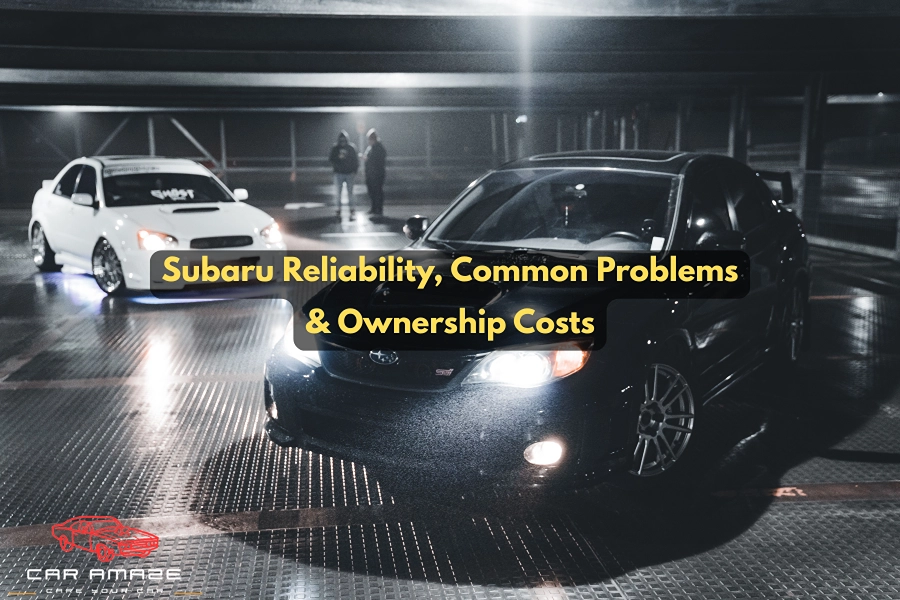
A Subaru’s reputation becomes easier to understand when you separate current models from older used cars. The brand has strong current reliability data, but owner discussions still contain plenty of stories about older CVTs, engine problems, and expensive repairs. Both can be true at the same time.
Are Subarus Reliable After 100,000 Miles?
A Subaru can remain dependable beyond 100,000 miles, but mileage alone doesn’t tell you whether a particular vehicle is a good purchase.
Maintenance history becomes increasingly important as a vehicle ages. A 120,000-mile Subaru with consistent service records can be a better purchase than a 70,000-mile example that spent years without proper maintenance.
The model and year matter too. A naturally aspirated Crosstrek used for commuting has a very different mechanical history from a modified WRX that has been driven aggressively.
If you’re considering a high-mileage Subaru, focus on:
- Maintenance records
- Engine condition
- Transmission behavior
- Oil consumption or leaks
- Cooling system
- Suspension
- Wheel bearings
- CVT condition
- Rust
- Previous accidents
- Modifications
The goal isn’t to find a Subaru with a low odometer reading. It’s to find one that has been properly maintained for the miles it has covered.
Common Subaru Problems to Watch For
Subaru doesn’t have one universal mechanical problem that applies to every model. The problems you should watch for depend heavily on the vehicle’s generation, engine, transmission, and maintenance history.
CVT Problems on Certain Older Models
The CVT is probably one of the biggest concerns you’ll encounter when researching are Subarus good cars Reddit.
Current owner discussions show a mixed picture. Some owners report long-term trouble-free CVT ownership, while others report transmission failures or repairs. Reddit discussions also repeatedly distinguish older CVTs from newer versions rather than treating all Subaru CVTs as identical.
That distinction is important.
You shouldn’t reject a modern Subaru solely because it has a CVT. At the same time, you shouldn’t buy an older used Subaru without researching its specific transmission and checking its service history.
If a used Subaru shows hesitation, shuddering, unusual noises, warning lights, or abnormal behavior during a test drive, have the transmission inspected before buying.
Head-Gasket Concerns on Older Subarus
The phrase Subaru head gasket problem has been around for years.
Certain older Subaru engines developed head-gasket problems, which helped create the brand’s reputation for expensive engine repairs. But applying that reputation to every Subaru currently sold would be misleading.
When shopping for an older Subaru, research the exact engine and model year rather than assuming the same problem exists across the entire lineup.
Look for:
- Coolant loss
- Oil contamination
- Overheating
- Visible leaks
- Cooling-system repairs
- Previous head-gasket work
A vehicle with documented professional repairs is not automatically a bad purchase. The quality and documentation of the repair matter.
Oil Leaks
Oil leaks can appear as Subaru vehicles age.
A small leak doesn’t necessarily mean the vehicle is about to suffer catastrophic engine damage, but you shouldn’t ignore it either.
During a used-car inspection, check around the engine and underneath the vehicle for fresh oil. If you see a leak, find out where it comes from and how much the repair will cost before negotiating the price.
Wheel Bearings and Suspension Wear
High-mileage vehicles can develop worn wheel bearings, bushings, struts, and other suspension components.
Listen for humming or grinding that changes with vehicle speed. During a test drive, also pay attention to steering feel, vibration, clunks, and uneven tire wear.
These aren’t reasons to avoid a used Subaru by themselves. They’re normal areas to inspect on an older vehicle.
Common Questions About Subaru Cars

Here are the answers of some key questions related to Subaru cars:
Are Subaru Maintenance Costs High?
This is one area where Subaru deserves a more careful answer.
Subaru’s reliability can be good while ownership costs are still higher than some buyers expect.
Consumer Reports currently places Subaru below many brands for maintenance and repair costs in its 2026 brand rankings, even while Subaru performs strongly in new-car reliability.
Several factors can contribute to repair costs:
- AWD components
- Boxer-engine layout
- Specialized repairs
- CVT repairs
- Suspension components
- Age and mileage
- Dealer labor rates
Routine maintenance isn’t necessarily expensive enough to make Subaru a poor choice. The bigger concern is what happens when a major component needs repair.
That’s why a used Subaru’s maintenance history matters so much.
Are Subarus Safe Cars?
Safety is one of Subaru’s stronger areas.
The Insurance Institute for Highway Safety (IIHS) has given several Subaru models strong safety awards. For the 2025 model year, the Forester earned a Top Safety Pick award for non-Wilderness trims, the Solterra earned Top Safety Pick+, and the Ascent earned Top Safety Pick.
The Outback also earned a 2025 Top Safety Pick award.
However, don’t assume that every Subaru has identical crash performance.
Safety ratings can change between model years, so check the specific year and trim you’re considering.
For a used Subaru, this matters even more because a 2017 model shouldn’t be judged using the safety rating of a 2025 model.
Are Subarus Better Than Toyota, Honda or Mazda?
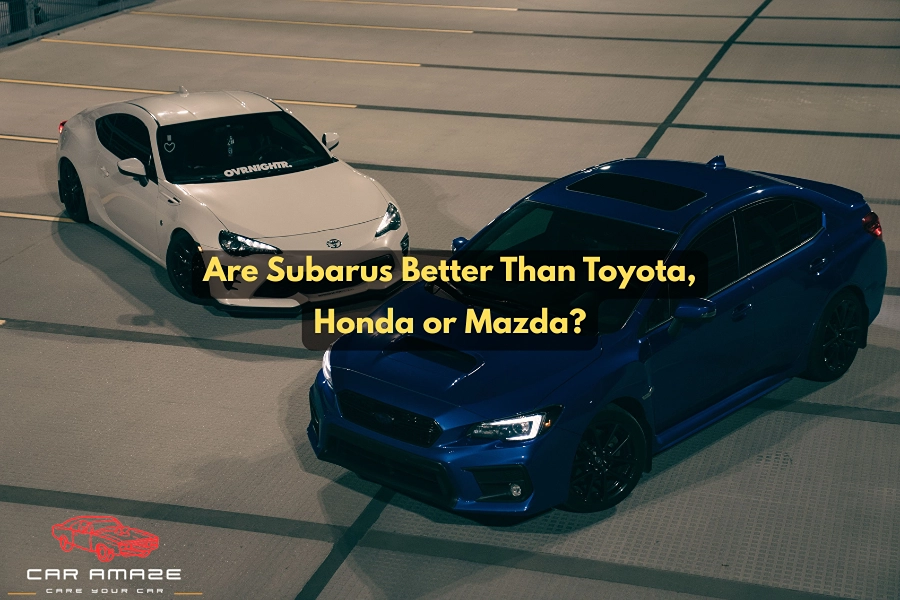
There’s no single winner for every buyer.
Subaru has a particularly strong case for drivers who value standard AWD and all-weather capability. Toyota has a strong reputation for reliability and resale value, Honda is known for practical and efficient vehicles, while Mazda tends to appeal to buyers who want a more engaging driving experience.
| Brand | Strongest reason to consider it |
| Subaru | AWD, safety and all-weather practicality |
| Toyota | Reliability and resale value |
| Honda | Practicality and efficient daily driving |
| Mazda | Driving experience and interior quality |
If you regularly deal with snow, Subaru’s standard AWD can make more sense than paying extra for AWD on another vehicle.
If you live somewhere with little snow and don’t need additional traction, a front-wheel-drive Toyota, Honda, or Mazda may provide everything you actually need.
So instead of asking whether Subaru is better than Toyota, ask which vehicle better matches your roads, weather, budget, and driving habits.
Are Subarus Good Cars According to Reddit?
Search for are Subarus good cars Reddit, and you’ll find two very different groups of owners.
One group reports long-term ownership with relatively few problems. Another talks about CVT failures, oil leaks, older engine issues, or expensive repairs.
Both types of experiences exist.
Recent Reddit discussions show owners reporting everything from older Subarus reaching very high mileage to transmission failures at much lower mileage.
That doesn’t mean Reddit proves Subaru is unreliable.
People are more likely to post when something goes wrong than when their car simply works as expected. One Reddit discussion about newer Subaru CVTs also points out that online reliability discussions can become dominated by problem cases rather than the much larger group of owners who experience no major issue.
The useful information from Reddit is therefore the patterns owners discuss, not the number of positive or negative comments.
What Subaru owners commonly praise
- AWD performance
- Snow and bad-weather capability
- Practicality
- Comfortable daily driving
- Long ownership
- Safety
- Outdoor usability
What owners commonly criticize
- CVT behavior or failures
- Repair costs
- Older engine problems
- Oil leaks
- Fuel economy
- Dealer service costs
Use Reddit to identify questions worth investigating. Then verify those concerns using reliability data, recalls, service information, and a professional inspection.
Check Recalls Before Buying a Used Subaru
A recall check should be part of every used-car purchase.
The NHTSA recall database lets you search using a vehicle’s 17-character VIN and determine whether that particular vehicle has an unrepaired safety recall. NHTSA says recall repairs are provided without charge when the vehicle is covered by the recall.
This is much more useful than searching Google for “Subaru recalls.”
A recall affecting one model year or production group doesn’t automatically mean every Subaru has the same problem.
Before buying, get the VIN and check it through the NHTSA vehicle recall database.
Who Should Buy a Subaru?
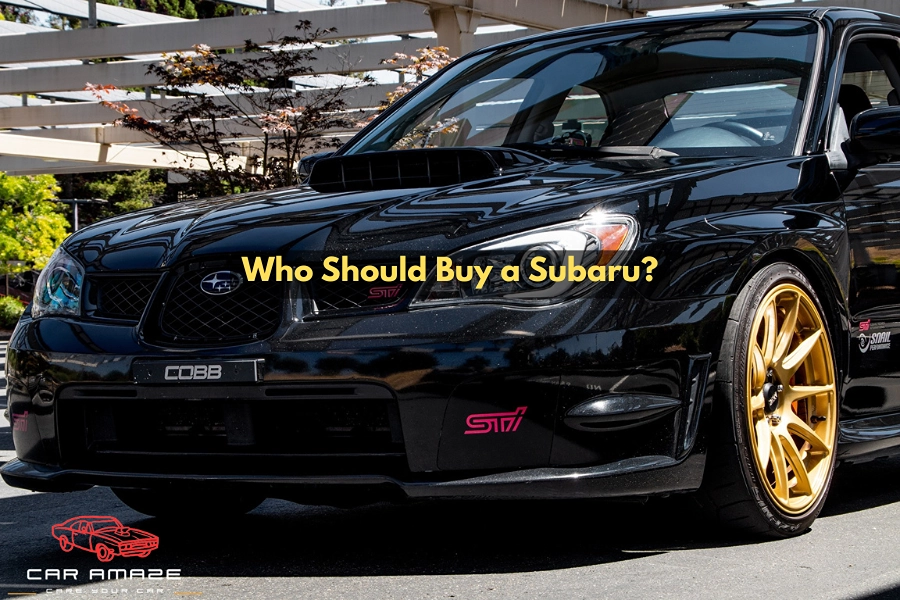
A Subaru makes the most sense when its strengths match your daily life.
Subaru is a good fit if you:
Drive in Snow or Poor Weather
AWD can be useful when roads become slippery, particularly when combined with appropriate tires and sensible driving.
Want an Outdoor-Friendly Vehicle
The Crosstrek and Outback are particularly appealing to people who regularly carry outdoor equipment or travel on rougher roads.
Want a Practical Family Vehicle
The Forester, Outback, and Ascent provide different levels of passenger and cargo space.
Plan to Keep the Car for Years
If you intend to keep a vehicle long-term, buying a suitable model and maintaining it properly can matter more than chasing the newest features.
Want AWD Without Buying a Large SUV
The Impreza and Crosstrek offer options for buyers who don’t need a large vehicle.
Who Should Avoid a Subaru?
Subaru isn’t automatically the best answer for everyone.
You may want another brand if:
You Don’t Need AWD
If you live somewhere with mild weather and spend most of your time on well-maintained roads, you may not benefit enough from Subaru’s AWD to justify choosing it.
You Want the Lowest Possible Fuel Consumption
Smaller front-wheel-drive competitors can be more efficient, depending on the models being compared.
You Want the Cheapest Repairs
A Subaru’s mechanical layout and AWD system can make certain repairs more involved than those on simpler vehicles.
You Want Strong Performance Without Buying a Performance Model
The standard Subaru lineup tends to prioritize practical driving rather than outright acceleration.
If performance matters, look specifically at the WRX or BRZ rather than expecting a Forester or Outback to behave like a sports car.
Are Subarus Worth Buying in 2026?
For many buyers, yes.
The current data gives Subaru a strong case. Consumer Reports currently places the brand at the top of its mainstream-brand rankings, while IIHS safety results show several Subaru models performing well in current safety testing.
But the used-car decision requires more care.
If you’re buying a new Subaru, you can focus more on the model’s current reliability, safety, features, price, and warranty.
If you’re buying a used Subaru, the checklist becomes much longer:
model year + engine + transmission + maintenance history + condition + accident history + recalls + price
That combination tells you far more than the Subaru name on the hood.
The Simple Buying Rule
If you remember only one thing from this guide, make it this:
Don’t buy a Subaru because Subarus are supposed to be reliable. Buy a specific Subaru because that specific vehicle has a good history, fits your needs, and passes a proper inspection.
That approach works especially well when shopping for a used car.
What Should You Check Before Buying a Used Subaru?
Don’t rely on a test drive alone.
1. Check the VIN
Use the VIN to check recalls and vehicle history.
The NHTSA recall database is the best starting point for open safety recalls.
2. Review Maintenance Records
Look for evidence of regular oil changes, scheduled servicing, brake work, fluid changes, and other recommended maintenance. Also, make sure that all the documents required for buying a car are available.
Missing records don’t automatically mean the car was neglected, but they increase uncertainty.
3. Inspect the Tires
This is especially important with an AWD vehicle.
Look for uneven wear and significant differences in tread depth between tires.
4. Check for Leaks
Look under the engine and transmission area for fresh oil or fluid leaks.
5. Test the Transmission
The vehicle should accelerate and shift smoothly without unusual noises, shuddering, hesitation, or warning lights.
6. Inspect the Suspension
Listen for clunks and knocks over bumps and check whether the vehicle drives straight.
7. Look Underneath
Rust can be especially important on vehicles that have spent years in areas where roads are heavily salted during winter.
8. Check for Modifications
This is particularly important with the WRX.
A heavily modified vehicle may have experienced harder use than a stock example.
9. Get an Independent Inspection
Have a qualified mechanic inspect the vehicle before you pay.
A few hundred dollars spent on an inspection can save you from buying a car that needs thousands of dollars in repairs.
Subarus Maintenance and Comparison with Other Models
Have a look at the maintenance cost of Subarus and its comparison with other car models:
Are Subarus Expensive to Maintain?
Subaru maintenance costs aren’t necessarily high enough to make the brand a poor choice, but they shouldn’t be ignored.
The AWD system, boxer engine layout, vehicle age, mileage, and type of repair can all affect the final bill.
Routine maintenance is usually much easier to budget for than a major repair.
That’s why the best way to keep ownership costs under control is to:
- Follow the maintenance schedule
- Fix small problems before they become larger
- Use the correct fluids and parts
- Inspect the vehicle regularly
- Address warning lights promptly
- Keep good service records
For used buyers, maintenance history is one of the most important factors affecting the real cost of ownership.
Are Subarus Better Than Toyotas?
Not necessarily.
Toyota generally has a stronger reputation for long-term reliability and resale value, while Subaru has a stronger case for buyers who want standard AWD and all-weather capability.
If your priority is maximum long-term reliability and resale, Toyota may deserve a closer look.
If you regularly drive through snow and want AWD without paying for it as an optional feature on many models, Subaru may be more attractive.
The right answer depends on the vehicle and your circumstances.
Are Subarus Better Than Hondas?
Honda is another strong competitor.
Honda’s lineup includes practical sedans, SUVs, and other everyday vehicles, while Subaru’s lineup focuses more heavily on AWD-equipped cars and SUVs.
Choose Subaru if AWD and poor-weather capability are high priorities.
Consider Honda if you want a broader selection of efficient front-wheel-drive vehicles and don’t need AWD.
Are Subarus Better Than Mazdas?
Mazda tends to appeal to drivers who care about steering feel, handling, and a more upscale interior experience.
Subaru has a different focus: AWD, practicality, safety, and outdoor-oriented capability.
For someone who enjoys driving on winding roads, Mazda may be more appealing.
For someone who regularly deals with snow and wants AWD as a central part of the vehicle, Subaru may be the better fit.
Are Subarus Good Cars Reddit Users Recommend?
Reddit shouldn’t be treated as a reliability database, but owner discussions can reveal issues that deserve further research.
The overall picture is mixed.
Some owners report very long ownership with few serious problems. Others describe expensive CVT repairs, engine problems, or maintenance issues.
The important lesson isn’t that Reddit proves Subaru is either reliable or unreliable.
It’s that specific model, year, engine, transmission, and maintenance history matter.
That’s also why you should be cautious when someone says, “My Subaru lasted 250,000 miles, so yours will too.”
One owner’s experience doesn’t predict what another vehicle will do.
Final Verdict
Yes, Subarus are generally good cars.
They make the most sense for people who want a practical vehicle with AWD, strong safety credentials, useful cargo space, and good all-weather capability.
Current reliability data also supports Subaru’s strong reputation. Consumer Reports ranks Subaru highly for predicted new-car reliability and overall brand performance.
The best approach is straightforward:
Choose the right model. Check the model year. Verify the maintenance history. Check recalls. Inspect the vehicle. Then compare the price with similar cars from Toyota, Honda, and Mazda.
If those factors line up, a Subaru can be a very good car to own for years.
FAQs
Are Subarus good cars?
Yes. Subaru generally makes good cars, particularly for drivers who value AWD, safety, practicality, and all-weather performance. However, reliability varies by model year, model, and maintenance history.
Are Subarus good used cars?
Yes, a well-maintained used Subaru can be a good purchase. Check its service history, vehicle history, recalls, tires, AWD system, engine, transmission, and overall condition before buying.
How long do Subarus last?
A Subaru can provide many years of service when properly maintained, but there is no guaranteed mileage that applies to every model. Vehicle condition, maintenance, driving habits, and model year all matter.
Are Subarus expensive to maintain?
Maintenance and repair costs vary by model and age. Subaru isn’t necessarily expensive to maintain during normal ownership, but certain repairs can cost more because of the vehicle’s mechanical design and AWD system.
Are Subaru CVTs reliable?
Many Subaru models use CVTs, and owner experiences vary. When considering a used Subaru, research the specific model year and transmission and pay attention to service records and test-drive behavior.
Which Subaru is the most reliable?
There isn’t one model that is guaranteed to be the most reliable for every year. Reliability ratings can change by model and generation, so compare the exact model year you’re considering.
Are Subarus good cars to buy for winter driving?
They can be an excellent choice for drivers who regularly deal with snow and slippery roads. AWD provides an advantage, although proper winter tires and careful driving remain important.
Are high-mileage Subarus worth buying?
They can be, provided the vehicle has been properly maintained and passes a thorough inspection. A well-maintained high-mileage Subaru can be a better purchase than a lower-mileage vehicle with poor records.
Should I buy a Subaru or Toyota?
Choose based on your priorities. Toyota has a strong reliability and resale reputation, while Subaru is particularly appealing if you value standard AWD, safety, and all-weather practicality.